
This post was originally published on this site.

Two seasons ago, fresh off a 92-win campaign and an NL Central division title, the Milwaukee Brewers traded their best pitcher. Former Cy Young winner Corbin Burnes, entering his final year before free agency, was dealt to the Orioles for a fairly underwhelming return. Nonetheless, the Brewers remained the class of their division, in fact increasing their win totals in the subsequent two seasons with a talented and deep pitching staff.
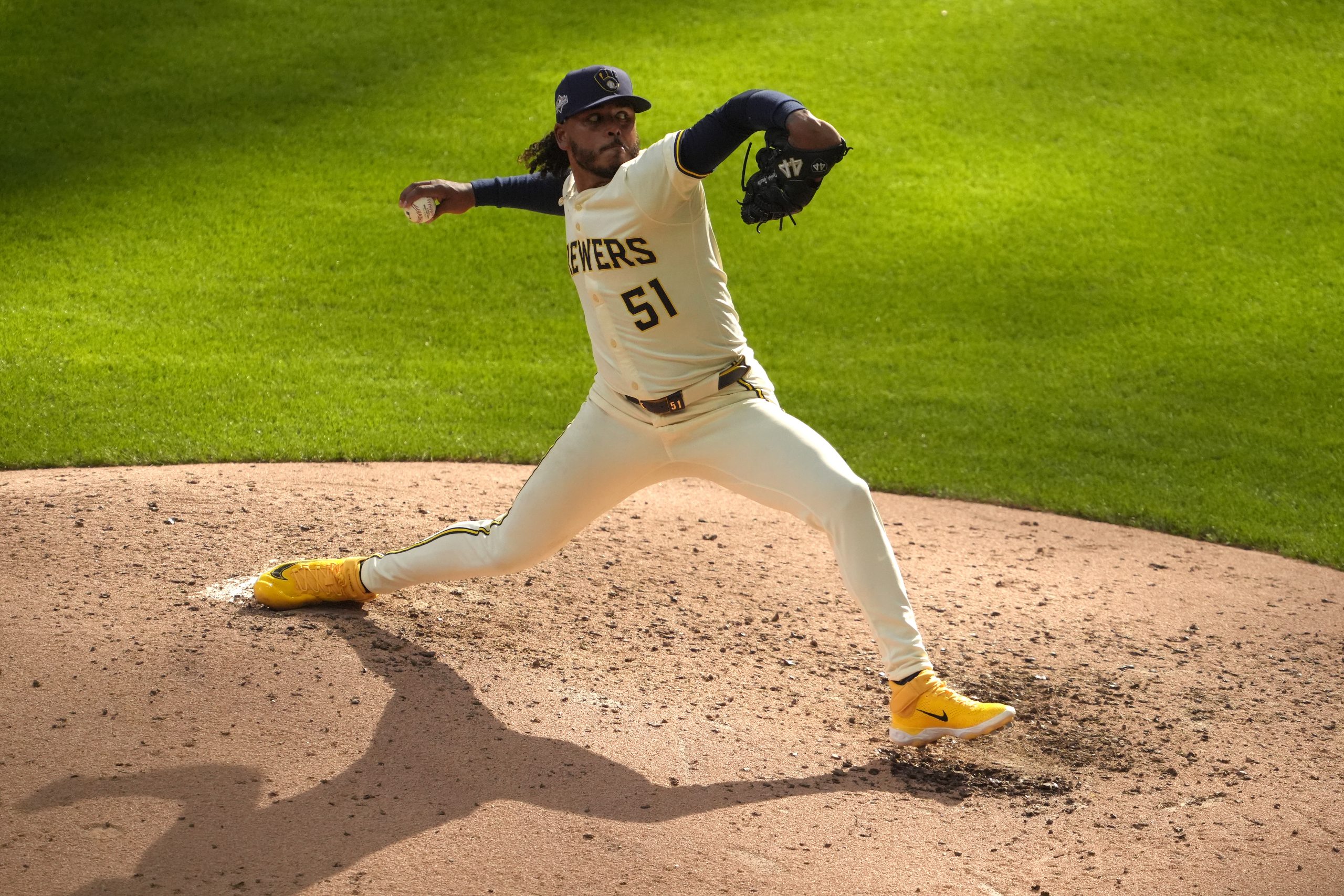
This offseason, they may yet repeat themselves by dealing another of their top arms. Freddy Peralta is coming off a career year with the Crew, and is one year out from free agency. Many teams in need of an additional impact starting pitcher, including the Yankees, have reportedly shown interest. It’s not entirely clear how realistic it is that Peralta will be moved, but given the low cost of that Burnes deal, it would behoove the Yankees to stay in line for this two-time All-Star.
2025 Statistics: 33 starts, 176.2 IP, 2.70 ERA (154 ERA+), 3.64 FIP, 3.86 xFIP, 204 K, 28.2 K%, 9.1 BB%, 3.6 fWAR
2026 FanGraphs Depths Charts Projections: 31 starts, 178 IP, 3.91 ERA, 3.95 FIP, 200 K, 26.6 K%, 8.7 BB%, 2.9 fWAR
Contract Status: Signed to $8M player option for 2026. Free agent after 2026 season.
After many seasons of mostly solid but volatile production, Peralta blossomed as an ace in 2025. He set a new career-best mark in ERA while compiling more innings than any prior year. As Milwaukee endured a rash of pitching injuries, particularly early in the season, Peralta was a metronome, providing consistently strong performances. He maintained a spectacular strikeout rate with his four-pitch repertoire, all of which rated above average by Statcast Run Value this year.
Part of that success seems to lie in an adjustment Peralta made to his mix. He continues to throw his mid-90s rising fastball about half the time, but he dramatically cut his slider rate from 22 percent in 2024 to nine percent in 2025. That came with modest jumps in the usage of his changeup and curveball to compensate. That pitch mix allows him to work all four quadrants of the zone effectively. Fastball up, curveball down, changeup working arm-side, slider spinning glove-side.
With that in mind, it’s little wonder that Peralta had the third-lowest opponent batting average of qualified starters at .191, with only Carlos Rodón (.187) and Yoshinobu Yamamoto (.182) above him. Of course, if the Yankees traded for Peralta, they would boast two of that trio in the same rotation.
When you miss bats as much as he does, you can go on some major heaters, like the one Peralta ripped off across August and September. He strung together five consecutive scoreless starts and 31 consecutive scoreless innings over that span, finishing as the NL Pitcher of the Month for August.
There are some flaws in Freddy’s profile. For one, like many other pitchers already in the Yankees’ rotation, he can struggle to limit the free passes. Peralta’s 9.1 percent walk rate was in the lower third of MLB pitchers, and that clip was actually a slight improvement of his career mark of 9.3 percent. It’s not surprising given the nastiness of his stuff, but there are days in which Peralta really scuffles with his command, limiting his ability to go deep into games. Even on starts where he has good command, he can get too cute by half, wasting pitches in an attempt to get strikeouts and inflating his pitch count. Overall, he averaged over 17 pitches per inning—for reference, Rodón, who gets in his share of deep counts, averaged about 16.4 pitches per inning; Yamamoto 16.1, and AL Cy Young winner Tarik Skubal 14.6. With that in mind, acquiring Peralta should probably also accompany some moves to strengthen the relief corps behind him
Peralta has been able to pitch to contact before, as his hard hit rate is actually quite low. That said, most contact against him is in the air, so when hitters do hit the ball hard, it can go a long way. Peralta used to have a big home run problem: in 2023 he had a frightful 16 percent home run per fly ball rate. But in ensuing years he’s been able to chop that down quite a bit.
Ultimately the pros in Peralta’s profile outweigh the cons, and as an ostensible rental he shouldn’t come at a great cost to the Yankees in terms of prospects if a deal with consummated. The main uncertainty lies in whether the Brewers will be willing to send him off.
It’s true that the 2025 season did see a great deal of development from the rest of their staff which indicates they could function without him. Quinn Priester went from Pirates castoff to rotation mainstay as a ground ball maven, Chad Patrick posted a solid rookie season, and veteran Brandon Woodruff returned from injury last year—he’s back after accepting the qualifying offer. (ESPN’s Jeff Passan noted that some around the industry believe Woodruff’s return makes a Peralta trade more likely.) Then of course, there was the emergence of Jacob Misiorowksi, a talent so electrifying that he got selected to the All-Star Game just a few starts after his debut just so a national audience could watch him.
The Brewers have usually been able to cobble together enough innings through various arms to make it work without the likes of Burnes and Woodruff, but that kind of strategy works until it doesn’t. Past results don’t predict future outcomes, least of all with pitching. It’s also worth wondering if a hypothetical trade package for one year of Peralta would match the value of the compensatory draft pick Milwaukee would received if he—most likely—departs in free agency a year later. But if they opt for the former path, the Yankees should not hesitate to make this splash. For the suddenly budget-conscious Yanks, they’d be hard-pressed to find a pitcher who could provide more for less this offseason.