
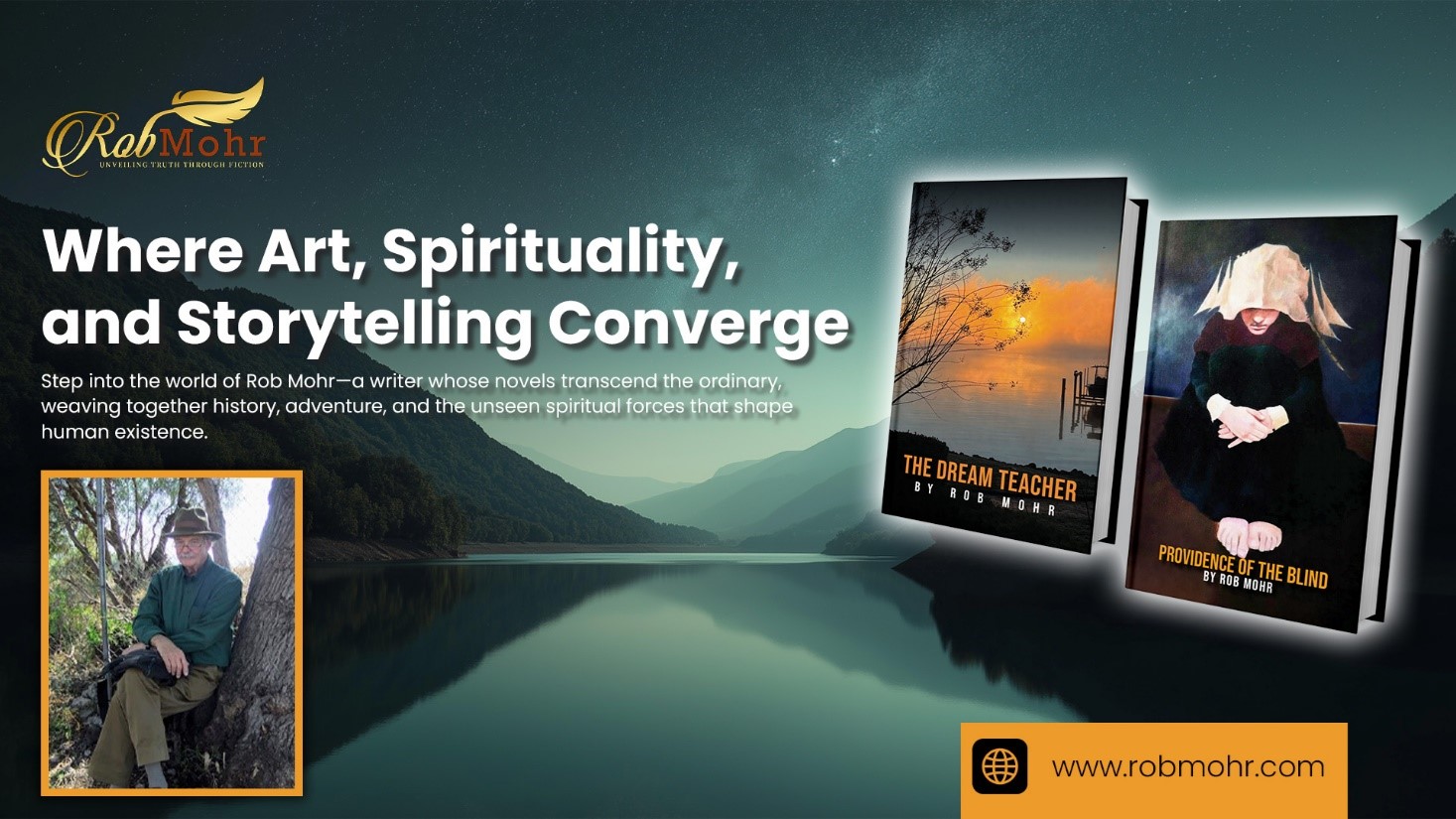
Some stories don’t just entertain—they demand action. Rob Mohr’s The Dream Teacher is one of them. Set in the rugged heart of the Bolivian Andes, the novel follows Marcus Stewart, an American educator whose mission to empower Quechua villagers collides with a violent military coup. Survival becomes a test of courage, but resistance, Mohr shows, isn’t about heroics—it’s about amplifying the voices that history has tried to silence.
Mohr brings the Andes to life with an intimacy only years of lived experience can provide. Every village, every ritual, every whispered prophecy feels lived-in, not researched. As Marcus navigates betrayal, revolution, and his own conscience, readers are drawn into a world where politics and spirituality intertwine, where the lessons of history are carved into mountainsides and memory alike.
“Fiction can’t just tell a story,” Mohr writes in an author’s note. “It has to open eyes, stir hearts, and sometimes, demand change.” And in The Dream Teacher, the line between narrative and activism blurs.
The novel’s brilliance lies in its people. Maria Helena, a fierce indigenous leader, refuses to be a background character—her strength challenges Marcus, the readers, and the very systems they confront. Luis Amaro de León, a customs agent tied to ancient Quechua prophecies, reminds us that resistance is spiritual as much as political. These characters are not accompaniments to the plot; they are the plot, carrying history, hope, and rebellion in their voices.
Yet Mohr doesn’t shy away from thrills. Tanks thunder across villages, gunfire shatters dawn, and escapes are plotted in shadows. But amid the suspense, the book never forgets its heart: the culture, the land, and the people who have survived centuries of colonization and exploitation. Here, culture is not window dressing; it’s the pulse that drives every choice, every risk, every moment of courage.
In a world where authoritarianism rises and truth is twisted, The Dream Teacher feels urgent. It asks what it really means to resist, to bear witness, and to fight for what is right—even when the cost is personal. It reminds us that fiction can’t just reflect the world—it can shape it.
Rob Mohr, a writer and artist shaped by years in South America and by the teachings of Paulo Freire, crafts a story that balances adrenaline with reflection, danger with dignity, and suspense with profound cultural insight.
The Dream Teacher isn’t just a novel. It’s a challenge: to see, to listen, and to act.