
This post was originally published on this site.
The UK is preparing to issue its first-ever “digital gilt,” a government bond recorded using blockchain technology, but what exactly does that mean for investors, and how would you buy one?
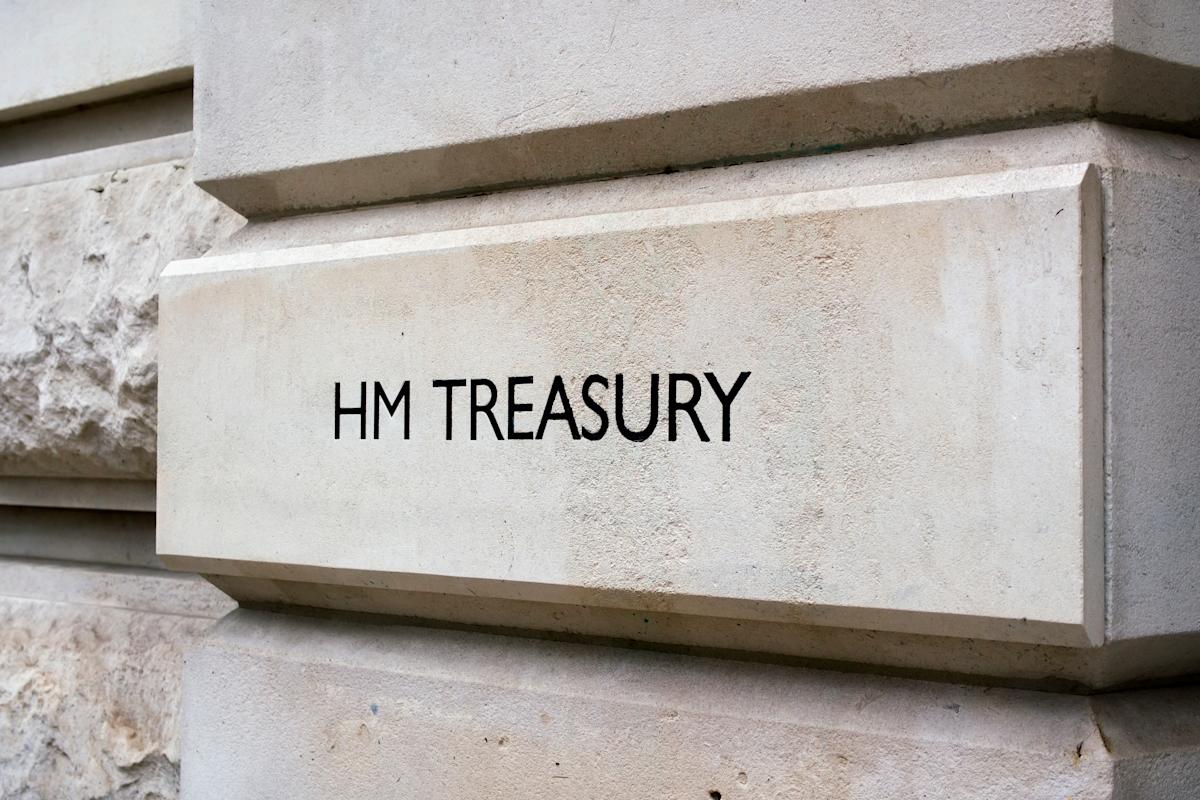
The UK treasury has appointed HSBC (HSBA.L) as the platform provider for the pilot issuance of Britain’s first digital gilt instrument (DIGIT), marking a significant step in the government’s effort to bring sovereign debt onto distributed ledger infrastructure.
Read more: Crypto live prices
The pilot, which will also involve law firm Ashurst as legal and regulatory adviser, is expected to run inside the Bank of England’s “digital sandbox,” allowing the tokenised government bond to be tested under relaxed regulatory conditions before any permanent market structure changes are introduced.
Announcing the move on LinkedIn, economic secretary to the treasury and city minister Lucy Rigby said: “Today we’ve taken an important step towards issuing the UK’s first digital gilt instrument (DIGIT).” She confirmed that HSBC (HSBA.L) had been appointed following a competitive tender process, with Ashurst advising on legal and regulatory matters.
Rigby said DIGIT would use HSBC’s Orion platform to test how distributed ledger technology (DLT) can be deployed in the gilt market, with the potential to “enable faster and more efficient transactions, reduce costs for firms, and enhance security across our financial system.”
HSBC (HSBA.L) is not new to the space. The banking giant has already orchestrated more than $3.5bn in digital bond issuances via Orion, including Hong Kong’s $1.3bn green bond, one of the largest tokenised debt sales to date. The UK is positioning itself to become the first G7 nation to issue a sovereign digital gilt through a formal government-led blockchain pilot.
A digital gilt remains a UK government bond backed by the state. The difference lies in how it is issued, recorded and settled. Instead of relying entirely on traditional clearing and settlement infrastructure, ownership and transfers would be recorded, and potentially settled, using distributed ledger technology, or blockchain infrastructure.
For investors, however, access is unlikely to change dramatically.
Elisenda Fabrega, general counsel at tokenisation platform Brickken, told Yahoo Finance UK: “Investors would buy digital gilts through regulated financial intermediaries, in the same way they currently access traditional government bonds.”
Read more: Bitcoin price steadies but fresh fears suggest slide to $52k
She explained that the innovation is primarily in the post-trade layer. “The difference lies in the post-trade and settlement setup: ownership and transfers would be recorded and/or settled using distributed ledger infrastructure, potentially alongside existing market infrastructure depending on the final design.”
Crucially, she stressed that access would remain subject to existing regulatory requirements, including investor onboarding, KYC (Know Your Customer) and AML (Anti-Money Laundering) compliance. “In practical terms, tokenisation changes the operational layer of issuance and settlement, but not the distribution model or the legal status of the bond,” she said.
In other words, retail and institutional investors would still go through brokers or banks, not directly interact with a crypto wallet.
HSBC’s (HSBA.L) involvement signals that blockchain technology is moving beyond experimentation and into the core plumbing of sovereign finance.
“HSBC’s (HSBA.L) involvement signals that distributed ledger technology is being integrated into sovereign issuance infrastructure, marking a further step in the institutionalisation of tokenised financial instruments,” Fabrega said.
Rather than representing a break from private-sector tokenisation efforts, she argued the initiative extends existing models into the public debt domain. This could accelerate regulatory clarification around digital record-keeping, settlement finality and the supervision of DLT-based market infrastructure.
Read more: UK economy posts sluggish 0.1% growth in final quarter of 2025
Fabrega noted that the UK’s approach is broadly aligned with regulatory trends elsewhere. In the European Union, for example, the DLT Pilot Regime provides a supervised framework for trading and settling financial instruments issued and transferred via distributed ledger technology.
“Therefore, the UK initiative does not represent a legal rupture, but rather a continuation of an infrastructure modernisation trend within established regulatory frameworks,” she said.
That regulatory evolution could have implications not only for sovereign bonds, but also for how public blockchains are treated under financial market law.
Although the pilot will use HSBC’s (HSBA.L) permissioned Orion system, the underlying innovations are not necessarily confined to private networks.
“The innovations being deployed in the UK digital gilt system, such as programmable settlement, digital ownership records and automated lifecycle management, are not inherently limited to private blockchain infrastructures,” Fabrega said.
From a legal and technical perspective, she explained, those features can be implemented across different ledger models as long as governance and compliance mechanisms are embedded into the issuance framework.
“Compliance requirements, including identity verification, transfer restrictions and regulated custody, can be integrated at the infrastructure and smart contract level regardless of whether the underlying ledger is permissioned or public,” she said, adding that the choice of network is largely an infrastructure design decision rather than a legal constraint.
Read more: Gold rally loses steam after strong US jobs data
In that sense, the real significance of the UK trial may be its institutional validation of DLT for sovereign issuance. The technical standards and operational models developed through the sandbox could, in principle, be adapted to public blockchains like ethereum (ETH-USD), provided regulatory and supervisory requirements are properly integrated.
If successful, tokenised sovereign debt could reshape parts of the bond market, not by changing the economics of government borrowing, but by modernising the infrastructure around it.
“Tokenised sovereign debt could reduce settlement times, streamline post-trade processes and lower operational friction,” Fabrega said. Faster settlement could affect how institutions manage collateral and liquidity, particularly in repo and treasury operations.
Read more:
Download the Yahoo Finance app, available for Apple and Android.