
This post was originally published on this site.
The United States and Bangladesh unveiled a new trade agreement on Monday.
Under the deal, certain volumes of imports from Bangladesh into the US can receive preferential treatment, attracting zero tariffs.
But the volume will be related to how much textiles the US exports to Bangladesh.
The US had “committed to establishing a mechanism for textile and apparel goods from Bangladesh using US-produced cotton and man-made fiber to receive zero reciprocal tariff in US market,” Bangladesh’s interim leader Muhammad Yunus said in a statement.
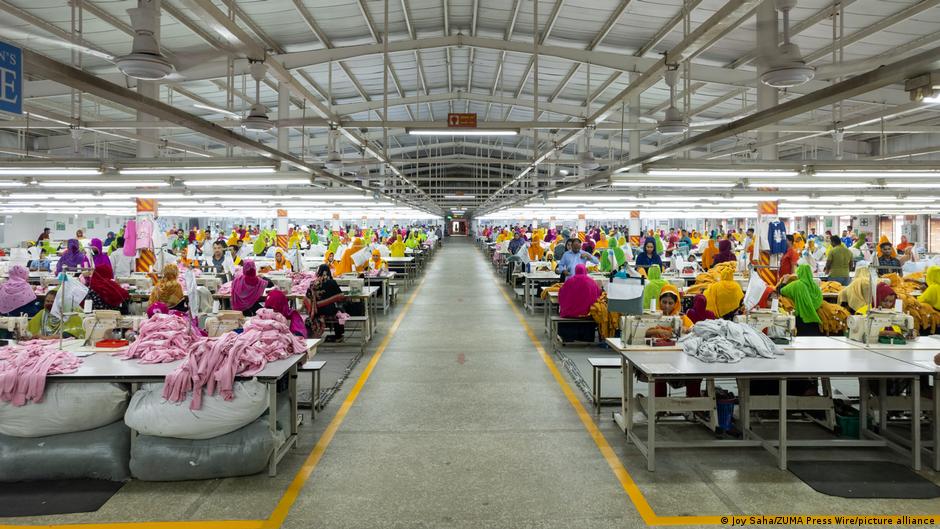
The US is Bangladesh’s biggest single destination for apparel exports, totaling $7.34 billion (€6.17 billion) in 2024.
But Bangladesh faces stiff competition from other Asian nations, such as India, which announced its own trade deal framework with the US last week, and Vietnam.
Worth $38.48 billion in 2024, Bangladesh’s readymade garment industry is its biggest export earner, accounting for more than 80% of total export earnings and employing about 4 million workers.
Bangladesh opens its markets to a range of US goods
The White House said Bangladesh had agreed to provide significant preferential market access for a range of US industrial and agricultural goods, including chemicals, medical devices, machinery and motor vehicles and parts, and US farm and food products.
Bangladesh will cut tariffs to zero on products such as poultry, pork, seafood, rice, corn and cereal grains when the agreement enters into force.
The tariffs on some other US products, such as almonds, will reduce to zero over five or 10 years.
Slight cut to tariff rate of Bangladeshi goods entering US
Most Bangladeshi products entering the US market will pay a flat rate of 19%, down 1% from the 20% rate set in August 2025. This is higher than the 18% announced in the US-India trade deal.
But Bangladeshi-made ingredients for pharmaceuticals and aircraft parts are allowed in duty-free.
Bangladesh will also ease some non-tariff barriers to trade with the US. These include accepting US vehicle safety and emissions standards and recognizing US Food and Drug Administration certifications.
Bangladesh was the first country in South Asia to complete a reciprocal trade deal with US, US Trade Representative Jamieson Greer said.
It “marks a meaningful step forward in opening markets, addressing trade barriers, and creating new opportunities for American exporters,” he said.
The South Asian nation exported around $8.4 billion worth of goods to the US in 2024, while its US imports amounted to $2.2 billion.
Bangladesh to boost purchases from US
The two countries also drew attention to upcoming deals.
Biman Bangladesh Airlines intends to purchase 14 Boeing aircraft, with options for additional purchases.
Bangladesh also will purchase an unspecified amount of US military equipment and limit purchases from certain countries.
The agreement followed nine months of negotiations that began in April 2025.
Yunus and his interim government have attracted some criticism for signing the deal only four days ahead of national elections on February 12.
Edited by: Karl Sexton