
This post was originally published on this site.
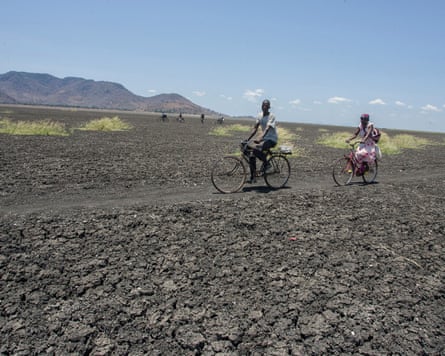
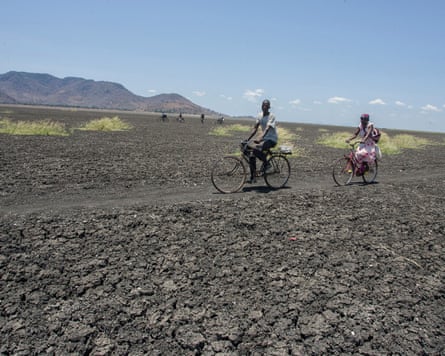
The UK plans to slash its aid to poor countries stricken by the climate crisis by more than a fifth, the Guardian has learned, despite promises to increase assistance and warnings from campaigners that the move will cost lives and livelihoods.
Ministers plan to cut climate finance for the developing world from £11.6bn over the past five years to £9bn in the next five. In real terms, accounting for inflation, this would represent a cut of about 40% in spending power since 2021, when the £11.6bn budget was agreed.
The slashing of climate aid, imposed by the Treasury, is planned despite recent warnings from the UK’s spy chiefs that the collapse of ecosystems overseas, such as the Amazon or the Congo, would inflict serious damage on the UK’s national security, including soaring food prices and the risk of war.
It also comes just a year after the UK and other rich countries promised to triple global climate finance to the poor world to $300bn a year by 2035, in recognition of the disasters countries are already experiencing. Although that deal did not specify how much must come from each, a reduction from the UK will make the total harder to reach.
Mohamed Adow, the director of the Power Shift Africa thinktank, said: “For vulnerable countries, UK climate finance isn’t an abstract budget line – it’s the difference between resilience and disaster. Cutting it at this moment will cost lives and livelihoods.”
Donald Trump is withdrawing the US from the Paris agreement and its parent treaty, the UN Framework Convention on Climate Change, and has scrapped the US’s climate finance targets. Adow said: “If the UK breaks its commitments, it gives cover for others to do the same, with devastating consequences for global climate action.”
Ministers are still arguing over the details of the new round of international climate finance, called ICF4 within the Foreign, Commonwealth and Development Office, the fourth such round of financing since 2010. The money comes from the overseas aid budget, which was slashed last year to 0.3% of gross national income (GNI, a measure similar to GDP). Until 2021, when it was cut to 0.5% by Boris Johnson, the UK devoted 0.7% of GDP to foreign aid.
The £9bn climate spending pledge is likely to equate to £2bn a year over the next three years, then £1.5bn a year in 2029-30 and 2030-31, which is beyond the current parliament. The Treasury is understood to be reluctant to commit cash beyond the current three-year plan for all government spending, but other departments, and several committees of MPs, have argued that a five-year period is necessary.
In addition to the headline cuts, the Guardian has learned that civil servants are scrambling to “rebadge” existing projects focused on issues such as education or health under the climate finance umbrella. Some officials claim that up to 30% of aid to the least developed countries can be counted as climate finance, even though the projects involved may have little or no influence on the climate crisis.
Yvette Cooper, the foreign secretary, did not attend the Cop30 summit in Brazil last November, and is said to have received her first major briefing on the climate only last December. While David Lammy, the previous foreign secretary, attended Cop meetings, made prominent speeches on climate issues and appointed both a climate and a nature envoy, Cooper is said to be much more interested in issues such as girls’ education.
Funding for nature conservation could also be slashed, and arguments are ongoing over the future of the ringfence around £3bn of the ICF budget for nature spending. Flagship projects such as the Blue Planet Fund, set up to help protect the oceans after public concern raised by Sir David Attenborough’s series, are likely to be kept in place but are set for a “haircut”, according to sources.
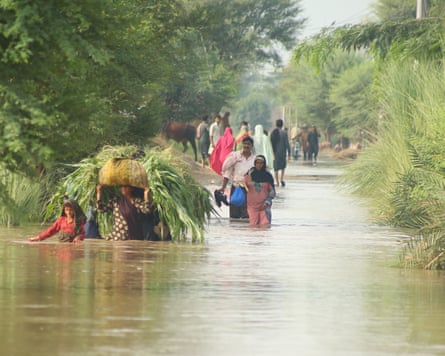
Developing country experts told the Guardian that slashing the climate budget would harm the UK’s national interest, as well as hurt the poor. Harjeet Singh, the cofounder of the Satat Sampada Climate Foundation, said: “The UK cannot claim to be a climate leader while retreating from its finance commitments. This move shreds the UK’s standing on the world stage, proving to the global south that British promises are hollow, and that its ambition is shrinking, not leading.”
Jonathan Hall, the managing director of Conservation International UK, said the recent report by the Joint Intelligence Committee showed that failure to help poor countries protect nature would affect inflation and national security in the UK. “If you care about food prices you should care about the potential collapse of the rainforests, if you care about global security you should care about the melting of the Himalayan glaciers,” he said, using examples cited in the report.
He said the ringfence on spending for nature must remain. “Protecting nature and our climate are not just nice things to do – they are essential to the social and economic stability and national security of the UK. That is why it is essential that the government commits at least one-third of our climate budget to programmes that protect nature for people.”
Several experts alsosaid that one of the biggest problems with UK climate finance was the lack of transparency over its spending, exacerbated since Brexit as the UK no longer abides by the EU’s reporting standards. “We could get to a situation where the label climate finance is meaningless, as we will have no idea what it is really spent on and where,” said one.
A government spokesperson said: “The UK remains committed to providing international climate finance, playing our part alongside other developed countries and climate finance providers to deliver our international commitments. The UK is on track to deliver £11.6bn in international climate finance by the end of this financial year. We are modernising our approach to ensure we focus on greater impact – ensuring every pound delivers for the UK taxpayer and the people we support.”