
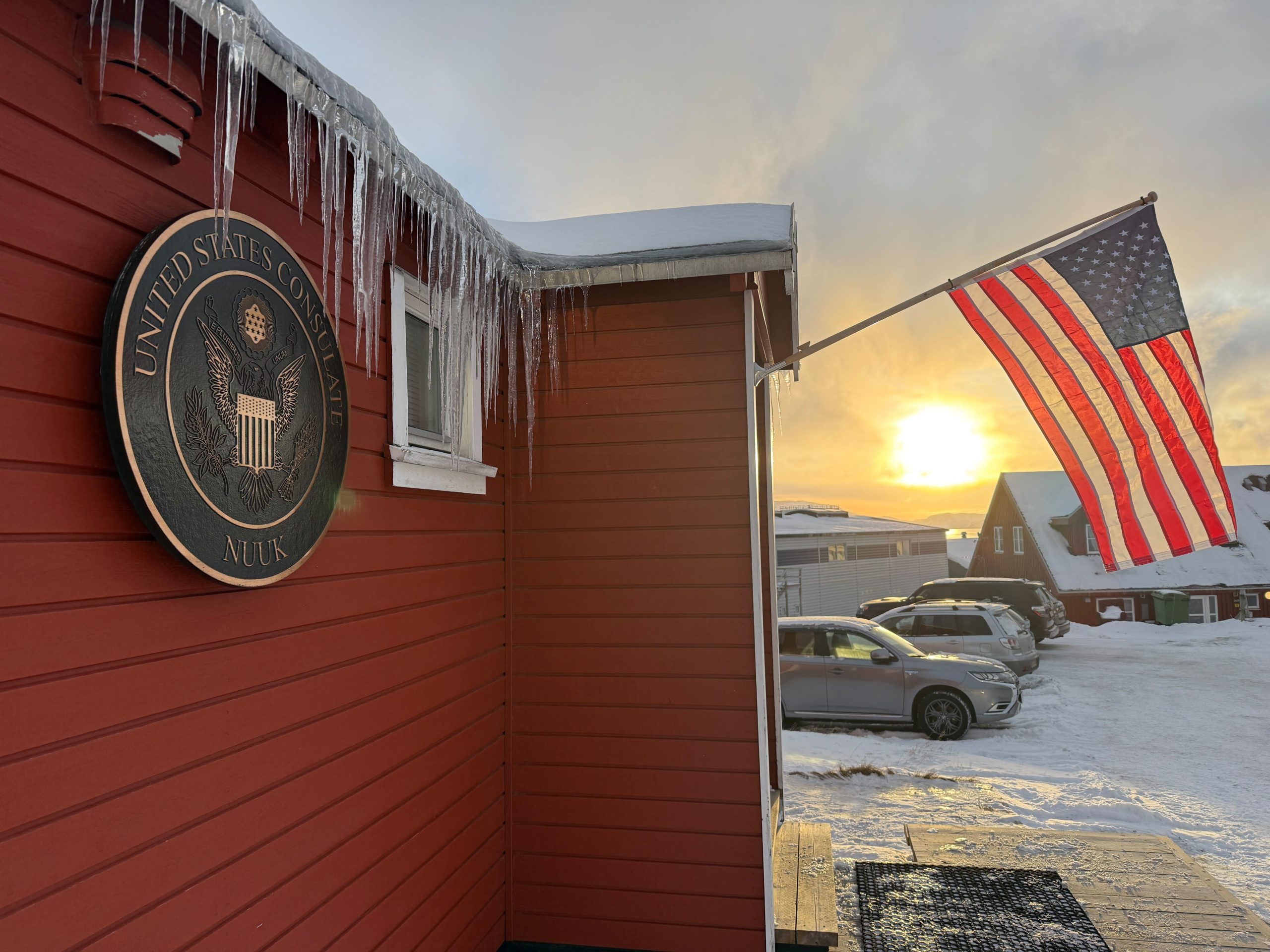
This post was originally published on this site.
- U.S. attempts to seize Greenland could hinder Washington and Brussels’ economic relationship, France’s finance minister has said.
- Roland Lescure told the Financial Times that Greenland’s sovereignty “shouldn’t be messed around [with].”
- Retaliatory economic pressures could result in “a sort of trade war,” according to one analyst.
A U.S. move to seize Greenland could damage trade ties with the European Union, France’s finance minister has warned, as one analyst told CNBC that tariffs or economic sanctions could lead to a “trade war.”
U.S. President Donald Trump has ramped up talk of annexing Greenland this month — and has not ruled out taking it by force. Talks between the U.S., Denmark and Greenland on Wednesday over the future of the world’s largest island ended without a diplomatic breakthrough.
French Finance Minister Roland Lescure told the Financial Times on Friday that economic ties between the U.S. and Europe could be damaged if Trump were to move to take the self-governing Danish territory.
“Greenland is a sovereign part of a sovereign country that is part of the EU. That shouldn’t be messed around [with],” he said.

When asked whether the EU would hit the U.S. with economic sanctions if it invaded Greenland, Lescure told FT: “I’m not going there. I mean, obviously, if that happened, we would be in a totally new world for sure, and we would have to adapt accordingly.”
His comments come as a Democratic-led U.S. delegation is expected to visit Copenhagen for talks with Danish MPs on Friday.
Trump has said the U.S. needs Greenland for national security reasons. Analysts told CNBC that he wants to keep rivals out of emerging trade routes and, potentially, mining of minerals that are critical in industries like defense.
“Significant” economic pressure in the form of tariffs or sanctions on Denmark by the U.S. “could likely mean a significant E.U. pushback, where the E.U. could respond in kind, leading to a sort of trade war with the U.S. as well as constant headline risks,” Dan Alamariu, chief geopolitical strategist at Alpine Macro, told CNBC over email.
“This would rattle markets,” he said. “It would also call into question NATO, though we don’t predict this happening, or NATO breaking apart. Domestic political and markets pushback would likely moderate any such pushes by the Trump administration.”
Meanwhile, European troops arrived in Greenland late Thursday for a collaborative military exercise.
This shows the U.S. that “this is primarily an allied effort,” Maria Martisiute, policy analyst at the European Policy Centre, told CNBC’s “Squawk Box Europe” on Friday. “If we want to reinforce veterans and defense in Greenland or the wider Arctic, it’s not up to the U.S. It can be done via allied efforts.”
The exercise, combined with European leaders outlining their non-negotiable red lines, can “send a powerful message,” she said, adding: “It remains to be seen how the U.S. will proceed in that regard.”
The European Commission, the EU’s executive arm, proposed to double its spending on Greenland in its latest draft budget.
“What is clear is that Greenland can count on us — politically, economically, and financially and when it comes to its security,” European Commission President Ursula von der Leyen said on Thursday.