
This post was originally published on this site.
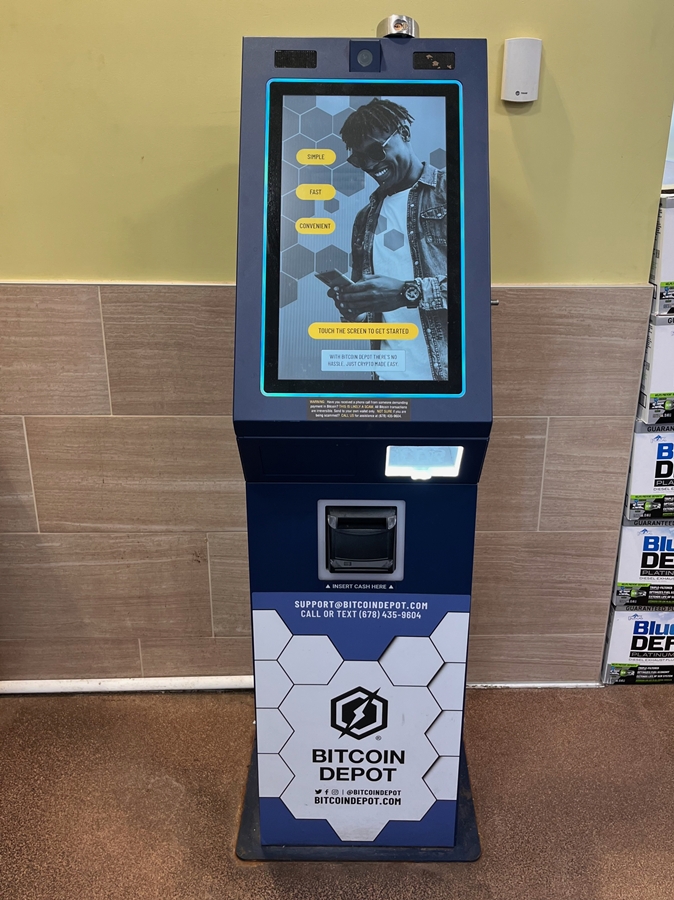
EASTHAM — Next to the freezers filled with bags of ice in the corner of the Cumberland Farms here, there are two electronic banking machines. One is a Citizens Bank ATM, the kind of electronic teller that has become ubiquitous since first appearing in the U.S. in 1969. The other looks much like a standard ATM but is, in fact, something entirely different: Bitcoin Depot’s cryptocurrency ATM.
Cryptocurrency ATMs allow customers to deposit or withdraw cash from their cryptocurrency wallets, which may include popular coins like Bitcoin, Ethereum, or the Trump family’s coins, $Trump and $WLFI.
Crypto ATMs have recently been the subject of enhanced scrutiny from the American Association of Retired Persons (AARP) and law enforcement officials across the country as scammers have directed their victims to send them money through these machines, which can facilitate irreversible transactions of thousands of dollars.
“It’s not uncommon for people to lose $10,000 or $20,000 in this machine,” said Dennis Hohengasser, president of AARP Massachusetts. He testified on Beacon Hill in October, advocating for a law that would put limits on daily transactions on crypto ATMs. According to FBI data, Americans lost over $9 billion to cryptocurrency scams in 2024.
There are now thousands of cryptocurrencies, but they all work on the same basic premise. People buy digital tokens. Every purchase is recorded on an open-source, public ledger called the blockchain. The value of each currency is decided by the market for it. Currently, one Bitcoin, the most well known and most valuable cryptocurrency, is worth more than $88,000.
Most of the time, those buying crypto do so in online exchanges, but in recent years several companies have created an in-person buying option with crypto ATMs.
In 2024, there were 29 crypto ATMs in 12 towns across the Cape and Islands, according to District Attorney Robert Galibois. The Independent found two on the Outer Cape, one at the Stop & Shop in Provincetown and one at the Eastham Cumberland Farms.
Galibois said that his office has seen “far too many” cases of fraud involving crypto ATMs but did not give a specific number.
“Heed all of the warnings” about potential fraud, said Galibois, who has been sounding the alarm about scams that target the elderly. In front of a crowd of seniors in Chatham in October, Galibois said such scams were “rampant.”
Eastham Police Det. Andi Murphy said that she has not heard any reports of scams at the crypto ATM in Eastham but said that some Eastham residents have called the department to say that they were asked to go to a crypto ATM in Harwich.
“A lot of people get sent to that one,” said Murphy. “The number of people who use them for a legitimate purpose is few and far between.”
In September, Washington, D.C. Attorney General Brian Schwalb sued Athena Bitcoin ATM, alleging that 93 percent of deposits to its machines were from scam victims.
“We firmly believe the crypto ATMs are used primarily for fraudsters to get money,” said AARP’s Hohengasser. He said scammers have started to favor crypto ATMs in recent years instead of gift cards, an earlier scammers’ favorite, and that it makes little sense for these machines to be used by those trying to buy crypto for legitimate reasons.
“If you want to buy crypto, you do it online because these machines charge between 13 and 18 percent,” said Hohengasser. As for the money deposited, he said, “It’s untraceable once it’s in there. There’s no way it can get out.”
Crypto ATM companies typically pay grocery stores, gas stations, and liquor stores around $300 per month to display their machines, according to Hohengasser.
At least 11 states have passed laws regulating crypto ATMs, according to Stateline. The Mass. legislature has not yet acted on crypto ATMs, but at least four municipalities in the state have passed ordinances banning the machines, Hohengasser said.
AARP state director Jennifer Benson told the Independent that the bill that would limit daily crypto ATM transactions is in committee. “The longer the legislation sits, the more fraudulent activity can occur,” she said.
There are now over 600 crypto ATMs in Massachusetts, a 100-percent increase from when the Mass. AARP began researching them in late 2023, according to Benson.
On Dec. 20, an Independent reporter visited the Bitcoin Depot ATM at the Eastham Cumberland Farms. It offered options for buying crypto for between $20 and $25,000.
Over a two-hour period, from roughly 11:30 a.m. to 1:30 p.m., customers looked at the reporter with sideways glances, trying to figure out if he was in line for the bathroom located around the corner or confused about where the checkout line began. None of them glanced at the crypto ATM.
Several employees said that they had rarely if ever seen anyone at the machine. They would not give their names, citing Cumberland Farms’s policy of not allowing employees to speak to the press.
“I only hear bad things,” said one. “But since they’re not trying to remove it, someone’s got to be using it.”
A representative for EG America, the parent company of Cumberland Farms, declined to answer the Independent’s questions about when and why Cumberland Farms decided to start hosting crypto ATMs.
Bitcoin Depot, which is now the largest provider of crypto ATMs in the country, also did not respond to a request for information. Its machine, however, does have several pop-up warnings. One reads, in part, “Do not buy bitcoin for IRS payments if someone says you have been hacked or investigated or if someone is trying to access your computer or bank account.”
“Losses due to fraudulent or accidental transactions may not be recoverable and transactions in virtual currency are irreversible,” the warning concludes.
The Provincetown Stop & Shop also has a cryptocurrency ATM, but it’s more inconspicuous than the Bitcoin Depot one as it’s part of the Coinstar change-counting machine, which is primarily used to convert coins to paper money or gift cards.
Stop & Shop referred questions about this machine to Coinstar. No one from the company responded to a request for information for this article.
Coinstar first added crypto dispensing to its machines after teaming up with the start-up Coinme in 2019. In 2024, Coinstar added its own cryptocurrency exchange, according to a Dec. 3 report in the Seattle Times.
According to that same report, the Washington state Dept. of Financial Institutions on Nov. 25 ordered Coinme to stop sales in Washington, where it was founded, and to refund customers over $8 million.