
This post was originally published on this site.
U.S. Trade Representative Jamieson Greer said President Donald Trump could decide to withdraw from the U.S.-Mexico-Canada Agreement (USMCA) next year, despite the pact encouraging member countries to remain until the next decade.
“The president’s view is he only wants deals that are a good deal. The reason why we built a review period into USMCA was in case we needed to revise it, review it or exit it,” Greer said in an interview with Politico.
Newsweek has contacted the Office of the United States Trade Representative for comment via email on Thursday.
Why It Matters
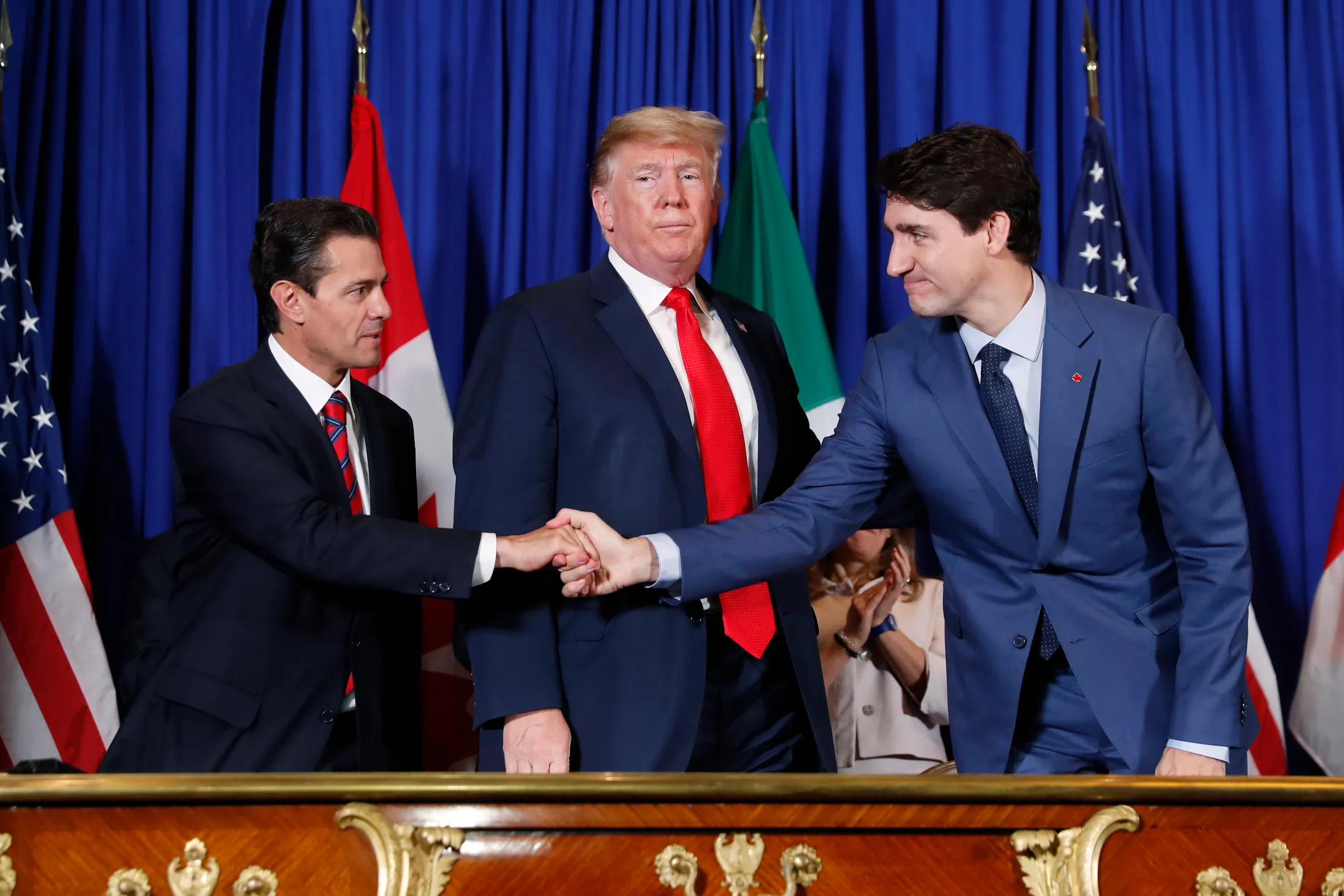
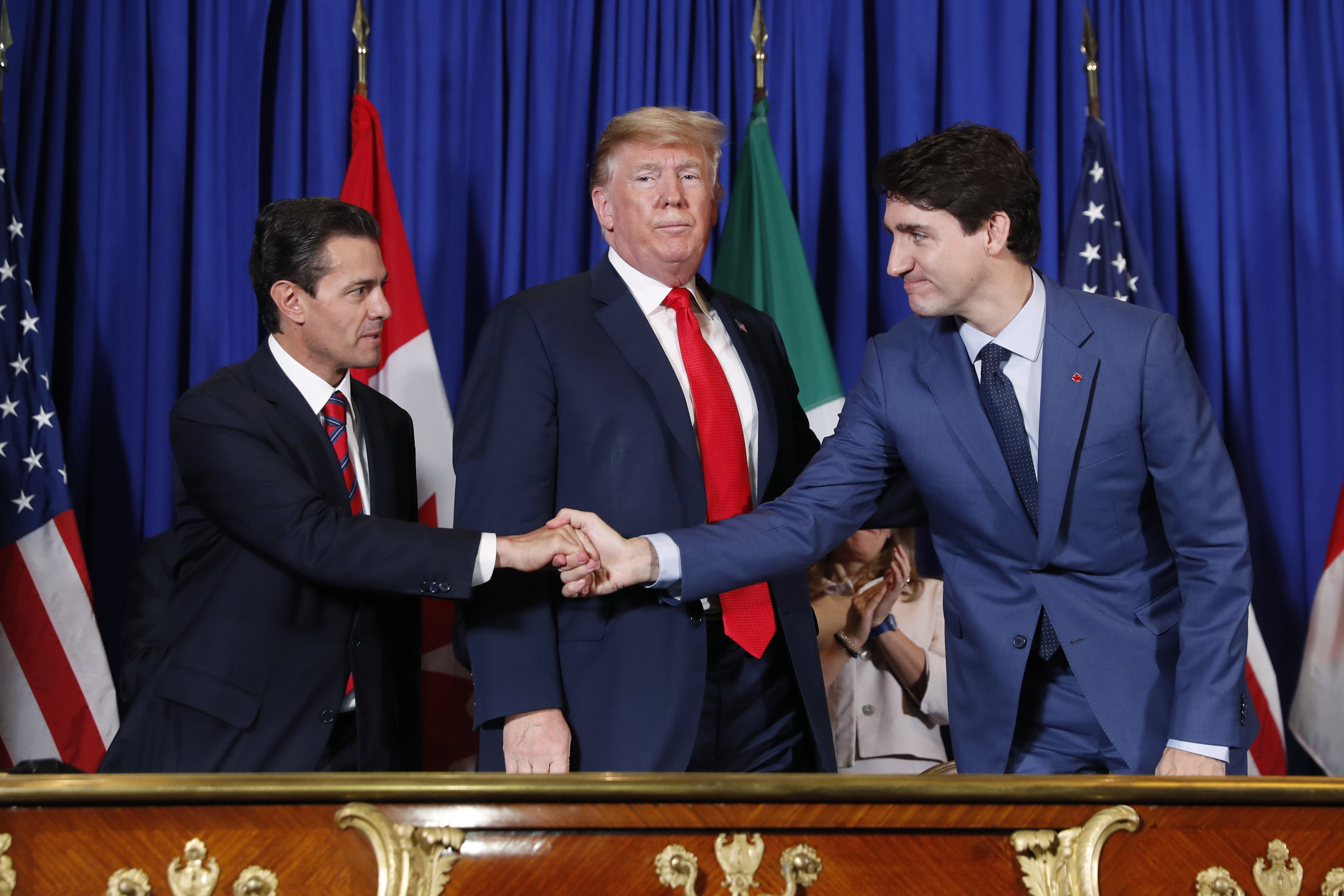
During Trump’s first term, the United States, Mexico and Canada replaced the North American Free Trade Agreement with USMCA. The deal binds the three North American countries in a trade framework set to terminate after 16 years, with a mandatory review in 2026 that could extend the agreement beyond its current 2036 expiration date.
Trade and tariffs have been a centerpiece of Trump’s second-term agenda, including levying heavy ones on neighboring Mexico and Canada. In January, the administration said it would commence a review process to “assess the impact of the USMCA on American workers, farmers, ranchers, service providers, and other businesses.”
USMCA governs almost $2 trillion in annual trade.
What To Know
Greer told Politico that the president could decide to withdraw from USMCA next year, saying, “I mean, that’s always a scenario.”
Article 34.6 of the agreement outlines requirements for party withdrawal. To do so, a party must provide written notice to all other parties six months prior.
The following Article, 34.7, outlines the review and extension policy of the agreement, noting that the deal expires 16 years after going into effect, unless all parties agree upon another 16-year term.
The same provision notes that six years after going into effect, the “Commission shall meet to conduct a ‘joint review’ of the operation of this Agreement, review any recommendations for action submitted by a Party, and decide on any appropriate actions. Each Party may provide recommendations for the Commission to take action at least one month before the Commission’s joint review meeting takes place.”
Greer nodded at the differences between the U.S.-Mexico and U.S.-Canada relationships, telling Politico: “Our relationship with the Canadian economy is totally different than our relationship with the Mexican economy. I mean, the labor situation is different. The stuff that’s being made is different. The export and import profile is different. It actually doesn’t make a ton of economic sense why we would marry those three together.”
He added: “I think it makes sense to talk to them separately about that agreement. A lot of the underlying rules, I think are helpful, and our exporters benefit from them, but we have to make sure that we are getting our benefit, the benefit of our bargain on USMCA.”
What People Are Saying
Assistant U.S. Trade Representative Daniel Watson said during Wednesday’s hearing on the U.S.’s possible withdrawal, per Politico, the three countries “face a very important decision [in July 2026] whether to extend the USMCA for another 16-year term.”
Business Roundtable, the Business Council of Canada and the Mexican Business Roundtable said in a joint statement on Thursday: “North American trade and integrated manufacturing networks have provided significant economic benefits in the United States, Mexico and Canada for decades. Since USMCA took effect, cross‑border economic activity has increased, bolstering growth, job creation and competitiveness in all three countries. As the first joint review approaches, we urge the Parties to work expeditiously to extend and strengthen USMCA. Preserving this vital trilateral partnership, enhancing cooperation on economic security and restoring duty-free treatment for all USMCA-compliant goods would bolster the long-term prosperity of businesses and workers in the United States, Mexico and Canada.”
What Happens Next
The Office of the U.S. Trade Representative is holding three days of public hearings from December 3 to 5 to collect input from more than 100 stakeholders as it prepares for USMCA’s mandatory joint review in 2026.