
This post was originally published on this site.

If you think you’re having a rough week, spare a thought for South Korean President Lee Jae Myung. His economy is the latest reminder of the dangers of making a deal with Donald Trump.
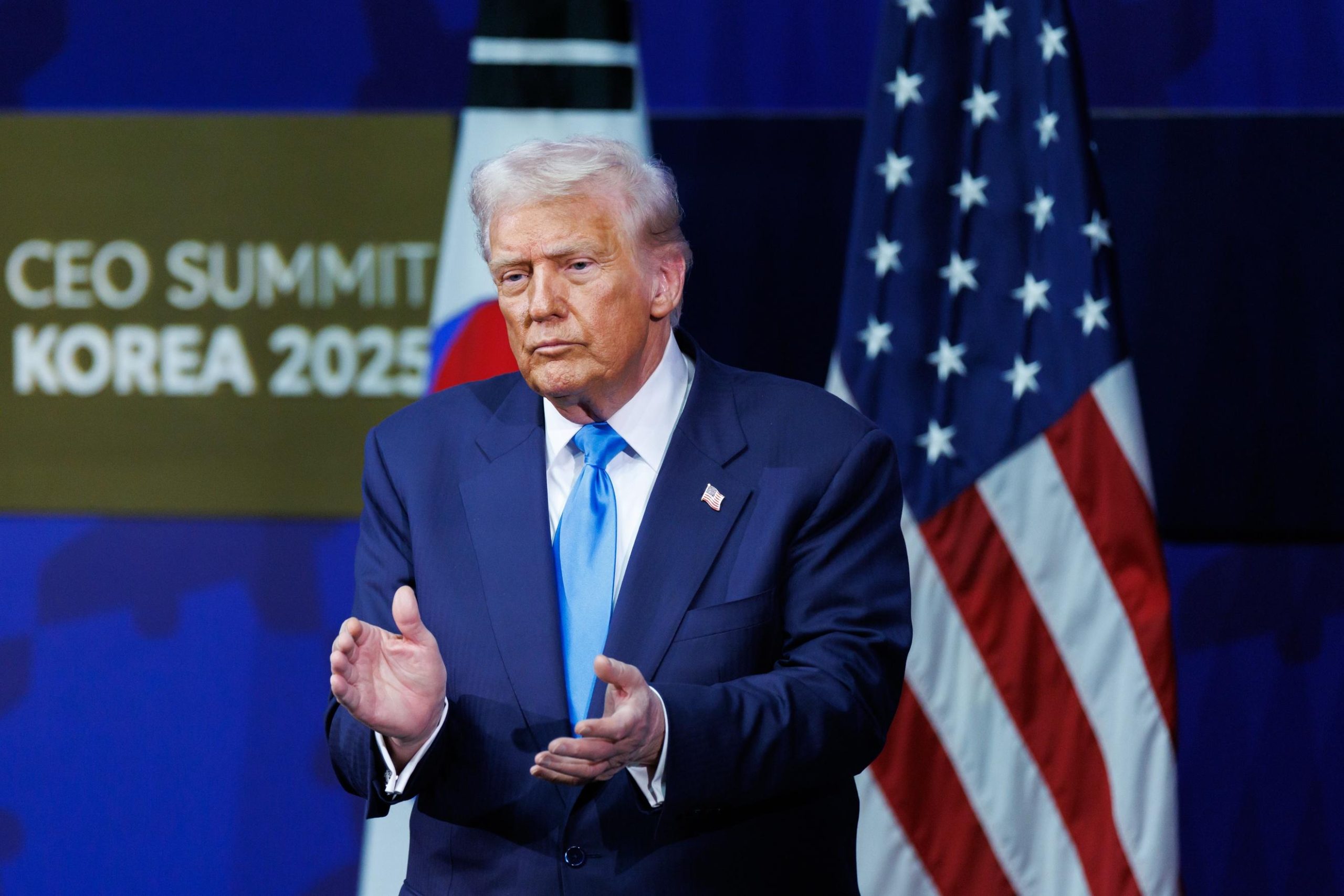
In August, the U.S. president and Seoul agreed to a 15% tariff rate. Two months later, in October, Trump visited South Korea, where he and Lee affirmed the tariff arrangement.
This week, an impatient Trump suddenly decided to up the tariff to 25%. The reason, ostensibly, is that South Korea’s parliament isn’t acting fast enough to enact the agreement.
To be fair, South Korea is barely a year out from its worst political crisis in generations. On December 3, 2024, then-President Yoon Suk Yeol declared martial law for bizarre reasons that 51 million Koreans are still struggling to understand.
Since then, Asia’s No. 4 economy has been busy impeaching and removing Yoon and then holding the national election that Lee won. Not a lot of free time to take up the specifics of the tariff deal that includes a $350 billion “signing bonus.” You’d think doling out the equivalent of 20% of gross domestic product might be worth some parliamentary debate.
As the South Korean political system dealt with the trauma of late 2024 and the multi-pronged fallout that followed, it faced another crisis: Trump’s trade war.
Trump doesn’t seem to realize the damage his import taxes — and the drip, drip, drip of bad news surrounding them — have done to export-reliant South Korea. Sure, most of the trade war has been aimed at China. But South Korea’s $1.86 trillion economy spent the last year in the middle of the collateral damage zone. And it’s still trying to catch up.
So, suddenly pushing South Korea, a top American ally, into the 25% zone must have Lee wondering what Trump might have in store for America’s adversaries if this is how he treats friends.
Yet the real message Trump may be sending here is to Chinese leader Xi Jinping. And it reads: avoid agreeing to the “grand bargain” trade war that Trump so desperately seeks.
So far, Xi has rather skillfully avoided full-on negotiations with Team Trump. In late October, Team Xi even secured a one-year truce. It means the earliest Trump could host a celebratory trade deal event at the White House is in early 2027.
That’s an even bigger “if” as Trump proves he’s anything but a man of his word. South Korea is just the latest. In the last few weeks, Trump hiked tariffs on eight European countries because they didn’t fall in line with plans to acquire Greenland. They include the United Kingdom, which was the first major economy to give Trump a trade deal win.
Now, of course, Japan lives in daily fear that Trump will hike its tariff to 25%. Trump might lash out at Prime Minister Sanae Takaichi for not shipping the $550 billion he demanded in return for a 25% levy.
Yet China is the real prize. Xi’s economy is now cast in the role Japan played in Trump’s worldview back in the 1980s. But it’s also the economic “whale” Trump needs to make the trade war seem worth it to the MAGA faithful. If you’re Xi’s Communist Party, why would you bother?
Even if China gave Trump the splashy deal of his dreams, he could always be just one bad mood away from new tariffs. Canada, after all, is looking down the barrel at a 100% tariff for daring to increase trade ties with China.
Xi knows, too, that Trump needs a deal — China doesn’t. Odds are very good that, if push came to shove, Xi could offer Trump a trade truce that gives the U.S. very little, and Trump would move on. Yet as Trump’s Korea drama suggests, sitting at a negotiating table with Trump World might be the last place Team Xi wants to be.