
This post was originally published on this site.

- Volatility will remain a feature of the cryptocurrency market, making appropriate portfolio allocation sizing a key decision for investors.
- The introduction of many ETFs covering leading cryptos like bitcoin and ether, as well as emerging digital currencies and linked platforms, such as solana, offers new ways to diversify exposure and manage risk.
- Classic portfolio concepts, such as index-based investing, dollar cost averaging, and portfolio rebalancing should all apply to crypto, but are often neglected by investors.
Volatility is nothing new for crypto investors, and 2025 has been a wild ride, with bitcoin climbing above $125,000 in October before experiencing several sharp drops — peak to trough, a decline of over $40,000 from its record high.
“Crypto is a volatile asset class, and in some sense, there is no avoiding that volatility,” said Zach Pandl, head of research at Grayscale Investments, a digital currency asset management company which runs one of the largest bitcoin ETFs, the Grayscale Bitcoin Trust (GBTC). “It’s an alternative asset class, and we are seeking its particular return characteristics,” he said.
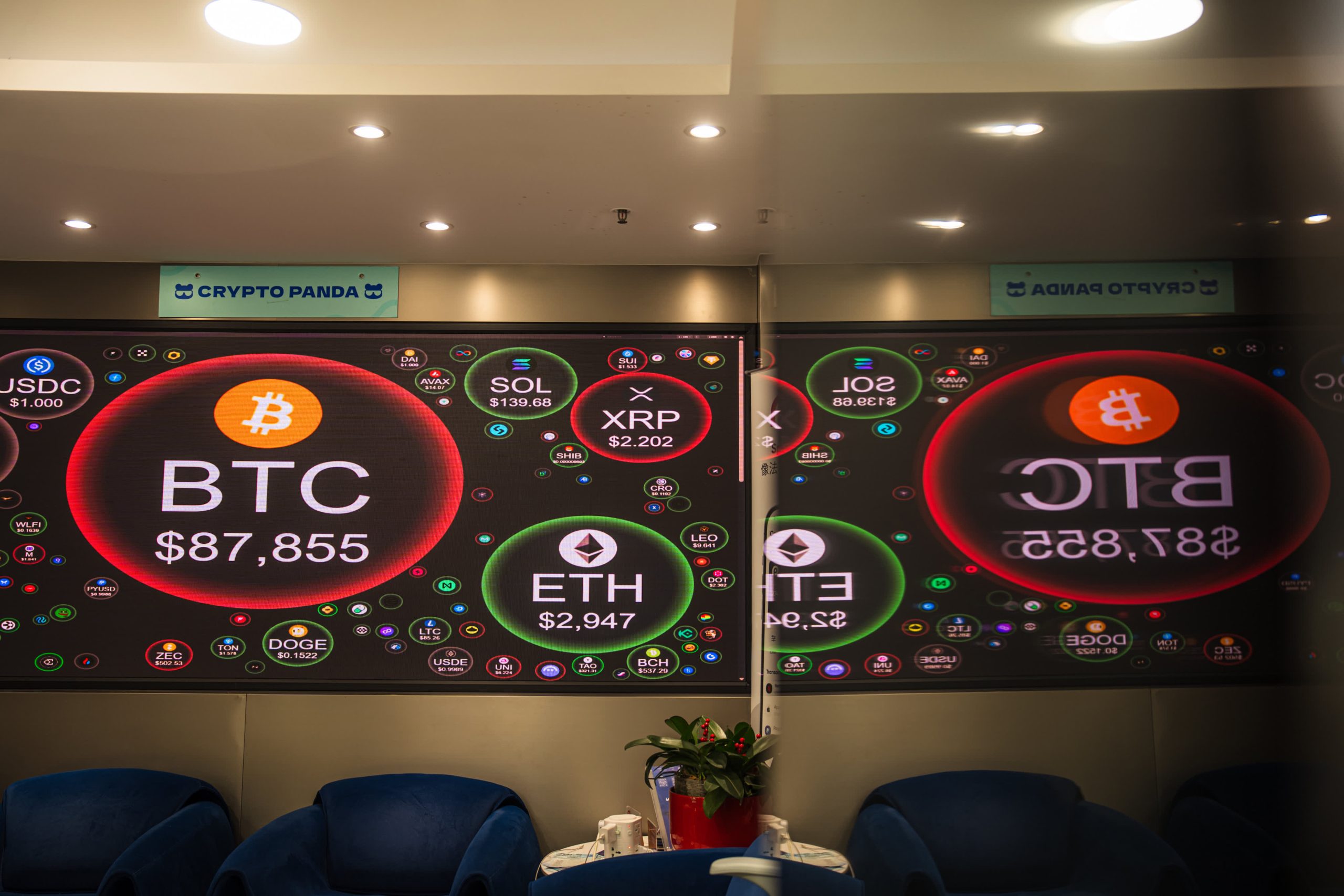
Bitcoin is now trading near $88,000, and whether the next move is up or down, investors in the crypto space need to have what it takes to stomach the volatility. There may be some help — in the form of new market ideas and classic diversification concepts — to cushion portfolios from at least some of crypto’s risk-on nature. These are some of the ideas to consider.
Identify your appropriate portfolio sizing.
The first step is to make sure your crypto position sizing within your portfolio is appropriate. Some financial advisors are going out on a limb and telling investors to hold as much as 40% in crypto. But for most investors, there is a strong case to be made for crypto remaining only a modest part of a broadly diversified portfolio. This can vary by an individual’s age, income, risk profile and other factors, but a good rule of thumb is to allocate no more than 5% of a well-balanced portfolio to crypto. Even so, many investors opt for a smaller allocation, often in the 1% to 3% range.
Consider dialing down the risk level in your other holdings.
David Siemer, co-founder and chief executive of Wave Digital Assets, an investment advisory firm specializing in digital asset management, emphasized the importance of ensuring the rest of an investor’s portfolio is aligned to help maintain volatility at a comfortable level. That may mean a less heavy tilt to the market’s leading growth stocks across the broader portfolio.
“Because [crypto’s] going to give you either rocket fuel or the opposite, you probably want to be a little heavier on value stocks or bonds, for example,” he said.
Diversify within the crypto asset class.
Bitcoin is the largest digital asset by market capitalization, but there are many others with valuable use cases, Pandl said. Adding exposure within a crypto portfolio to ether and the solana cryptocurrency, for instance, “can be a way to make sure you’re capturing all of these trends in your portfolio,” he said. This approach may improve risk-adjusted returns in the same way diversification improves risk-adjusted returns in other asset classes, Pandl added.
Still, investors need to recognize that other types of crypto are highly correlated to bitcoin, so there’s only so much diversification within crypto itself that’s possible, Siemer said.
Other advisors caution that many of the non-bitcoin digital assets becoming popular still trade more like tech stocks than stores of value. It is too soon to know how their trading will evolve, investment advisor Nate Geraci, president of NovaDius Wealth Management, told CNBC’s “ETF Edge” earlier this year, and they may remain more closely hitched to the risk-on market trade than bitcoin itself does over time.
Using ether as an example, Geraci said, “I view it more as a tech play than bitcoin, which many view as digital gold. It takes time for advisors and investors to get comfortable with where it fits in a diversified portfolio. It’s very early quite frankly,” he added.
Buy a range of ETFs, or buy into the concept of an index-based crypto fund.
The crypto ETF landscape has significantly expanded since the Securities and Exchange Commission approved 11 spot bitcoin exchange-traded funds in January 2024. Bitcoin and ether spot ETFs have garnered billions in institutional inflows, and asset managers are actively filing for ETFs covering solana, XRP, litecoin, cardano and more, with the Fidelity Ethereum Fund (FETH) and the Solana ETF (SOLZ) as examples.
Investors should expect many more ETFs to launch in the next year, which will provide additional options for consumers and opportunities for diversification, Pandl said.
Investors can also now take an index-based approach within ETFs, which is a convenient way to gain diversification in crypto, while managing volatility. Grayscale has an index fund, the Grayscale CoinDesk Crypto 5 ETF (GDLC) that became available as an ETF in September and holds a basket of the top five crypto assets weighted by market capitalization. Seventy-five percent of the assets were bitcoin as of Dec. 8, but that automatically rebalances based on market capitalization, Pandl said.
The recently launched Bitwise 10 Crypto Index ETF (BITW) holds 10 crypto assets including bitcoin, ether, XRP, solana, chainlink and litecoin. It is the first ETF to also include exposure to cardano, avalanche, sui and polkadot. But as with the Grayscale crypto index fund, it is important for investors to understand that holdings remain heavily weighted to the more established cryptocurrencies. BITW allocates 90% of its holdings to bitcoin and ether.
Use a financial advisor who is crypto friendly.
One of the ways to encourage diversification — and shield against big portfolio swings — is to work with a financial advisor who can help you craft an appropriately diversified portfolio that includes crypto. Not all advisors incorporate crypto into their model portfolios, but that’s starting to change as digital assets gain traction.
Thryve Wealth Management, for example, uses bitcoin as a hedge against the U.S. dollar. Randol W. Curtis, chief investment officer, said if inflation continues at 2.5% to 3%, that’s a significant erosion of the U.S. dollar’s purchasing power. That’s where bitcoin comes in. “Every bitcoin will be worth more and more dollars every year that the dollar inflates away,” Curtis said. The firm is also researching the ethereum and solana platforms, used primarily for stablecoins.
Ric Edelman, who runs the Digital Assets Council of Financial Advisors, told CNBC earlier this year that crypto’s mainstream adoption phase is occurring at a time when investors need to hold equities later in life than ever before to achieve retirement income security, and bonds are not able to serve in the same role as they did throughout the 20th century. As the asset allocation model shifts away from the classic 60% stock/40% bond approach, crypto needs to play a bigger role in investing, he says.
There are now crypto ETFs offering an income component to perform some of the functions that bonds once did within a portfolio, including Simplify Bitcoin Strategy PLUS Income ETF (MAXI) and a planned bitcoin income fund from the world’s largest asset manager, BlackRock.
Dollar cost average and rebalance in the crypto market.
Another way to reduce crypto’s volatility is dollar cost averaging, which involves systematic weekly or monthly purchases of crypto. That way, whether it’s going up or going down, you’re buying in at various prices, which will reduce the volatility, said Steve Larsen, president of Columbia Advisory Group and co-founder of the Certified Digital Asset Advisor designation.
Larsen also advises regular crypto rebalancing. He gives the hypothetical example of an investor who holds 5% of his portfolio in bitcoin, which rises to 7% based on market appreciation. The investor should then sell 2% of his bitcoin holdings and use the proceeds to buy other assets. If bitcoin becomes too small a percentage of the portfolio, the investor can buy more, Larsen said.
Advisors have professional tools to automatically rebalance portfolios. Additionally, most major retail brokerages offer clients rebalancing and trading tools as part of their online account tools. The problem is, many self-directed investors don’t take the time to do this.
“The reason people get stunned with bitcoin is they don’t treat it like anything else,” said Ivory Johnson, founder of Delancey Wealth Management. If you had tech stocks and you never rebalanced when tech stocks tanked, you’d be kicking yourself. Bitcoin is the same thing. “It goes up, and people think it’s going to keep going to the sky. Treat crypto like any other asset class,” he said.
Johnson points to previous market cycles where investors made risky bets based on unbridled optimism. “There are people who lost their entire savings because they thought there was no way General Motors could go bankrupt.” In 2009, it was one of the largest corporate bankruptcies in U.S. history.
Consider downside protection ETF products.
Some investors who want to dabble in crypto, but who prefer downside protection, might consider a principal protected note, a financial instrument that returns the principal amount invested at maturity regardless of the underlying asset’s price movement.
Multiple companies offer these types of products. Calamos Investments, for example, launched the first “downside protection” crypto ETF in January, the Calamos Bitcoin Structured Alt Protection ETF (CBOJ). The fund company offers multiple ETFs using this strategic approach with different levels of downside protection — 100%, 90% or 80%.
Of course, there are management fees associated with ETFs, and even higher fees on more sophisticated products. The iShares Bitcoin Trust (IBIT) has an annual management fee of 0.25%, versus 0.69% on the Calamos bitcoin ETF. But some investors prefer to use professional managers versus investing on their own directly, Siemer said. “For some people, doing it in a simple product that’s easy to buy has value,” he added.

Sign up for our weekly newsletter that goes beyond the livestream, offering a closer look at the trends and figures shaping the ETF market.