
This post was originally published on this site.
It’s looking like the Toronto Maple Leafs may not get Chris Tanev back this season.
And injuries on the back end have been a problem all year, with Jake McCabe, Brandon Carlo and Morgan Rielly also missing time at one point or another.
A trade before March 6 feels as necessary as ever for a team that’s swung deals for defenders at the trade deadline just about every year: Carlo last spring; Joel Edmundson and Ilya Lyubushkin 2.0 in 2024; McCabe, Luke Schenn and Erik Gustafsson in 2023; and Mark Giordano and Lyubushkin 1.0 in 2022.
Advertisement
This time around, general manager Brad Treliving will ideally add a right-shooting defenceman to help replace Tanev if he can’t return from a groin injury.
Here, we lay out three possible swings for that player: one big (the triple), one medium (the double) and one on the smaller side (the single).
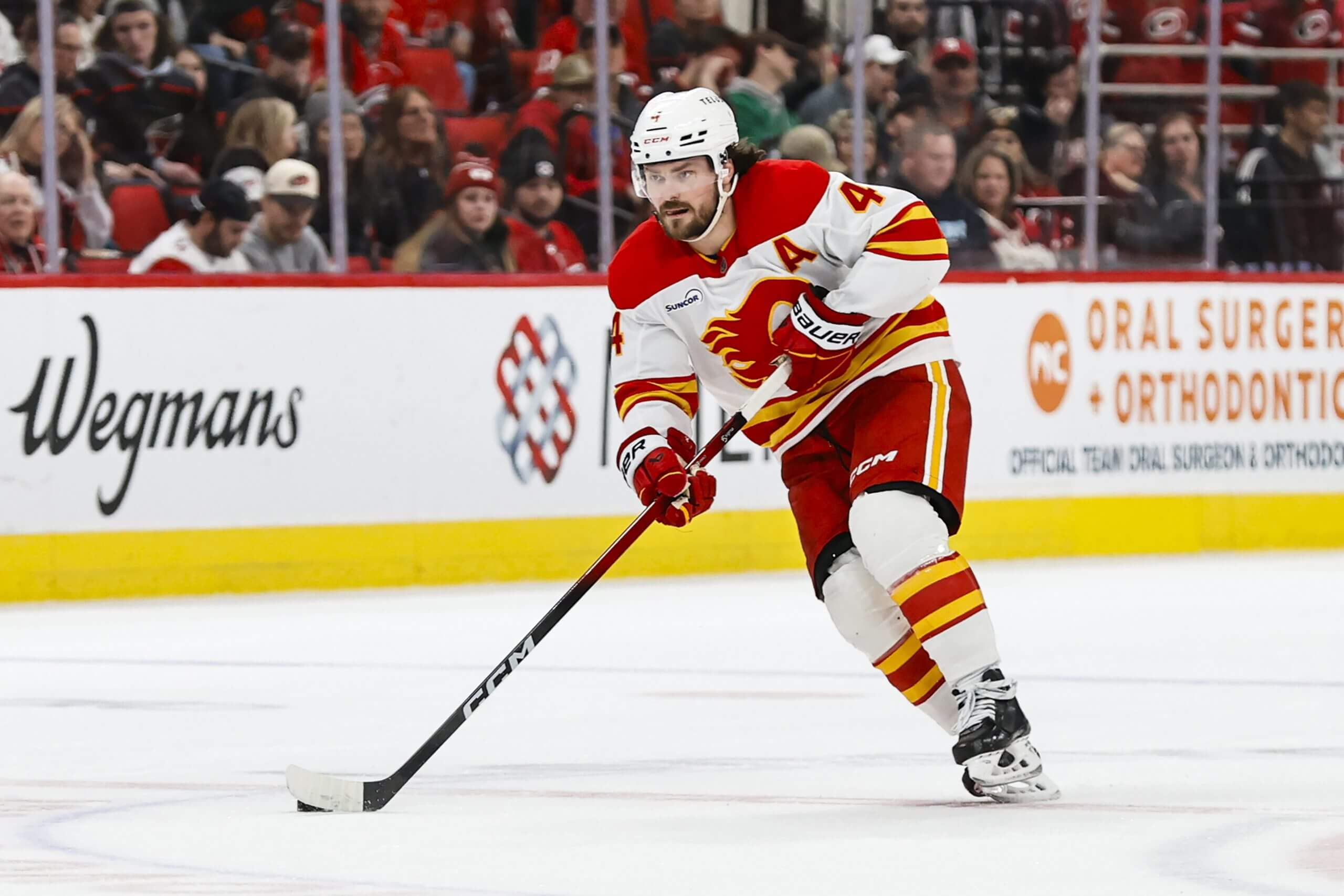
The triple: Rasmus Andersson
Andersson makes a lot of sense for the Leafs in a vacuum.
He would be the closest thing to a No. 1 defenceman the team would have — a strong puck-mover, offensive contributor and defender — if not quite at the level of a prototypical No. 1 defenceman.
Head coach Craig Berube could play the defensively stout Andersson next to Jake McCabe on a top pairing that could tangle with top competition, both at five-on-five and on the penalty kill. One of the league’s top goal scorers on the back end, Andersson would give the Leafs a shot threat from back there that they don’t otherwise have (Oliver Ekman-Larsson’s output notwithstanding).
He would likely replace Rielly at the point of the No. 1 power-play unit.
Andersson would knock everyone down a rung on the depth chart and into more suitable terrain. Rielly and Ekman-Larsson, in particular, wouldn’t have to play quite as many (or as difficult) minutes.
The blue line wouldn’t be spectacular with Andersson on board, but solid from top to bottom:
McCabe — Andersson
Rielly — Carlo
Ekman-Larsson — Stecher
Treliving was the Calgary Flames GM when Andersson was drafted in 2015 and knows him well from Andersson’s rise up the ranks.
Fit and connection aside, it’s highly improbable the Leafs can swing a deal for the player ranked third on Chris Johnston’s trade board.
For one thing, the Leafs have a deficiency of trade assets, even the best of which may not interest the Flames.
Does putting Easton Cowan and Ben Danford together do enough for Calgary? Do the Leafs need to add their second-round pick in 2027 to sweeten the deal? And is it even a good idea for an older team bereft of young talent to part with all of its best futures for Andersson, who will be 30 early next season and crucially needs a new contract?
The answer is almost certainly not.
Rasmus Andersson would be an easy fit on the ice for the Leafs. (Jaylynn Nash / Getty Images)
Any team that trades for Andersson will do so with the intention of paying his next deal, assuming, of course, that Andersson wants to sign there. That could be a key factor in all this and one that might work in the Leafs’ favour, if Andersson is indeed willing to stick around in Toronto for the long haul.
What does his next contract look like?
Advertisement
Is it along the lines of the five-year commitment, with a $6 million cap hit, that Mike Matheson recently got from Montreal? Or something larger, such as the seven-year deal, with a $7 million cap hit, that Jake Walman landed from Edmonton?
Noah Hanifin, Andersson’s former teammate in Calgary, got an eight-year deal with a $7.35 million cap hit from Vegas last spring.
Andersson is better than all of them, so the ticket figures to be larger, especially for a team without the tax appeal of Vegas. It could take a cap hit of $8 million to $9 million on a long-term deal for a team such as Toronto.
Which is dicey for the Leafs for two reasons:
1. Andersson will begin the deal at the start of his 30s. He isn’t the biggest guy or the fleetest of foot, and the Leafs have witnessed how quickly the bottom can drop out on aging defencemen (see: TJ Brodie, Giordano).
2. The team appears to be nearing the end of its contention window and already has a bunch of commitments to defencemen over 30: McCabe (33 next fall), Rielly (32 in March) and Tanev (37 in December) all have another four years left on their contracts after this one. Ekman-Larsson will be 35 this summer and has another two years to go.
Even Troy Stecher, a pending free agent whom the Leafs could conceivably re-sign, will be 32 in April.
Is this kind of defence worth locking into for the long term?
Rielly — Tanev
McCabe — Andersson
Ekman-Larsson – Stecher
The Leafs might love to add Andersson to their group, but the probability of them doing so doesn’t feel high.
The double: Justin Faulk
Faulk is older than Andersson and not on his level; thus, he wouldn’t bring the same all-around impact to the Leafs. However, there’s no long-term leash here either as Faulk’s current deal expires after next season.
The Blues will still want to cash in on Faulk, though. He is leading St. Louis in goals and averaging 22:36 a night.
So, what’s the cost?
Advertisement
The Blues might insist on a first-round pick of some kind, given that Carlo, another right-shooting defender with a year left on his contract, fetched the Boston Bruins a conditional first last spring along with a top prospect in Fraser Minten.
That would have to be a total no-go for the Leafs, not only because they don’t have a first to deal until 2028 but also because they can’t possibly deal it for an aging defenceman such as Faulk, who turns 34 in March.
Would a second-rounder in 2027, and maybe a prospect that isn’t Cowan or Danford, still be too high a price tag?
The Leafs might want some retention on Faulk’s $6.5 million cap hit, which could come at the cost of an additional late-round pick.
Even if the price were manageable, adding a 34-year-old defenceman onto the books for next season might not be a good idea — though it would give the Leafs some insurance if Tanev’s issues linger.
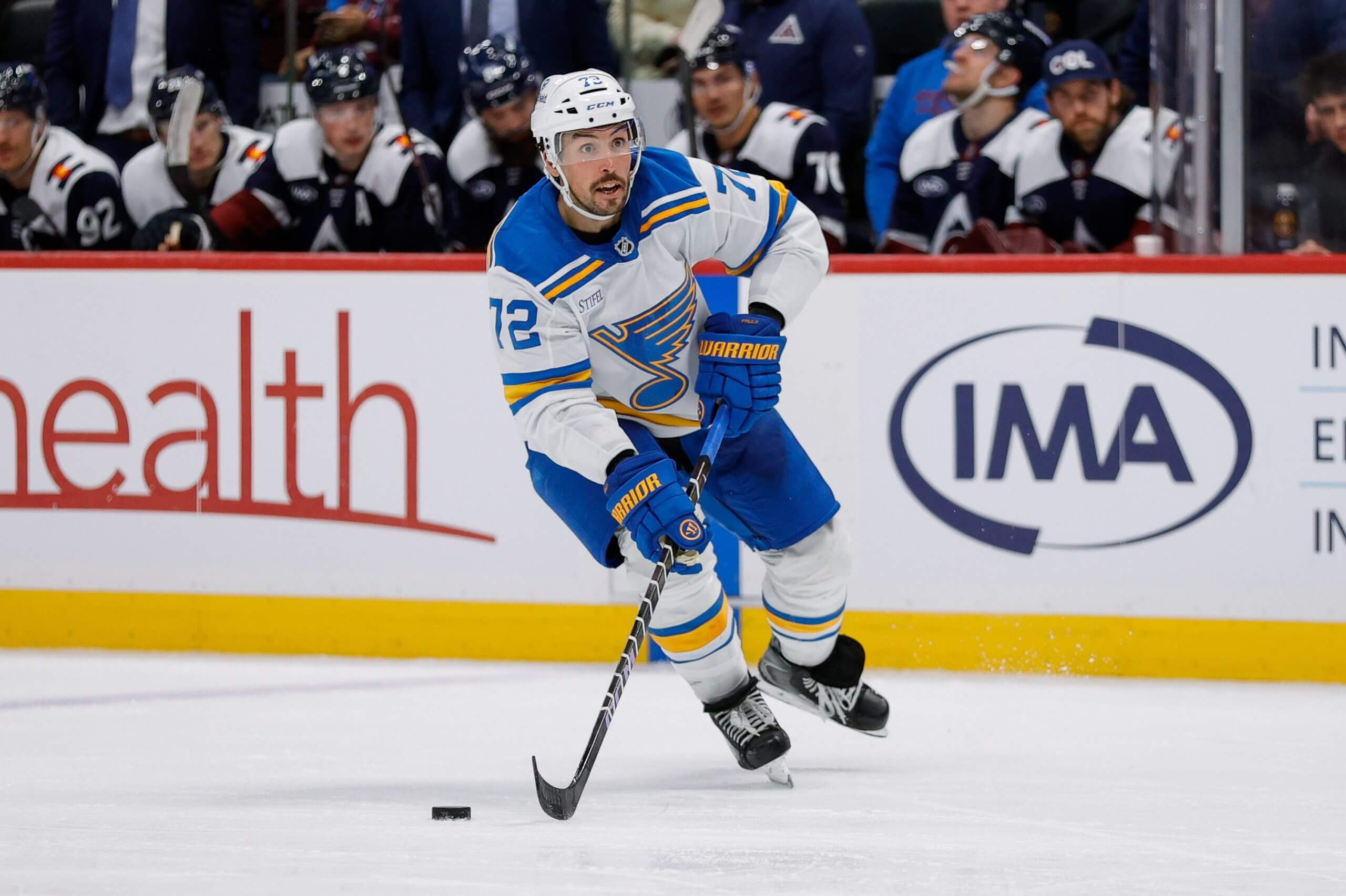
Justin Faulk has scored a bunch and played big minutes for the Blues this season. (Isaiah J. Downing / Imagn Images)
Bring Faulk aboard, and the Leafs can build three veteran pairs for the playoff push this spring:
Rielly — Carlo
McCabe — Faulk
Ekman-Larsson — Stecher
Faulk would offer the Leafs a little more puck-moving juice and big-shot potential. He could take on a major penalty-killing role in Tanev’s absence and man the point of a power-play unit. And, for what it’s worth, Faulk did play for Berube and Mike Van Ryn, who runs the Leafs’ defence, in St. Louis.
This one, too, poses some challenges.
The single: Luke Schenn
Yet another sequel with Schenn could be the move that suits the Leafs right now.
First, the caveats: Schenn is 36, it has not been a great year for him or the Jets, and this defence is already slow and a bit stodgy. And while Schenn was a superb trade fit with the Leafs once upon a time, that was nearly three years ago.
However, bringing Schenn back a third time still makes some sense.
Advertisement
Schenn, whose contract ($2.75 million cap hit) expires at the end of the season, will be affordable.
It surely won’t take the third-round pick the Leafs sent to Vancouver for Schenn at the 2023 trade deadline. Will a fifth- or sixth-rounder — the Leafs have both in the upcoming draft — get it done?
At minimum, Schenn should be an upgrade on the Philippe Myers/Henry Thrun/Dakota Mermis/Matt Benning cluster. And if he can replicate some of the chemistry he had with Rielly and move pucks as confidently as he did in the postseason two years ago, the Leafs will be in a better spot — not a great spot, but better than the present and with very little spent. The best that Rielly has looked in recent years was during that stretch in 2023, playing with Schenn.
If Schenn were to come aboard once again, the Leafs blue line would look something like this:
Rielly — Schenn
McCabe — Carlo
Ekman-Larsson — Stecher
Is the third time a charm?