
This post was originally published on this site.
Investors saw positive returns in 2008 from Walmart and McDonald’s, but history won’t repeat itself.
After three years of double-digit returns in the S&P 500 (^GSPC 1.34%), some investors may be throwing caution to the wind, and others may be looking more defensively.
While conditions don’t appear to support a massive crash, pullbacks can and do occur. Investors who are defensive now may be tempted to assume history will repeat itself.
History shows that during the last major financial crisis in 2008, just two out of the 30 stocks that make up the Dow Jones Industrial Average (^DJI 1.29%) were up: Walmart (WMT +3.31%) and McDonald’s (MCD +2.29%).
Unlike 2008, however, conditions are different. Whatever causes the next market sell-off will be different. And these two defensive names won’t be the big winners if we get another 2008-style meltdown. To see why, let’s look at each company in turn.

Today’s Change
(3.31%) $4.26
Current Price
$133.03
Key Data Points
Market Cap
$1.0T
Day’s Range
$129.31 – $133.86
52wk Range
$79.81 – $133.86
Volume
951K
Avg Vol
30M
Gross Margin
23.90%
Dividend Yield
0.73%
Walmart’s everyday low prices have created a richly valued stock
As of Feb. 3, Walmart has joined the rarified list of companies with a $1 trillion market cap, a small club largely dominated by tech companies. Customers continue to flock to the company’s stores, and Walmart continues its push to keep prices low, which has helped during the surge in inflation in the 2020s.
Over the past five years, the king of retail is up over 170%, returning more than twice the S&P 500’s return of 75%.
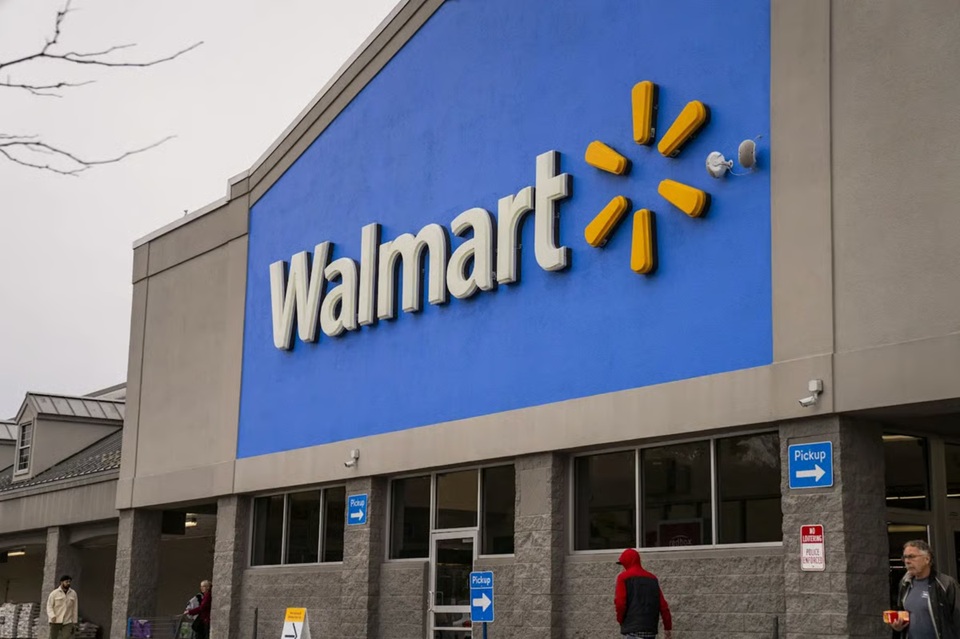
Image source: Getty Images.
That kind of outperformance during a market rally doesn’t guarantee worse performance than the market during a downturn. But it should give investors caution. Big returns on the way up leave little defensive downside protection.
On the valuation side, Walmart’s market-crushing rally has come amid a rapid expansion of its price-to-earnings (P/E) ratio over the years. In 2008, Walmart was valued at 16.5 times earnings. Today, investors are willing to pay 45 times earnings, or almost three times as much.
That’s usually a valuation reserved for high-growth tech stocks, not retail operators with high costs and low margins as part of their business model.
In contrast, big-box retail competitor Target (TGT 1.81%) trades at 14 times forward earnings, or about one-third the valuation. Plus, Target pays a 3.9% dividend.
Walmart pays a paltry 0.7% dividend, its lowest payout since 2003 and well under its 10-year average of 1.8%.
It’s true that during a market meltdown and weak economy, consumers may shift their spending from higher-end retailers to Walmart, whether out of caution or because the economy slides into a recession. But during a recession, earnings multiples like P/Es will contract heavily. Already trading so high, Walmart offers investors no margin of safety, especially with today’s low dividend yield. Even competitors like Target would feel the pain with their lower valuation.
It may not take a recession for poor returns from here, either. A slowdown in consumer spending as unemployment continues to steadily rise could act as a shock to consumer stocks, even if trends like artificial intelligence (AI) spending continue to benefit the overall market.
In short, Walmart investors may not fare well in a downturn, following this outperformance relative to the rest of the stock market.

McDonald’s
Today’s Change
(2.29%) $7.41
Current Price
$330.62
Key Data Points
Market Cap
$230B
Day’s Range
$320.15 – $333.38
52wk Range
$283.47 – $333.38
Volume
3.5M
Avg Vol
3.2M
Gross Margin
57.25%
Dividend Yield
2.22%
The “Golden Arches” shares are priced for perfection too
Many of the same challenges apply to McDonald’s. The fast food operator traded hands at about 15 times earnings in 2008. Today, it trades at about 30 times earnings.
While not as extreme as Walmart, McDonald’s is operating with a different set of challenges.
First, inflation-wary consumers miss the days of dollar menus at fast-food places. Fast food wasn’t just supposed to be fast but also cheap.
Today, customers still get sticker shock ordering a burger and fries, a term dubbed “McFlation,” as the prices of some menu items have more than doubled since 2014.
McDonald’s is fighting a second front that Walmart isn’t. Its competition no longer comes from other fast-food chains or even other restaurants in general. The rise of weight loss drugs such as Ozempic poses a threat to the company’s customer base as fewer hungry customers opt to dine out.
Some equity analysts have even downgraded shares, citing the impact of weight loss drugs. Growth has been sluggish as the use of weight loss drugs has risen in the general population, including a notable 3.6% drop in same-store sales in the U.S. in early 2025, right as these drugs were hitting their stride.
So far, McDonald’s has held up better than other fast-food brands. Competitor Wendy‘s (WEN 4.44%) fell by over 40% in 2025, compared to flat performance for McDonald’s.
While McDonald’s still remains a beloved brand, changing consumer tastes may not make shares the relative safe haven in a crisis that they have been, as consumers look for low-cost alternatives.
History will rhyme, not repeat; and richly valued stocks will take a hit
In the next crisis, there will be a handful of other companies that buck the market’s downtrend — there always are. But it’s unlikely to include Walmart and McDonald’s.
Both Walmart and McDonald’s are great companies that have executed well in low-cost industries. And at the right price and valuation, they can be great investments, too. Yet, their valuation is simply too high today, and current challenges don’t make them a slam-dunk investment for defensive investors.
For investors thinking defensively today, companies that thrived in 2008 may get dinged in the next bear market, whenever it hits.