
This post was originally published on this site.
Key Takeaways
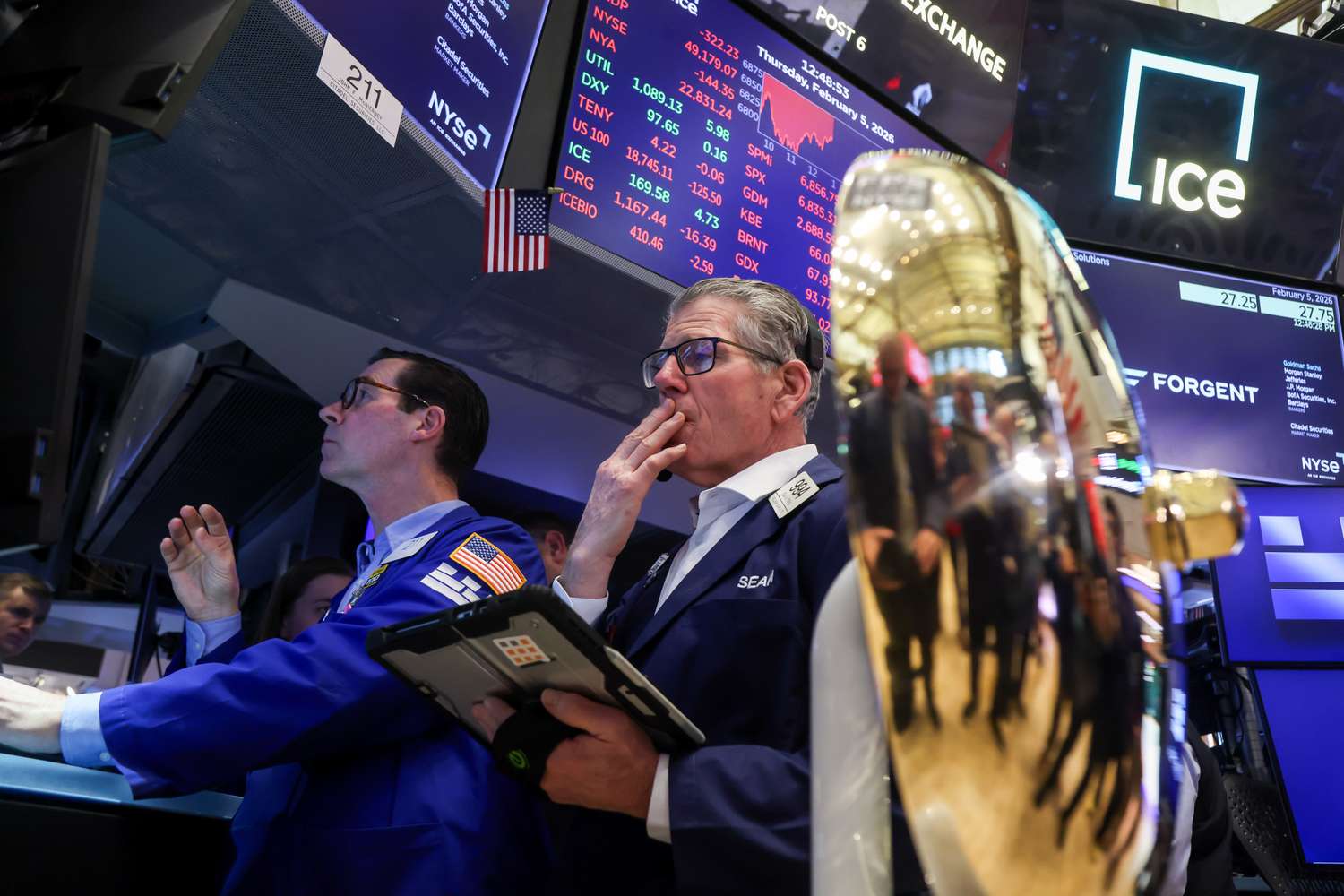
- The AI trade was hit with a double whammy this week when massive AI spending forecasts from Alphabet and Amazon amplified uncertainty about their return on investment and new tools from Anthropic sent software stocks spiraling.
- Some experts say this week’s trading reflects a healthy reset of expectations that many on Wall Street thought were getting too optimistic.
AI was the rising tide lifting all boats. These days, it’s sinking as many as it’s lifting.
Investor anxiety is building in tandem with Big Tech’s AI spending, creating an environment in which the slightest whiff of uncertainty can wreak havoc on stocks. The four hyperscalers that reported earnings in the past two weeks—Meta (META), Microsoft (MSFT), Alphabet (GOOG, GOOGL), and Amazon (AMZN)—all laid out plans to continue aggressively investing in AI infrastructure.
Alphabet and Meta say this year’s infrastructure spending will be about double last year’s. Amazon on Thursday forecast 2026 capital expenditures of $200 billion, a 50% year-over-year increase and about $50 billion more than Wall Street expected. Microsoft didn’t provide a dollar estimate, but its capital spending the rest of the year is expected to be consistent with last quarter, when it rose by more than 60%.
“Just like last earning season, the hyperscalers are coming out with ever higher estimates of capital spending,” said Gina Martin Adams, Chief Market Strategist at HB Wealth Management. “And just like last earnings season, we’re really questioning how much that is going to ultimately pay off for them.”
Why This Is Important
Concerns about an AI bubble pressured tech stocks throughout the second half of last year. Some experts say this week’s tech sell-off has helped relieved some of that pressure and reset expectations that were becoming too optimistic.
Wall Street’s concern about return on investment has been evident in markets for weeks. Meta stock skyrocketed after it reported ad revenue growth accelerated last quarter as AI tools increased ad impressions and engagement across its network of apps. Microsoft and Amazon tumbled after reporting disappointing cloud computing results, their tidiest proxies for AI-driven growth.
But unlike last earnings season, investors are going beyond the debate over AI winners to ask: Who are the AI losers?
That question weighed on software stocks last month, when names like Intuit (INTU) and Salesforce (CRM) slumped amid growing concern that new AI tools and the rise of “vibe coding” threaten to upend the software-as-a-service (SaaS) business. Those jitters became a full-blown panic this week when AI start-up Anthropic released tools to assist with legal work. By Thursday’s close, the S&P Software & Services Index had fallen more than 20% since the start of the year.
Many executives and market watchers have called this week’s “SaaSpocalypse” overdone. Nvidia CEO Jensen Huang at an event Wednesday called it “illogical” to think AI will replace the software industry. Still, the pullback may signal a shift in the AI narrative on Wall Street.
Related Education
“For three years, we only traded on the promise of AI as it was being developed,” said Adams. “Now, as it gets deployed, we start to really think about the economic implications of that deployment and some industry displacements.”
Some experts say the reappraisal of AI expectations is a healthy development for the market. Adams argued that this week’s trading has helped relieve stocks of some of the AI bubble concerns that percolated throughout the second half of 2025. “Already, we’re down to just a 10% premium for tech stocks relative to the market,” she said. “I think that’s fantastic.”
Investors appeared to feel comfortable putting chips back on the table Friday, with the tech sector leading a broad stock rally. After all, tech giants are still spending hundreds of billions of dollars on data center infrastructure and, while that may pressure their margins, it’s still a boon to their suppliers.
An illustrative example: The profits of memory device makers have soared in the past year alongside demand from AI data centers. Shares of Sandisk (SNDK) are up nearly 150% since the start of the year.