
This post was originally published on this site.
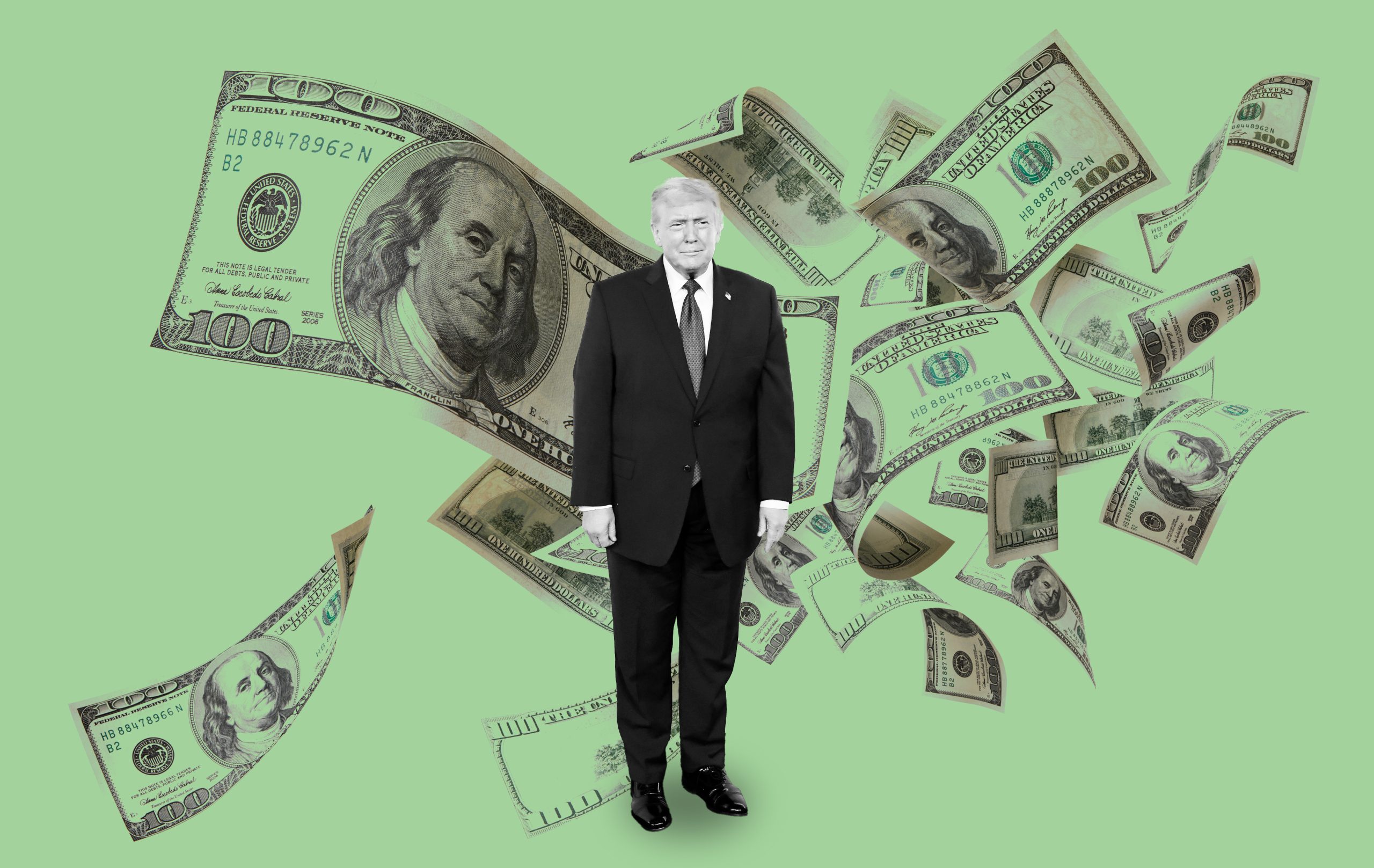
That $200 billion sounds like a great deal of money, but it is something on the order of 0.6 percent of U.S. GDP. In 2025, total federal revenue was about 17 percent of GDP (spending was 23 percent of GDP, hence the huge deficit), and, to put that tariff revenue into context, we typically see much larger year-to-year variations in corporate income tax revenue, which is itself a relatively small source of federal income. Revenue produced by the personal income tax routinely swings by more than 2 percent of GDP over short periods. Tariffs are a stupid policy for 10,000 reasons, but we have a large, robust, and sophisticated economy that can absorb a great deal of stupidity, especially when the price tag is relatively low as a share of GDP. Given that regulatory compliance costs are estimated to run as high as 12 percent of GDP, the administration’s regulatory reform agenda, imperfect though it is, may provide real economic savings that exceed the cost of its destructive trade policies.
(Emphasis on may: The great problem with the Trump administration is that even when it stumbles into the right policy, reform is by necessity entrusted to incompetents and sycophants, with the entire enterprise subject to the minute-by-minute whims of the president, who is profoundly corrupt and possessed of a toddler’s self-control and attention span. So, who knows?)
The real long-term cost of Trump’s anti-trade tantrum is not the $200 billion or so a year in higher taxes on American consumers and businesses. We’ll get through that. But there are other costs: There is the misallocation of capital as tariffs, a product of artificial advantages for less efficient producers and handicaps on more efficient producers; there are new inefficiencies built into the trade system; because trade deficits are the mirror image of capital surpluses, there is less investment capital flowing into the United States than there would have been (U.S.-bound foreign direct investment fell 21 percent in the first quarter of 2025 and has been declining in the longer term), meaning that some kinds of capital will be harder to secure and more expensive to access, a boon to U.S.-based banks and private-equity firms and other allocators of capital but a burden for start-ups, small businesses, and growing American enterprises that would benefit from readier access to capital.
The Trump administration offers a lot of grandiose promises and the occasional press release about how his tariff agenda is bringing back something like the factory economy of the postwar years, but, as with the case of Foxconn’s supposed $10 billion investment in Wisconsin (which turned out to be about 93 percent baloney), there is a great deal of fanfare but not much else. The main result of Trump’s trade policy has not been a replacement of Chinese imports by U.S.-produced goods but a replacement of Chinese imports by Mexican and Vietnamese imports, as well as a shift away from goods and services offered by those nefarious … Canadians. Japan’s share of U.S. imports is down a little, and the Republic of Korea is up a bit over 2017 but down a bit vs. 2024.
Hurray for Mexico.
I don’t hate that outcome, inasmuch as I feel a lot better about buying Pendleton shirts made in Mexico than I would about buying Boot Barn shirts made in China. (I am not much of a “Made in the US of A!” guy, but I am a little bit of a China-avoider.) But that’s a $200 shirt—not everyone can afford such principles. (Think how much better the world would be if the so-called People’s Republic had been Hong Kong-ified rather than Hong Kong’s having been abandoned to socialism.) I am all for building up Mexico and Canada—anybody with a proper understanding of the actual national interest of the United States would see, without too much trouble, how much better off our country would be with a rich and stable Mexico next door rather than a struggling, sometimes unstable, middle-income Mexico next door. Call me a snoot, but I’d rather have Australia next door than Pakistan. And while Canada is doing just fine, if our northern neighbor were as prosperous as the Netherlands or Denmark, the United States would stand to benefit enormously—more than any nation in the world other than Canada itself. This is all pretty obvious stuff, but not obvious enough for the Trump administration, which is a nest of rage-monkeys, dimwits, and cynical operators who make their living milking rage-monkeys and dimwits.
Damaging U.S. trade relationships around the world will cost Americans bigly, but not always in the obvious, easily quantified ways that can be derived easily from month-to-month or quarter-to-quarter data. And that should be fairly obvious, too: Trade policy consists of doing various invasive things to prevent people from making the economic exchanges that they would have made left to their own devices and based on their own understanding of their own interests. As long as he is not standing in a voting booth or in front of a television camera, the average American is a pretty bright fellow, more than capable of deciding for himself whether to buy the $30 jeans made in China or the $300 jeans made in the United States, the Corolla or the Tundra or the F-250, the 2,000-square-foot house with a 20-year mortgage or the 3,500-square-foot house with a 30-year mortgage.
Trade policy, like industrial policy and other forms of economic steering, is a politician saying, “I don’t want you to do what you think is best for you—I want you to do what I think is best for me.” Call me cynical, but that’s really the whole thing.
Words About Words
A friend sent me something he was writing with a question about the “third-to-last paragraph.” There isn’t anything wrong with “third-to-last,” of course, but when a chance to use antepenultimate presents itself—seize it, I say.
Penultimate is one of those words like epicenter that gets used the wrong way because people who don’t know better think that the prefix is an intensifier: There’s the center, and then there’s the center center we really mean it center! that people mean by epicenter, which does not mean center at all but refers to an imaginary point above the center of an earthquake. Penultimate does not mean super-duper-ultimate but second to last, and antepenultimate is whatever comes in the series before the penultimate, the word of in the case of this sentence.
Ante– is a funny prefix in that when we speak of the antebellum era, no one has to guess which war it is we are talking about: Antebellum means before the Civil War in much the same way that postwar period or postwar economy refers to the period right after World War II. There are many wars to choose from (too many) but those words came into being, or into current usage, in reference to those particular wars.
In Other Wordiness
Some Slate headlines over the past few days:
A New Version of Woke Is Coming. Conservatives Aren’t Going to Like It.
Why a Floppy-Haired 27-Year-Old Olympic Skier Is Making Conservatives So Very, Very Angry
Conservatives Are Terrified That People Like Me Are Buying Guns Now.
Do you see the theme there?
There is a line attributed to Adolf Hitler asserting that the genius of totalitarian systems is attested to by the fact that they cause their enemies to imitate them. H.G. Wells, in calling for the development of a scientifically planned global state, called for the progressives of his time to become “liberal fascisti” and “enlightened Nazis.” (I read that in a book.) Appreciating the energy and the apparent solidarity of the fascist movements of the first part of the 20th century, many progressives and nationalists in the liberal democracies—including Franklin Roosevelt, who was both a progressive and a nationalist, arguably a bit more a nationalist—found themselves experiencing a good deal of jackboot envy. In the current era, when right-wing rhetoric amounts to very little more than sneering and bullying—“liberal tears,” “cry more,” etc.—it should be no surprise to see our friends on the left arguing that if x discomfits or hurts conservatives, then x must be good, which is the subtext of those Slate headlines. But I do not think that this sort of thing is really a reaction to the Trumpist style, inasmuch as it precedes the emergence of that style as the dominant form of expression on the right. “Your uptight Christian parents are going to hate this!” is a very, very old marketing ploy, one part “Banned in Boston!” and one part “Republicans pounce!” Incidentally, I spent a lot of time with right-wing gun nuts, and I have yet to meet one who is upset that nice suburban liberals are buying firearms—and the Slate report has not convinced me that these fearful conservatives actually exist beyond the anecdotal level.
And Furthermore …
A few years ago, many conservatives—myself included—practically gave ourselves hernias from harrumphing so hard when the executive editor of the New York Times, Dean Baquet at the time, confessed that his writers and editors didn’t really understand Christianity and the role it plays in American life. Journalism at large is culturally weird, and the New York Times is more culturally weird than the average outlet, for all sorts of reasons. I chuckled a little when the New York Times announced that it had hired a new Austin-based reporter to cover politics, whose LinkedIn bio describes her as focused on gay rights and implores readers to “ask her about her wig collection.” I’m sure she is a fine reporter and will do good work covering the very interesting stories of Texas politics (as, indeed, she already has), but if the Times were looking to really underline its cultural weirdness, it could hardly do better than sending a wig-collecting gay-rights crusader to talk tariffs with the Texas Soybean Board in Lubbock (and Lubbock is more liberal than much of Texas) or to talk with some rural border sheriff about transnational crime. Ask her about her wig collection!
Granted, there was a time when a man such as myself would have a collection of hairpieces—but that’s beside the point!
It is interesting to see the Times investing so much in Texas—but Texas is one of the places where they’re putting the new in the news, while New York City and its new mayor are busy exploring the freshest economic and political thinking of the 1840s.
Elsewhere
You can buy my most recent book, Big White Ghetto, here.
You can buy my other books here.
You can check out “How the World Works,” a series of interviews on work I’m doing for the Competitive Enterprise Institute, here.
In Closing
The Trump administration is winding down its theatrical display of brutality in Minneapolis with nothing to show for it other than millions of dollars in economic damage and two dead Americans, shot down by agents of their own government. I suppose that from the outside it looks like a lot of fun being right all the time but, I promise you, it isn’t.