
This post was originally published on this site.
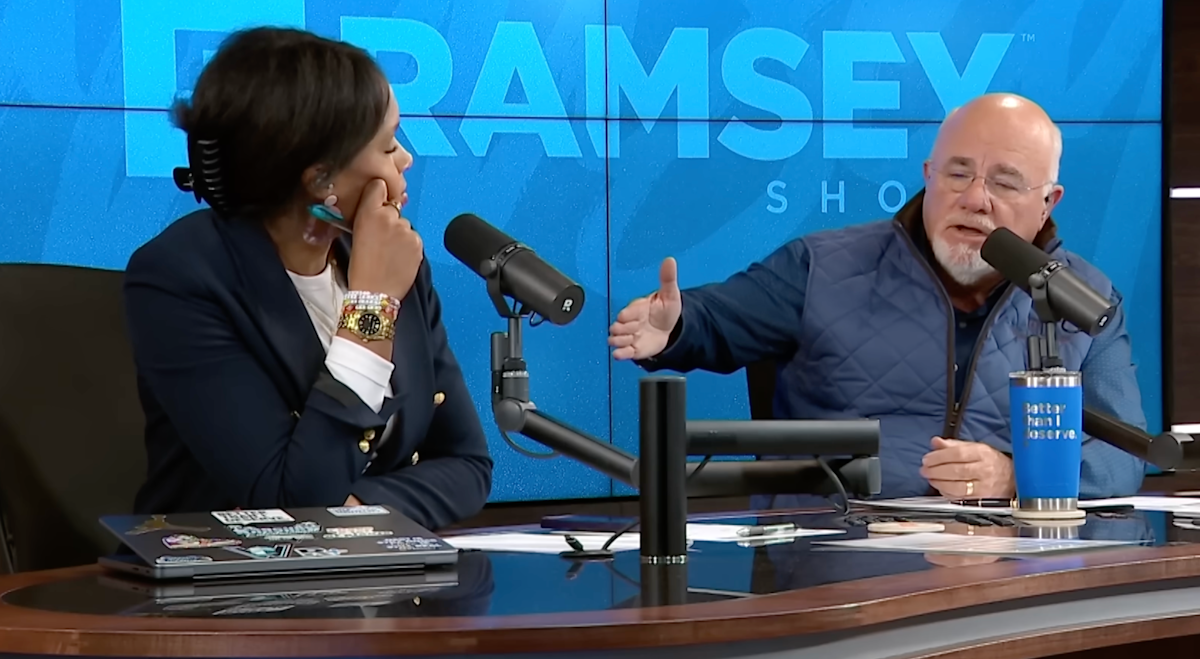
Jesse, a Tennessee caller to The Ramsey Show, had a problem many Americans would envy. His company was rewarding his strong performance with an all-expenses-paid cruise. But with roughly $20,000 in debt weighing on his mind, the “free” vacation felt anything but celebratory.
His quandary underscores a challenge millions of Americans face. According to the Federal Reserve Bank, the total U.S. consumer debt reached $18.59 trillion as of September 2025, with credit card balances climbing to $1.23 trillion (1).
Jesse’s concerns weren’t unfounded. Even when opportunities seem cost-free, the psychological pull toward spending can derail financial progress.
While his employer covered the trip, room and board, the experience still came with hidden costs. Shore excursions, specialty dining, alcohol and souvenirs all represent potential spending pitfalls.
Host Dave Ramsey didn’t tell Jesse to skip the trip. Instead, he shifted the conversation to behavior.
“The reason that we teach people to stay out of restaurants and stay out of vacations while they’re in Baby Step 2 is total focus,” Ramsey explained (2). “I have one job and that’s to defeat the debt.”
Dave Ramsey has discussed his seven baby steps on air. Baby Step 2 covers paying off all debt, minus any mortgages, using the debt snowball method; paying off the smallest debt first and working your way up from there.
Now, the issue wasn’t the cruise but whether Jesse had fundamentally changed his relationship with money. Ramsey said that avoiding restaurants and vacations during debt repayment isn’t about deprivation; it’s about prioritizing financial stability.
“The reason that we teach people to stay out of restaurants and stay out of vacations while they’re in baby step two is total focus,” he said. “‘I have one job, and that’s to defeat the debt because if I live like no one else later, I can live and give like no one else (2).'”
Ramsey’s call for Jesse to “set new neural pathways” is backed by behavioral finance research. According to The Decision Lab, personality traits play a significant role in debt repayment behaviors, and understanding these traits helps create targeted strategies for responsible financial decisions (3).
Cohost Jade Warshaw reinforced the point with a brownie analogy. Once you allow yourself to have “just one,” it becomes exponentially harder to maintain discipline.
“You slice off a little piece, and you go, I’m just going to have that little piece,” she said. “Then you go back in, and you slice off another little corner and another little corner. And before you know it, you’ve eaten the pan of brownies.”
Read More: The average net worth of Americans is a surprising $620,654. But it almost means nothing. Here’s the number that counts (and how to make it skyrocket)
Psychologists refer to this as the “what-the-hell effect” (4). Once we break a rule we’ve set for ourselves, we’re more likely to abandon it entirely. For someone in debt, a “free” vacation can become the gateway to justify other spending.
The Ramsey Show hosts stressed that lasting financial change requires systems rather than relying on constant willpower. Ramsey shared his own practices of prepaying utility bills and setting automatic transfers to investment accounts.
According to Yahoo Finance, certified financial therapist Nathan Astle explains that people often make illogical financial decisions “not because they’re irresponsible, but because emotions like fear, shame and stress are driving the behavior (5).” Recognizing those emotional triggers is essential for building better financial habits.
Warshaw also pointed to the importance of internal dialogue:
“You can’t say ‘I can’t spend any money,’” she said. “You have to form the words of what you want, which is, ‘Paying off my debt is my priority.'”
Ramsey agreed, adding that gratitude reframes the experience.
“‘I’ve chosen to be grateful that the company gave me this,’” he suggested. “‘Otherwise I wouldn’t be able to do it this year because we’re not going on vacation.’”
Ramsey emphasized that if Jesse took the trip, it needed to be disciplined, not an excuse to regress into old habits. More importantly, Jesse needed to use the experience to prove to himself that he had genuinely changed.
For millions of Americans working to reduce their debt, Jesse’s situation offers a clear lesson: “Free” experiences can still carry financial consequences if they reinforce spending patterns you’re trying to break.
The path forward isn’t about rejecting every opportunity for enjoyment. It’s about making sure rewards come after, not during, the hard work of financial transformation.
Before you reward yourself, make sure you’ve truly changed the habits that created the problem in the first place. Otherwise, even the most generous offer might cost you more than you can afford.
Join 200,000+ readers and get Moneywise’s best stories and exclusive interviews first — clear insights curated and delivered weekly. Subscribe now.
We rely only on vetted sources and credible third-party reporting. For details, see our editorial ethics and guidelines.
Federal Reserve Bank (1); The Ramsey Show (2, 6); The Decision Lab(3); Psychology Today (4); Yahoo Finance (5).
This article provides information only and should not be construed as advice. It is provided without warranty of any kind.