
This post was originally published on this site.
Sarah, 32, was ten weeks pregnant when she learned that the government was going to give her unborn child $1,000. She was also newly unemployed, after the Trump administration terminated federal funding for the research lab where she had worked for the past three years. “It felt like such a slap in the face,” she says. “Like, ‘We’ll take away your job, paycheck, and health insurance. Instead, your baby will get $1,000 in an account with Trump’s name on it.’”
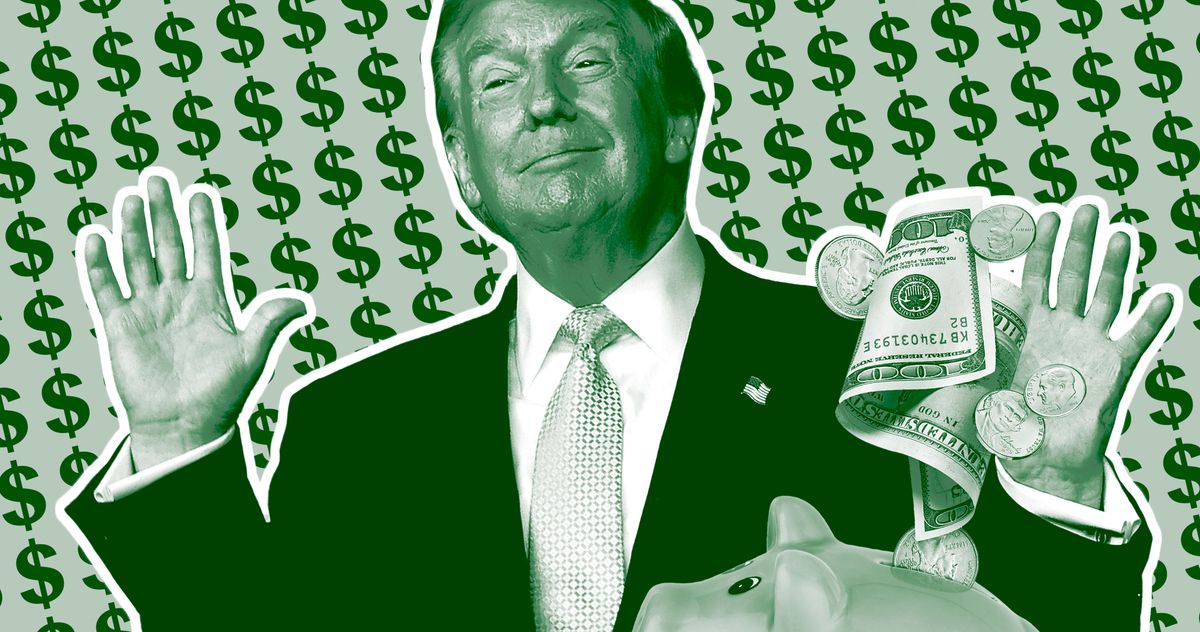
“Trump accounts,” which were created under the Big Beautiful Act, are a new type of individual retirement account that will be given to all American babies with $1,000 in it. The logistical details of exactly how infants (and their parents) will receive these accounts are fuzzy, but the IRS has stated that anyone with a social security number who is born between the beginning of 2025 and the end of 2028 will be eligible for the seed funding, regardless of their parents’ income level. (Older children can also open Trump accounts, but they won’t be part of the $1,000 pilot program.) Sarah — who, like most of the mothers I spoke to for this story, requested a pseudonym — is due to give birth in January, but the first Trump accounts won’t be available until July of 2026, when they will be distributed to parents who elect to open one in their 2025 tax forms.
Anyone can contribute to a child’s Trump account — including the child’s parents — up to a $5,000 annual limit. Employers can also pitch in up to $2,500 a year for their employees’ kids, either through a matching program or on their own (employer contributions do not count as part of the employee’s taxable income, although they do count toward the Trump account’s $5,000 yearly cap). The White House issued a statement estimating that, if the maximum contributions were made, a baby born in 2026 would have a Trump account balance of $303,800 by age 18 (when they would gain limited access to the funds) and more than a million dollars by age 28. Trump himself called it a “pro-family initiative that will help millions of Americans harness the strength of our economy to lift up the next generation.”
When I asked new and soon-to-be parents if they planned to open a Trump account for their babies, the general consensus was “sure, but I don’t feel great about it.” Many hadn’t even heard of the program. “A WHAT?!” said one, who admitted she hadn’t really been following the news (“too depressing”) since her son was born in September. Others were vaguely aware of it, especially since Michael and Susan Dell, the tech-billionaire couple, recently made news with their pledge of $6.25 billion to pad Trump accounts for kids age 10 and under who live in Zip Codes with median incomes below $150,000 (qualifying children will each receive a one-time gift of $250).
“We talked to our financial adviser about it and ultimately decided that, sure, we’ll take free money for our daughter,” says Julie, 29, a new mother who works in technology sales in Michigan. “But I’m conflicted on it because I don’t agree with the administration doing this. I don’t think it’s an effective way to help people who really need it.” She plans to take the $1,000 but won’t contribute to it further. “I don’t see the point. There’s no special tax benefit. I would rather set up a different type of account for her or just contribute to her 529.”
There are two situations where a Trump account is worth having, says Orumé Hays, a certified public accountant based in New York. “One is if your child qualifies for the free seed money, and the other is if your employer is willing to contribute to it,” she explains. Otherwise, don’t bother. “If you have money to invest in your child’s future, these Trump accounts are not the most effective way to do it.”
For starters, contributions to Trump accounts are not tax deductible. Instead, Hays recommends that parents open a 529 account for their child, which offers tax benefits on both ends: Contributions are pre-tax, and withdrawals for qualified expenses (namely, the beneficiary’s higher education) are tax-free.
Hays also takes issue with the other restrictions on Trump accounts. The IRS stipulates that the money must be invested in funds that track an index of primarily U.S. companies, such as the S&P 500. What’s more, it’s off-limits until the beneficiary — the child — turns 18. “At that point, it essentially functions like a traditional IRA,” she says. That means the beneficiaries can’t just use it for whatever they want; they can tap into it only for certain qualifying expenses, like education, medical bills, or buying their first home. All withdrawals will be subject to regular income taxes, but if they raid the account for anything “unqualified” — say, to pay rent or buy groceries — they’ll get hit with an extra 10 percent tax penalty.
At best, Trump accounts are simply dressed-up retirement vehicles for babies but with fewer upsides. Just like with regular IRAs, beneficiaries can start taking withdrawals without penalty for any purpose after the age of 59.5, although — again — they’ll still have to pay income tax on it. “In most cases, if you can afford to put away money for your child’s future, you’re better off just opening a regular brokerage account for them, which will have more flexibility,” says Meg K. Wheeler, an accountant and founder of the Equitable Money Project in Boston. She also doesn’t have a lot of faith in the Trump administration’s management of the accounts or in their long-term security. “I’ve had a lot of people say, ‘I’m nervous to put my money into it because I don’t know if I’m going to be able to get it out.’”
Mal Baska, a financial educator who had her second child last March, is opening a Trump account to get the free $1,000 for her baby but won’t open one for her older son, who was born in 2023. Like Julie, she and her spouse consulted their financial planner about it. “And basically, my conclusion was that these Trump accounts really don’t present any greater advantages than other accounts that I already have available and opened for my children.”
Baska also pointed out that the idea behind these types of accounts is not new. It’s not specifically Republican or Trumpian, either. The concept of “Baby Bonds” was pitched back in 2010 by economists Darrick Hamilton and William Darity, who proposed giving a publicly funded trust account to every eligible child at birth, to be invested for future growth. They envisioned it helping to close persistent wealth disparities, particularly the racial wealth gap. In 2023, Cory Booker and Ayanna Pressley — both Democrats — proposed the American Opportunity Accounts Act, which would give every child “a seed savings account of $1,000 at birth” that would earn interest and “receive additional deposits each year depending on family income.” That same year, a version of the Baby Bonds program was piloted by Democratic legislators in Connecticut, targeting children born to low-income families.
Why did Trump — who is not known for giving handouts — get interested in what has historically been a left-leaning concept? Enter financial executive Brad Gerstner, the CEO of Altimeter Capital and founder of the nonprofit Invest America, who has been lobbying for a federally funded child savings program since 2021. He initially approached the Biden administration but ultimately gained traction with Trump, who — as anyone who received a stimulus check during the pandemic knows — tends to like things he can put his name on.
Wheeler points out that most American parents do not have the extra funds to contribute to their child’s Trump account. She hopes that, instead, they focus on contributing to their own retirement accounts to avoid becoming a financial burden on their kids someday (and unlike Trump accounts, 401(K) contributions are tax-deductible). If the $1,000 seed money is the only contribution your Trump account gets — the likely case for most beneficiaries — that original deposit would grow to roughly $3,000 in 18 years and nearly $58,000 in 60 years, before taxes (assuming an average rate of stock market return of 7 percent). Which is much better than nothing, obviously. But at what cost?
That’s what Sarah’s still struggling with. “I’ll probably take the money for my daughter, even though I’m deeply opposed to the legislation that it’s part of,” she says. (This fall, she got a new job at another lab, but it pays significantly less than her previous role and uses a fraction of her expertise.) “Kids are losing their SNAP benefits and going hungry, but they get $1,000 that they can’t touch? Come on.”
Wheeler agrees. “This is a major misallocation of public funds,” she says. “Putting that same thousand dollars into social-support programs that people need right now would have a much greater impact than it will in 65 years, when it gives them pocket change for their retirement.”
Of course, Trump accounts might not even be around by then. “At this point, we have to assume that everything is at risk, because we can no longer trust the departments that oversee government protections that were put in place to preserve things like retirement accounts,” says Wheeler. “So sure, take your $1,000 if it’s offered to you, but this tool is highly problematic. And I don’t know if it’s going to stick around because, frankly, I don’t think it should.”
Email your money conundrums to mytwocents@nymag.com (and read our submission terms here.)
More From This Column
-
How to Book a Winter Vacation That Doesn’t Cost a Fortune
-
You Can Pay Someone to Do All Your Holiday Shopping for You
-
How to Get Your Money in Order Before Filing for Divorce
Should I Open a Trump Account for My Child?
Comment