
This post was originally published on this site.
The finance ministry will push for the creation of a sovereign wealth fund and a special fund for strategic export support next year as part of efforts to boost the economy, Minister Koo Yun-cheol said Thursday.
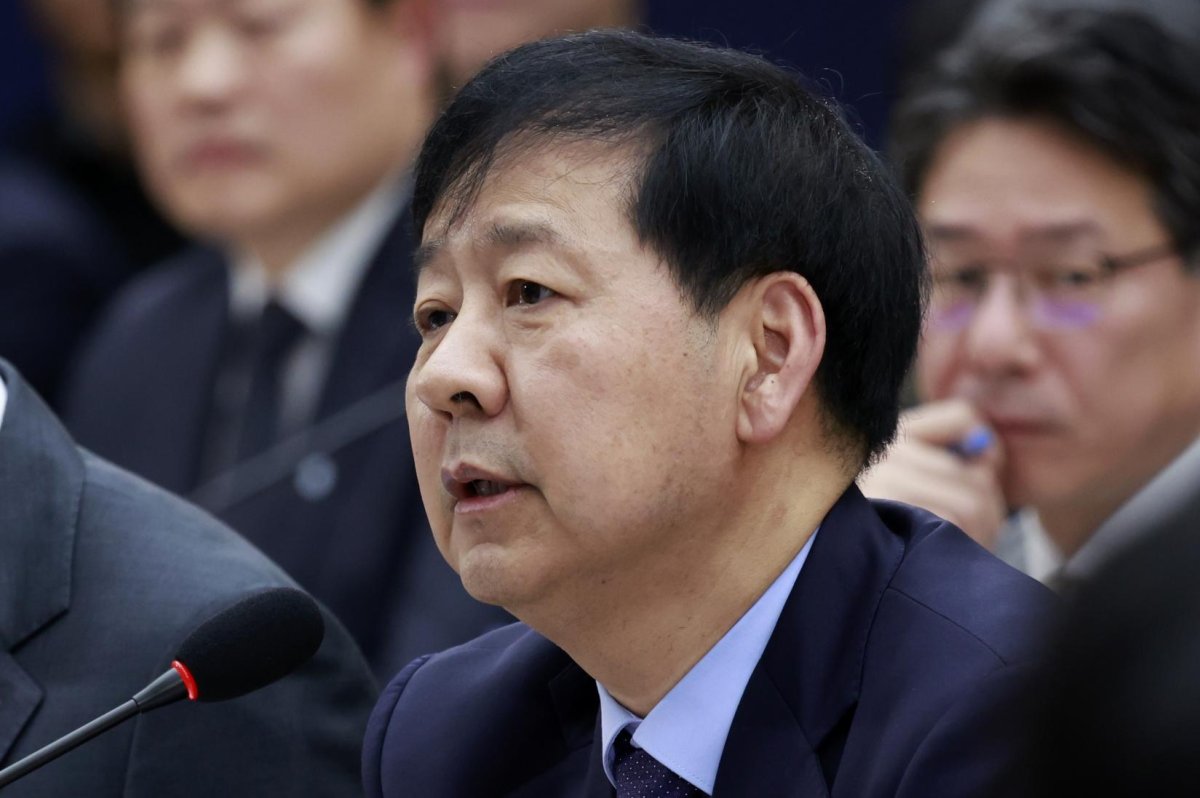
“To raise the potential growth rate (of the Korean economy) and overcome polarization, we will come up with an economic growth strategy for 2026 by the end of January,” Koo said during a work report to President Lee Jae Myung, noting the strategy will be centered around six key areas.
Koo said his ministry will push for the establishment of a sovereign wealth fund in the first half, benchmarking similar funds in Singapore and Australia.
The ministry will also devise measures to effectively manage state-owned properties, currently worth some 1,300 trillion won (US$882.3 billion), to expand public housing and foster the growth of strategic industries, such as artificial intelligence (AI) and renewable energy.
For Korea’s envisioned investment in the United States under a bilateral tariff deal reached late October, the government will establish a strategic investment corporation and a special fund to select “commercially rational” investment projects, he added.
To maximize national interests in the course, the government will legislate a special law on the management of strategic investment in the U.S. to better monitor the effects on the Korean economy and the foreign exchange market, as well as monitor whether necessary safeguard measures are properly implemented.
Under the final trade deal, Seoul will provide $200 billion in cash installments, with an annual cap of $20 billion, for investment projects in the U.S. and an additional $150 billion for bilateral shipbuilding cooperation.
A separate fund to strategically support exports and overseas business deals of local companies will also be created, and the government will set up a new committee on economic security to better respond to supply chain disruptions.
The growth strategy will also include a plan to foster an AI transition, with an aim to make South Korea a global leader in physical AI, such as AI-powered robots, automobiles and ships.
“We will work to achieve at least 1.8 percent economic growth through proactive fiscal policies and measures aimed at boosting consumption, investment and exports, while thoroughly managing the foreign exchange and real estate markets with a system to regularly monitor those markets,” Koo added.
Regarding the business circle’s call for easing the separation of banking and industry, Koo said his ministry will consider special exemptions of regulations for holding companies and ways to rationalize economy-related laws.
In detail, the ministry plans to push for alleviation of regulations on shares of a holding company in its subsidiaries in advanced industries requiring massive investment, including the semiconductor sector,
On the fiscal and tax policy, he reported a plan for bold expenditure restructuring to better allocate assets, and a tax system aimed at inducing capital flows into productive sectors.
Copyright (c) Yonhap News Agency prohibits its content from being redistributed or reprinted without consent, and forbids the content from being learned and used by artificial intelligence systems.