
This post was originally published on this site.
As fintechs like Robinhood (HOOD) and FanDuel lean into the gamification of trading to attract younger users, financial giant Charles Schwab (SCHW) has no plans to join the digital bookie business.
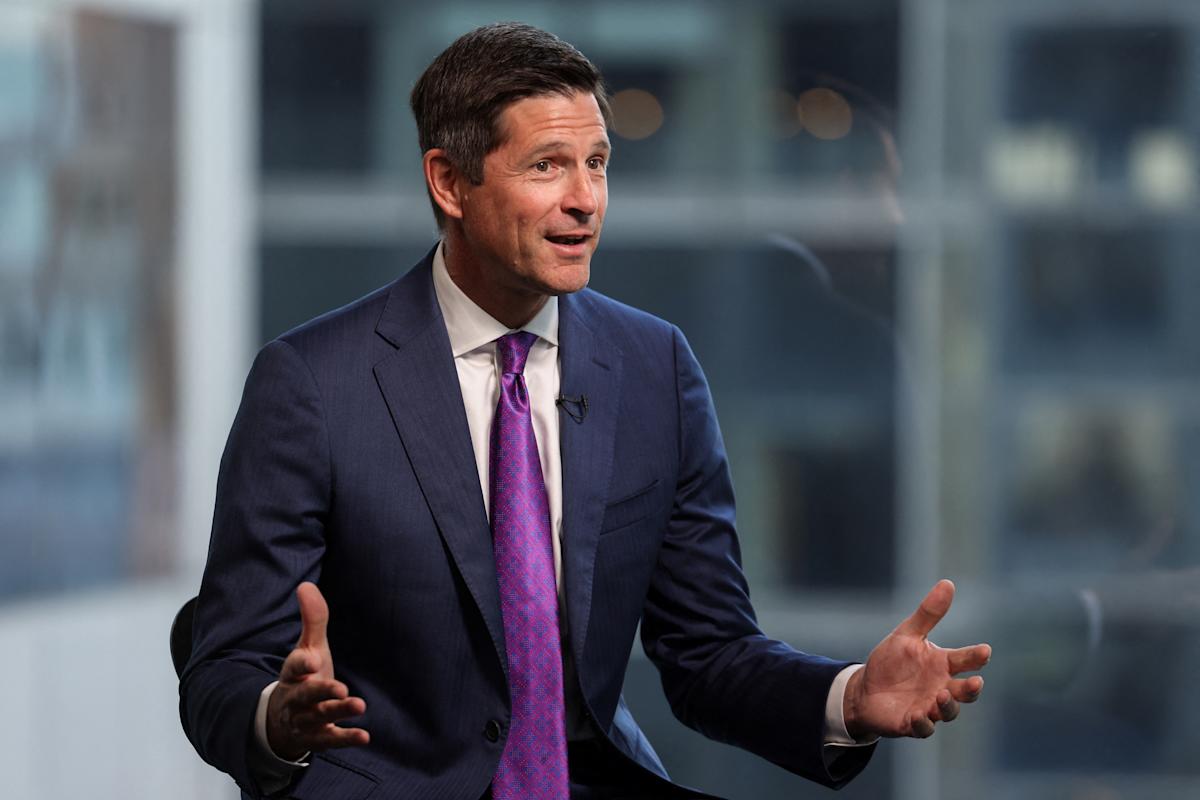
“People generally don’t get better off in their financial life via gambling,” Rick Wurster, Schwab CEO, told Yahoo Finance. “So that’s something we’re hesitant to do.”
He poignantly added that the firm would “leave that to the gambling firms,” name-dropping Robinhood and FanDuel. FanDuel did not immediately respond to Yahoo Finance’s request for comment.
For Schwab, the skepticism toward casino-style trading hasn’t slowed the firm’s growth. Gen-Z investors are 41% more likely to start investing before age 21 than previous generations, and they made up one-third of Schwab’s new client households last year, Wurster noted.
He added that by focusing on financial plans and live coaching from thousands of traders — offered in-person and online — the firm has brought down its average client age by ten over the last decade.
“We’re winning with the young client,” Wurster said, noting that there are “no trade-offs” offering a bet on the Sunday night game.
Wurster’s cautious stance extends to the red-hot prediction market landscape, which he breaks down into three distinct elements. First, he points to markets that offer insight into the probability of different events — information Schwab plans to eventually integrate into its platform.
Second, he acknowledged markets linked to economic reports, such as inflation or employment, which can serve as legitimate portfolio hedges. Finally, he highlights the pure gaming aspect of sports betting, which he claims makes up 95% of the current market and is counter to Schwab’s mission.
Even when pressed on whether betting on an inflation print is any different from a random guess, Wurster was blunt, admitting there is still an element of gambling in both.
For now, Wall Street seems to prefer the voice of reason approach. Shares of Schwab have gained roughly 27% over the past year, significantly outperforming the broader S&P 5OO (^GSPC), which has rallied nearly 14% in the same timeframe. While Robinhood’s stock has soared over 53% during that period, Schwab’s steady growth remains a cornerstone for long-term investors.
JPMorgan analyst Kenneth Worthington recently maintained an Overweight rating on the stock, raising his price target to $128. The firm ended 2025 with a “strong finish,” delivering $164 billion in core new assets in the fourth quarter alone.