
This post was originally published on this site.
Key Takeaways
- Robinhood launched its own RWA-focused L2 testnet powered by Arbitrum, enabling on-chain trading of real stocks and ETFs.
- The platform offers 24/7 trading with low fees while maintaining regulatory compliance.
- Robinhood Chain bridges TradFi and DeFi, providing developers with tools to build new financial applications.
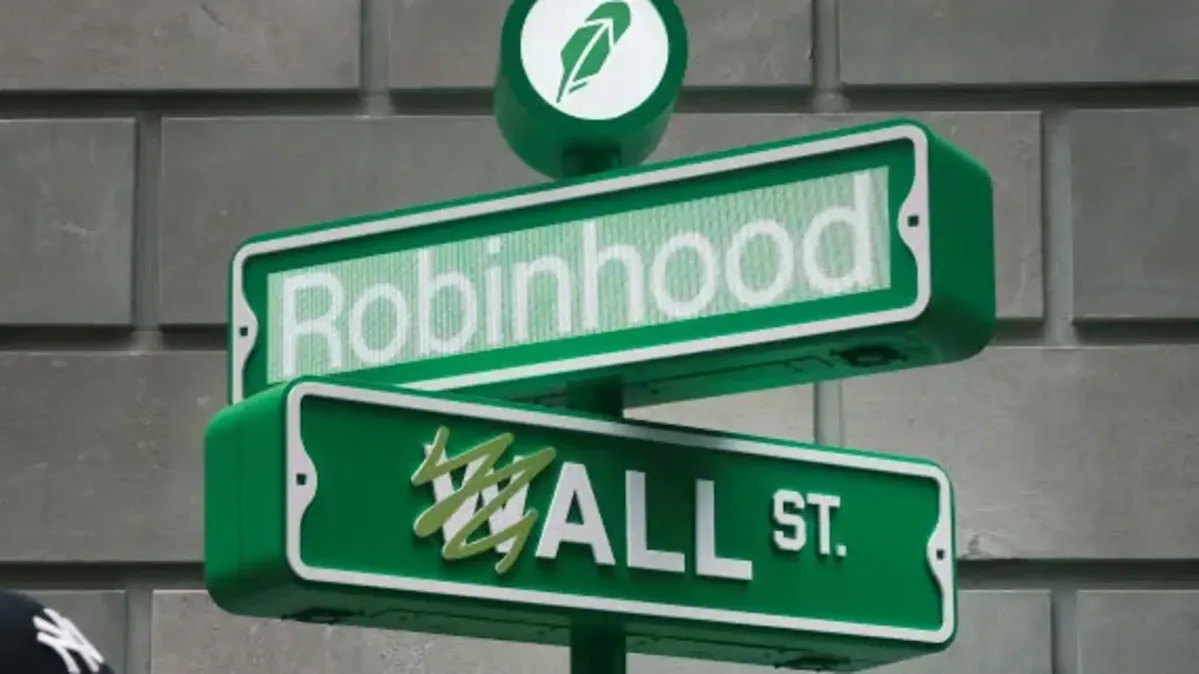
Robinhood, the U.S.-based trading powerhouse valued at around $76 billion, is launching its own blockchain, Robinhood Chain.
This marks a shift toward bringing more operations in-house, allowing the company to integrate traditional finance (TradFi) with decentralized finance (DeFi) and enable users to trade assets like stocks and ETFs directly on its own platform.
Try Our Recommended Crypto Exchanges
Sponsored
Disclosure
We sometimes use affiliate links in our content, when clicking on those we might receive a commission at no extra cost to you. By using this website you agree to our terms and conditions and privacy policy.


Robinhood’s RWA-Focused Layer 2 Blockchain
Launch and Compatibility
Announced on Feb. 10, Robinhood’s new L2 blockchain leverages Arbitrum’s technology and is fully compatible with Ethereum.
Its public testnet allows developers to experiment with tokenized real-world assets (RWAs), including equities, private equity, and ETFs.
Infrastructure and Performance
At its core, Robinhood Chain is powered by Arbitrum Orbit, a framework that enables customizable blockchains with enhanced performance, lower fees, and the security guarantees of Ethereum.
The L2 setup processes transactions in batches, making it more efficient and cost-effective than Ethereum’s mainnet.
The chain embeds compliance directly at the protocol level.
It ensures regulatory adherence for tokenized assets like equities, private equity, and other RWAs
Key features include support for tokenized stocks and ETFs, with over 1,000 such assets already available in the EU through Robinhood’s app.
Developer Access
Developers can now access testnet-only assets in a familiar Ethereum Virtual Machine (EVM) environment.
Tools and APIs allow the creation of innovative DeFi applications that integrate tokenized stocks and ETFs.
For reliable pricing and settlements, Robinhood has partnered with Chainlink as its oracle provider, reducing risks such as bridge exploits or sequencer downtime.
Entering the RWA Tokenization Race
RWA tokenization has emerged as a defining trend in the 2025–26 bull cycle, attracting attention from industry giants like BlackRock.
While securities tokenization has existed since 2020, the rebranding to RWAs has broadened adoption, particularly among institutional investors seeking to bring traditional financial instruments on-chain.
Robinhood Chain enters a competitive L2 landscape alongside Arbitrum and Optimism.
Its closest rival is Coinbase’s Base, an Optimism-based L2 that has gained traction with social apps and low-cost transactions, boasting a TVL of over $10 billion as of early 2026.
Base focuses on consumer-friendly DeFi, but Robinhood looks to differentiate with a finance-specific approach that embeds compliance for RWAs.
Other competitors include Polygon, which supports enterprise tokenization, and specialized RWA platforms like those from BlackRock or Securitize.
Robinhood’s Value Proposition
For Robinhood Users
Robinhood Chain enables low-cost, 24/7 trading of tokenized assets, democratizing access to global markets.
Users can self-custody their assets in the Robinhood Wallet while tapping into Ethereum’s DeFi liquidity for lending, borrowing, or yield farming.
Tokenized U.S. stocks and ETFs can be traded directly in-app with on-chain settlements, enhancing transparency and accessibility.
For Robinhood Developers and the Ecosystem
Robinhood Chain’s public testnet serves as a sandbox for innovation, particularly in the RWA tokenization space.
Developers can experiment with novel financial applications, such as tokenized equities, private equity, or ETFs, in a fully Ethereum-compatible EVM environment.
The platform provides APIs, SDKs, and developer tools to integrate DeFi functionality with regulated asset trading, bridging the gap between traditional finance and decentralized applications.
By bringing billions of dollars in traditional financial liquidity on-chain, Robinhood Chain has the potential to significantly boost Ethereum’s total value locked (TVL) and stimulate growth in the broader DeFi ecosystem.
For Robinhood Investors
Institutional adoption is a core focus of Robinhood Chain.
Built-in compliance features help reduce regulatory and operational risks, creating a trusted environment for institutional participation.
These features make it easier for institutions to experiment with tokenized assets while adhering to KYC and AML requirements.
Robinhood positions itself as a “zero-to-one” innovator, merging TradFi and DeFi by leveraging Arbitrum’s security and scalability while offering proprietary features tailored to regulated markets.
While challenges remain—such as sequencer risks and bridge security—Robinhood’s focus on regulated assets and self-custody solutions may provide it with a competitive edge in attracting institutional capital.
By enabling users and institutions to hold assets in the Robinhood Wallet while simultaneously accessing Ethereum’s liquidity pools, the chain bridges the divide between centralized control and decentralized opportunity.
This fosters a new era of accessible, secure, and compliant financial services.
What Lies Ahead
Following six months of private testing, Robinhood plans to launch the mainnet in 2026.
It will migrate tokenized U.S. stocks and ETFs currently offered to EU customers on Arbitrum One to its proprietary chain.
This launch positions Robinhood as a key player in bridging traditional and decentralized finance.
It will also potentially reshape how real-world assets are tokenized and traded on-chain.
Top Trending Crypto Articles