
This post was originally published on this site.
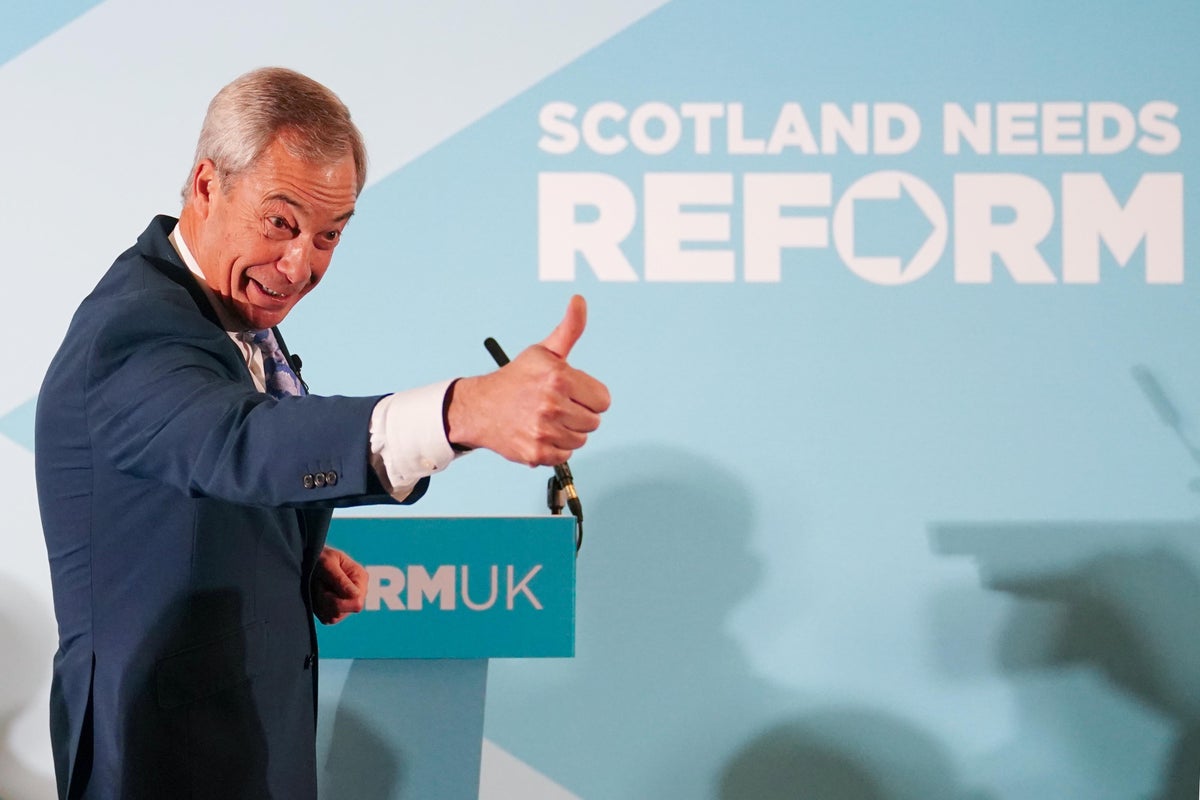
The Electoral Commission has been asked to investigate cryptocurrency donations to Reform UK amid claims Nigel Farage may have “abused his public position as an MP”.
Both Labour and the Lib Dems have requested an investigation after the commission’s quarterly report last week revealed that Thai-based crypto billionaire Christopher Harborne had given Reform a £9m donation – the largest ever political donation by a single living person.
Reform has said none of the donations from Mr Harborne – who sometimes goes under the Thai name Chakrit Sakunkrit – were in cryptocurrency. But it has declined to answer other questions on cryptocurrency donations that Mr Farage has publicly claimed that the party has received.
In the letter to the commission, the Lib Dems raised concerns over “a potential conflict of interest”, which could “undermine public trust in the integrity of our political system”.
Meanwhile, in a letter to Mr Farage, which was also sent to the Financial Conduct Authority (FCA) and the Electoral Commission on Sunday evening, Labour Party chair Anna Turley said the Reform leader’s statements “raise a number of questions which deserve an urgent answer”.
On 29 May, Mr Farage announced that Reform would be the first British party to accept political donations in cryptocurrency, following the example of Donald Trump’s campaign in the UK.
The donation by Mr Harborne was given on 1 August. The following month, on 23 September, Mr Farage used an interview on LBC to namecheck Tether – one of the cryptocurrencies, along with cryptocurrency exchange Bitfinex, that Mr Harborne has shares in – when he said he was going to the Bank of England to argue against curbs on crypto.
He told Nick Ferrari: “We should hang on to this and wait till they mature – and secondly, Nick, I’m going to go tomorrow to say this, you know, Tether is a stablecoin. Stablecoins are the way in which money goes from conventional currencies into cryptocurrencies and back again. Tether is about to be valued as a $500bn company.
“You know, stablecoins, crypto – this world is enormous and I’ve been urging for years that London should embrace it.”
A few weeks later, on 22 October, Mr Farage told Reuters that Reform UK had already received “a couple” of donations in the form of crypto assets, without giving further details.
Mr Farage has been promoting cryptocurrency since May, when he appeared at the Bitcoin Conference in Las Vegas and said that Reform UK would launch a “crypto revolution” and introduce a Crypto Assets and Digital Finance Bill.
In a speech in the City of London on 3 November, Mr Farage again called for the deregulation of crypto.
He said: “Secondary lending is exploding and could come back to bite us. We’ve ignored the burgeoning global markets in digital assets, stablecoins and crypto. The City succeeded by innovating and taking risks; we’ve done none of it. We should lead in these 21st-century sectors.”
Reform have not answered questions sent by The Independent on who has given the party crypto donations, how much it has received and what type it received, or whether the party had a stash of Tether when Mr Farage promoted it on LBC.
In her letter to the commission, Lisa Smith, the Lib Dem’s shadow spokesperson for the Cabinet Office, said: “The sequence of events raises serious questions about whether the public promotion of Tether by the party leader may have been connected to, influenced by, or otherwise associated with this substantial financial contribution.
“It also raises the question of whether any private commitments were made to give Tether a central role in the ‘Crypto Revolution’ that Nigel Farage has committed his party to delivering if they take power.
“Even the perception of a link between political advocacy and major corporate donations risks undermining public trust in the integrity of our political system.”
She went on: “There is also a strong case, in the public interest, for Mr Farage to declare if any donations were received in the form of cryptocurrency. There is a disturbing possibility that Reform was in possession of Tether when Mr Farage promoted the coin, which would be an abuse of his public position and role as a member of parliament.”
Meanwhile, Labour’s Ms Turley asked Mr Farage for clarification on whether he received any donations in cryptocurrency before October.
The Electoral Commission has stated that no political party has currently registered crypto assets as donations. Political parties have until the end of January to report donations they have received from 1 October onwards, but anything received before then should already have been declared.
She also asked how the party could be sure it had met the requirements under the Political Parties, Elections and Referendums Act 2000 (PPERA) to ascertain the identity of its donor, and asked if he would publish Reform’s vetting procedures.
Ms Turley’s letter, seen by The Independent, asks whether any cryptocurrency donations were converted immediately into sterling or if they were held as crypto assets for a period of time, as well as raising concerns over the risks of money laundering and pro-Russian interference associated with crypto currency.
The letter adds: “It is of course possible that Reform UK did not receive a single cryptocurrency donation above the donation threshold between May and September… and that your efforts in loudly soliciting and facilitating such donations were an entirely fruitless publicity stunt.
“It is equally possible that your claims about Reform UK’s compliance process for cryptocurrencies, and your reference to ‘donations in crypto that get exchanged into sterling’ are entirely hypothetical.”
In a statement, Ms Turley added: “Nigel Farage has some serious questions to answer. After boasting about taking crypto donations and putting on a front for big crypto firms, it appears nothing has been declared.
“Farage needs to urgently come clean and clarify whether Reform have misled the public or if they have misled the Electoral Commission. He should provide a detailed account of who is funding him, to assure the public there’s been no wrongdoing here.”
Reform UK said all its donations “have been reported correctly and in line with the Political Parties, Elections and Referendums Act 2000 (PPERA).”
Meanwhile, a Electoral Commission spokesperson said: “No political party has reported any donations that they have identified as cryptocurrency.
“Donations in crypto assets would be reported by political parties as ‘non-monetary’ donations. As with all non-monetary donations, details regarding the nature of the donation would be available to view in the donation details on our political finance database.
“Donations must be valued in British pounds (GBP) at the time of receipt of the donation. The value in GBP is the market value of the crypto asset, for example, the exchange rate of the payment provider, or if unavailable, the exchange rate on a major exchange at the time of receipt.”
The Tories have also raised concerns by tabling a number of questions in parliament to the communities secretary on whether crypto regulation needs to be dealt with in the Elections Bill.
Mr Farage stated in a press conference on Thursday that Mr Harborne had wanted nothing in return for his donation.
He said: “Does he want anything in return for his money? I promise you absolutely nothing. Do I speak to him regularly? Maybe once a month, maybe once every six weeks, but certainly not more than that.”
He later insisted he was “very, very comfortable and confident in the case of Mr Harborne that we know where his money comes from” when asked about Reform’s due diligence of the donation.
A Reform UK spokesperson said last week: “This quarter’s figures show the incredible progress Reform UK is making. This is further evidence that we have all the momentum in British politics.”