
This post was originally published on this site.
The Trae Young trade officially kicked off NBA trade season last week. The deals are no longer hypothetical. They’re actually happening now. Teams have less than one month remaining before the final buzzer rings. Buyout season follows, but for practical purposes, the significant portion of everyone’s roster-building for the year ends in early February.
Not everyone has a blockbuster like the Young deal in them. Some teams have smaller ambitions. Others just need to move some money around. But everyone has something they’d like to accomplish before the deadline arrives in February, so let’s go through every team and try to find a deal that makes sense in their current context. We’ll start with the Eastern Conference today and move into the West tomorrow. Some of these deals will be more plausible than others, but the goal here is to put forth a somewhat realistic trade that makes sense for the team in question.

The Pistons outscore their opponents by an average of around 14 points in the paint per game. However, they’re outscored by more than five points per game from behind the arc. The Pistons are always going to win games at the rim, but if they can just clean up their shooting a little bit, they’ll have a real chance to not only win the East, but compete with the inevitably favored Western Conference champion.
Michael Porter Jr. is the cleanest fit on the board by far. He should come at a lower cost than big names they’ve been linked to like Lauri Markkanen and Jaren Jackson Jr., but his all-around offense should fit in seamlessly. To get him, the Nets get a first-round pick a few years into the future, a second-rounder, the expiring contract of Harris to match money, and Ivey, a talented former lottery pick who’s just been nudged out of the role he needs by the players around him. Before he got hurt, Ivey was having a breakout season a year ago. Maybe the Nets can re-sign him in restricted free agency and then get him back on that developmental track. That they remove Porter, their best offensive player by far, from their roster as they attempt to tank for a better first-round pick is just the cherry on top.
How Michael Porter Jr. took a different kind of star turn with the Nets
James Herbert
There’s not too much the Knicks can do from a matching salary perspective. They’re basically limited to Yabusele, Dadiet and a minimum throw-in, which should get them a player in the $9 million range. They probably have enough second-rounders to send to Dallas for Marshall if the Mavericks make him available. That would especially be true if they dangled Washington’s top-eight protected first-round pick. That pick won’t convey, but it becomes two second-round picks, including Washington’s this year, which will be at the top of the round. The Knicks could use one extra big wing defender for their bench, and Marshall can do enough with the ball in his hands to survive offensively as well. The Nets are along for the ride as cap facilitators.

Boston Celtics
Celtics fans aren’t going to want to hear this, but they have real motivation to duck the luxury tax this season. As fun as this surprising campaign has been, the Celtics have always measured themselves by championships. Boston’s best chance at winning another will come after Jayson Tatum is at full strength. If they can duck the luxury tax this year and next, they’ll manage to reset their repeater tax clock, freeing them up to re-sign key youngsters like Jordan Walsh and Neemias Queta as well as add to the existing core without fear of a salary-induced teardown like they just lived through last offseason.
Utah is our facilitator here. For the price of one late first-round pick and one early second-round pick, the Jazz shave around $15 million off of Boston’s payroll and get the Celtics below the tax and get Hauser off of next year’s payroll. That will hurt this year’s roster, but in Nurkić and Mykhailiuk, they’d at least be getting back expiring contracts attached to veterans they could use off of their bench. It would sting to weaken this year’s team, but the goal will be positioning the roster to compete once Tatum is fully healthy, not in a year when he might come back right before the playoffs.
All right, let’s take a blockbuster swing. Is Morant an ideal fit in Toronto? Probably not. The Raptors can protect him defensively, but his iffy shooting could cause problems next to Scottie Barnes with Jakob Poeltl at center. Still, Toronto needs a talent infusion if it plans to seriously compete in the Eastern Conference. If Morant ever becomes his old self again, he’d give the Raptors someone with the sort of All-NBA ceiling they currently lack.
Would Memphis want Quickley? That’s hard to say. There’s no deal if not. But Quickley is slightly cheaper than Morant at least, and he’s a much easier fit on most teams since he both shoots and defends. Getting a look at two younger prospects in Agbaji and Dick could be worthwhile for a team that develops players extremely well. It’s not exactly a haul, but Trae Young was just cap dumped. It’s hard to imagine Morant doing much better.
- 76ers receive: 2026 second-round pick (via Hawks, protected 31-55)
- Nets receive: Andre Drummond, Kyle Lowry, Eric Gordon, 2027 second-round pick (more favorable of Warriors or Suns), 2028 second-round pick (via Warriors), 2029 second-round pick
The 76ers have ducked the tax three deadlines in a row. Let’s make it four! This one will be harder to do than ever unless they’re willing to give up Kelly Oubre Jr., but he’s an important part of this year’s team. More likely, it’s second-round picks for older bench players. They’d have to reset their bench with a few prorated minimum salaries, and the second-round cost would be steep, but owners always prefer to duck the tax if possible, and with so few contracts to trade to improve, this is by far Philadelphia’s likeliest deadline path.
NBA trade deadline: Breaking down the teams and players that could be involved in tax-ducking moves
Sam Quinn
- Magic receive: 2026 second-round pick (via Suns, protected 31-55)
- Wizards receive: Tyus Jones, 2026 second-round pick, 2028 second-round pick
Last tax duck for awhile, I promise. Orlando has to duck the tax. With Paolo Banchero set to start a max rookie extension next season, the Magic are already going to be prohibitively expensive for a long time. Couple that with a breakout season from Anthony Black and you have a team with five potentially very expensive players in their 20s. That’s a recipe for a lot of years paying the luxury tax, so delaying the repeater clock as long as possible is critical. So the Magic pay off the Wizards to take Jones. Washington had Jones two seasons ago, so they’re familiar with him and would probably welcome his presence in their locker room.

The Pelicans are seemingly signaling that the are unlikely to trade Jones. Cleveland could potentially make it worth their while. The Cavaliers have leaned more and more into Evan Mobley as a center this season, so Allen is potentially expendable for them. The Pelicans, however, badly need a rim-protector to pair with Derik Queen. Cleveland sweetens the pot with a very valuable future first-round pick deep into the future, so while the Pelicans would miss Jones defensively, the offer here is big enough to warrant consideration. With Trey Murphy and Saddiq Bey on the wing already, the Pelicans may feel they can get away with moving Jones even if it leaves them without much perimeter defense. For Cleveland, Jones would be the ideal perimeter defender, and the Cavaliers have enough shooting to protect that vulnerability of his.
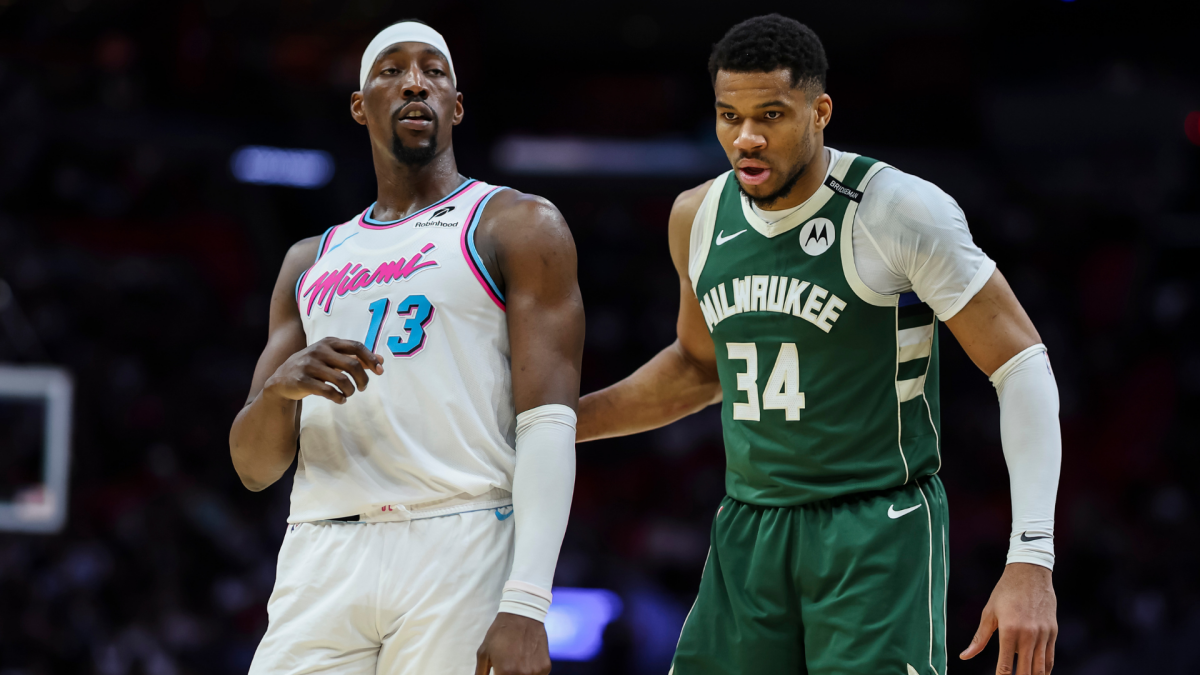
- Heat receive: Giannis Antetokounmpo, Kyle Kuzma
- Bucks receive: Tyler Herro, Terry Rozier, Simone Fontecchio, Kel’El Ware, Jaime Jaquez Jr., Kasparas Jakučionis, two first-round picks (2029, 2031), three first-round swaps (2028, 2030, 2032)
Yes, yes, I know, the Bucks won’t trade Giannis Antetokounmpo until he asks them to, and he’s made it clear that he won’t ask them to. The Bucks also just lost to a Nuggets team missing four starters. That pairs nicely with their two losses to the Wizards as well as a 45-point loss to the Nets, home loss to the Kings and a loss to the Hornets missing LaMelo Ball and Brandon Miller. The Bucks are perpetually teetering on the verge of a collapse. If they get there before the deadline, well, let’s at least prepare a possible trade.
Miami is the perfect compromise trade candidate. They’re desperate enough to give up basically everything, sans Bam Adebayo, to get Antetokounmpo, but they play in one of the few markets in the NBA that could feel relatively safe about him re-signing when his current contract ends. There’s no signature asset here. No young player with a clear All-NBA future or a pick we know will be very high in an upcoming draft. But it includes a recent All-Star from Wisconsin (Herro), cap relief, all of Miami’s best young talent, and five years of draft control over what would be a fairly old Heat team. Between Ware and those picks, odds are the Bucks would come out of this with some pretty notable assets in the end. And the Heat? They’d have a starting five of Antetokounmpo, Adebayo, Andrew Wiggins, Norm Powell and Davion Mitchell. That’s enough to make the Finals.
Atlanta Hawks
- Hawks receive: Nic Claxton
- Nets receive: Kristaps Porziņģis, 2026 first-round pick (via Cavaliers)
The Hawks looked into Anthony Davis, but his injury probably takes him off of the table if they care about the 2026 postseason. How about a younger, cheaper and increasingly versatile center instead? Claxton and Onyeka Okongwu would give the Hawks two big men who can defend the perimeter, and Claxton’s offense has grown quite a bit as the Nets have rebuilt. His passing especially would fit well in Quin Snyder’s offense. Porziņģis is just matching salary here, but the Nets might be able to flip him for value elsewhere. The real value comes in what would most likely be a first-round pick that comes in around the late teens or early 20s, originally from Cleveland.

The Bulls reportedly view Josh Giddey as a Tyrese Haliburton-esque playmaker, and are therefore looking for their version of Pascal Siakam to pair him with. Well, there aren’t that many Siakams floating around the league, and the ones that do exist usually aren’t available. Williamson might be. The Pelicans need to use his salary slot for a center (if they don’t trade another core player for one), and even if that’s not their plan, his skill set overlaps so much with Derik Queen’s that pairing them together doesn’t really make sense.
The Pelicans take on no long-term money in this deal. They get two expiring contracts and otherwise walk away from the Williamson experience. They get a first-round pick here, but it’s lottery-protected, so the value is only minimal. Better than waiving him on a partial guarantee, at least. The Bulls take the talent swing they need. If they can just keep Williamson healthy, this deal would be a steal. Easier said than done, of course, but Chicago is going to have to take some risks to get off the hamster wheel of perpetual play-in mediocrity.

Milwaukee Bucks
We may have had the Bucks trade Antetokounmpo to the Heat in another deal, but as it stands in reality, Milwaukee wants to add to its team in an attempt to win and coax a contract extension out of Giannis. If we assume their future first-round picks are off limits, the best they can do is first-round swap rights (if the Blazers even keep their lottery-protected pick at all) and taking on some bad money. Fortunately, there’s a fit here.
Jerami Grant makes around $10 million more than Kyle Kuzma does, and he’s under contract for an extra year. He’s a better player than Kuzma, so the Bucks would get an upgrade for taking on that extra money. Portland, having added Jrue Holiday on a similar contract since extending Grant, now has less reason to keep another long deal attached to an older player. The Blazers save a bunch of money just by trading a player that would likely decline by the time they’re ready to win in the playoffs.

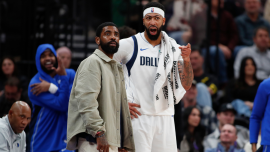
OK, hear me out: I actually think Anthony Davis makes plenty of sense for the Hornets. They control Dallas’ 2027 first-round pick, so they’re natural trade partners. They have some not great contracts to move here, and while Thompson is overpaid, he’d be the perfect veteran to have around Kon Knueppel. Speaking of Charlotte’s explosive rookie, he, LaMelo Ball and Brandon Miller have given Charlotte a top-five offense since the beginning of December. What the Hornets need is size and defense. That’s where Davis fits in. And if he misses the rest of this season due to injury, well, the Hornets would likely be able to snag slightly better 2026 lottery odds ahead of his eventual return.
Would it be unconventional for a team currently outside of the top 10 in a weak East to trade for an older player like Davis? Sure. But they can afford him on their balance sheet, they make basketball sense, and they’re ready to take a step forward next season. For the right price, it’s worth considering, and if Dallas can get its own pick back next year, it can slow play its rebuild around Cooper Flagg. This makes sense for all parties involved. Dallas could potentially even duck the luxury tax this year with a follow-up trade.
How Anthony Davis’ injury impacts his trade market and his future with Mavericks
Sam Quinn

Brooklyn Nets
- Nets receive: Lonzo Ball, 2031 first-round swap
- Cavaliers receive: 2032 second-round pick (protected 31-55)
The Nets have two veterans anyone would want in Porter and Claxton. We’ve traded both of them in earlier entries. That leaves us with, well, more cap facilitating. Ball has had a miserable offensive season for Cleveland, and the Cavaliers are so far over the luxury-tax line that dumping him outright would save them around $70 million in cash. Would ownership give up an unprotected first-round swap deep in the future for that? It depends on how close they think the Cavaliers are to winning a championship. If this team doesn’t prove something significant in the coming weeks, a substantial tax dump like this will be a possibility.
Washington Wizards
The Wizards already spent one of their big expiring contracts when they cashed in CJ McCollum to get Trae Young. They still have one left they can use to add picks in a cap dump trade. That’s Khris Middleton. If the Grizzlies are looking at trading Ja Morant (and possibly Jaren Jackson Jr.), they’ll probably want to get older, injury-prone money off of their books. So they’ll send the Wizards three second-round picks to get off of the last year of Caldwell-Pope’s deal and two years of Jerome’s. Jerome hasn’t even played for Memphis yet, but given how well he played for Cleveland last year, maybe he could be a long-term backup option for the Wizards after this deal.

Indiana Pacers
This might be a gap year, but the Pacers still need to find a center for next year. Gafford is the easiest fit into their salary structure. He’s not a shooter like Myles Turner was, but he should be a fit in Indiana’s up-tempo offense regardless. The cost here is meaningful. A first-round pick next year, albeit one with a lottery protection in case Tyrese Haliburton isn’t 100%, and a good young player in Bennedict Mathurin. The Pacers are probably going to struggle to re-sign Mathurin in restricted free agency given how much money they have allocated elsewhere (and need to preserve for a center), so using him to get a big man now makes plenty of sense. Dallas has a bit more long-term financial wiggle room, so the Mavericks would probably like the idea of bringing in Mathurin as a potential long-term teammate for Cooper Flagg.