
This post was originally published on this site.

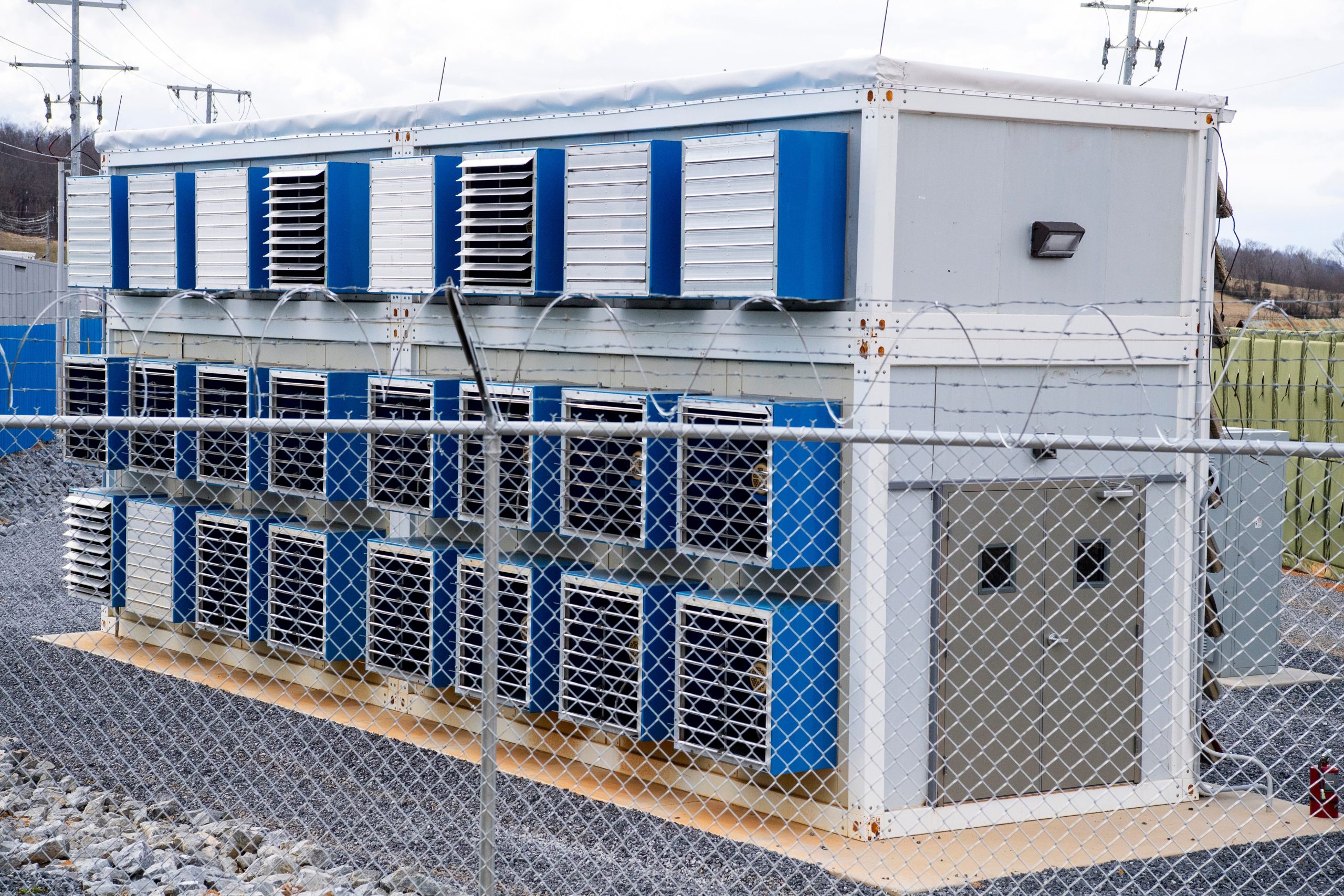
See what a crypto mine in Limestone, Tenn. looks and sounds like
Listen to a crypto mine in Limestone, Tenn.
Brianna Paciorka, Knoxville News Sentinel
We’re all familiar with the concept of mining for precious metals, but what is mining for cryptocurrency? Crypto mining is how some cryptocurrencies — like Bitcoin — process transactions and mint new tokens. Mining for cryptocurrency is, by design, like digitally mining for gold.
Crypto “mines” are specialized data centers where crypto miners, utilizing specialized computer hardware and an appalling amount of energy — on par with the electricity usage of many midsize countries — compete to solve a complex math puzzle. The fastest miner to solve the puzzle is awarded the privilege of adding the newest block to a blockchain. They also collect transaction fees and the newly minted cryptocurrency associated with that block.
Cryptocurrency has so far largely failed to achieve its goal of widespread consumer use, but to a remarkable extent has achieved its goal of being free of serious government regulation. As a result it has often become a vehicle for fraud and criminality.
An examination of the International Consortium of Investigative Journalists, The New York Times and other news organizations found that “at least $28 billion tied to illicit activity has flowed into crypto exchanges over the last two years.” The most avid users of cryptocurrencies have been hackers, thieves and extortionists, a criminal group that explicitly value cryptocurrency’s opaque nature.
Perhaps the earliest use of cryptocurrency was for money laundering, and this continues today. Take for example a drug dealer who can sell his illegal products for cryptocurrency or use the proceeds from his sales in conventional currency to purchase cryptocurrency, in neither case, confident in knowing that the market is substantially unregulated, making the transactions easily hidden under phony names and secret accounts. He can then easily sell his cryptocurrency and end with revenue difficult to trace to the underlying narcotics sales.
President Donald Trump has vowed to make the United States the “crypto capital of the planet,” and his administration appears intent on limiting or scaling back even the nominal regulatory attempts that were previously made. Earlier this year the SEC dismissed lawsuits and ended investigations targeting numerous cryptocurrency ventures. In April, the Justice Department disbanded a unit that was responsible for investigating cryptocurrency crimes. It seems likely that for the immediate future, cryptocurrency will continue to serve no positive purpose in our country other than to provide a platform for fraud and crime.
If this was not bad enough, crypto mining also creates serious environmental sustainability and public health issues, such as increased local air (from fine particulate matter), water and noise pollution, strained local electric grids, raised electricity rates for residents, and increased climate pollution.
A study, which looked into the economic perspective of Bitcoin’s (the main and most well-known cryptocurrency) environmental impact, found that in 2025, each $1 of Bitcoin value created was responsible for $0.74 in health and climate damages in the U.S.
Driven by low electricity costs, tax incentives and other business-friendly legislation for multimillion dollar crypto mining companies, Oklahoma has come to be ranked third nationally in creating a crypto economy.
In Oklahoma cryptocurrency mining facilities benefit from industrial rates, which are significantly lower than residential rates. In July 2025, Oklahoma’s industrial electricity rate was about 5.25 cents per kilowatt-hour (kWh), one of the lowest in the nation. During the same period, the average residential rate in Oklahoma was 13.5 cents per kWh.
House Bill 3594, passed in the 2024 legislative session, defends this tiered schedule and shields miners from discriminatory rate-setting, explicitly prohibiting the Oklahoma Corporation Commission (OCC) from creating a separate, higher rate specifically for crypto miners. The bill was based almost word for word on model policy from Satoshi Action Fund, a dark money 501(c)(4) nonprofit that advocates for crypto legislation. The new law effectively put out a welcome mat for crypto miners, who have been roaming the American countryside in search of the cheap energy, land and running water needed to power their mining operations.
A second bill, HB 1600, also passed during this session, provided crypto miners with a sales tax exemption for electricity (as well as machinery and equipment).
If we are to ensure that our currency markets remain among the most open and honest in the world, contributing substantially to attracting investment, strengthening the dollar and deterring financial crime, our federal government will need to take strong actions.
Meanwhile our Legislature and the Oklahoma Corporation Commission need to consider the impact of crypto mines on our environment, public health, grid and electricity rates. Equally important and not to be overlooked is the moral dimension. The unregulated nature of the cryptocurrency markets make these markets easy targets for crooks and corrupt financial dealings. A cryptocurrency mine exists only for its owners’ self-enrichment. Why should the public give crypto miners public dollars and resources to manufacture their own (in many cases, ill-gotten) wealth, in exchange for a few jobs, environmental degradation, and increased utility bills?
Mike Altshuler is a retired educator and environmental activist who lives in Edmond. He can be reached at okczen@yahoo.com.