
This post was originally published on this site.
One of my favorite traditions is to look back at the previous year’s NBA trade deadline, see how we felt about the deals at the time and update those assessments. With the benefit of hindsight, we can see if any or all were as meaningful or meaningless as initially believed.
I’ve done this trade-season column for years now. I reviewed the 15 trades leading up to the 2018 deadline, the 22 we saw ahead of the 2019 buzzer and 15 deals in 2020. I examined 22 deals leading up to the 2021 trade deadline. In 2022, we had 18 trades to revisit, and 17 from 2023. Last year, we had 24 trades to revisit.
Advertisement
We also have the Trade Deadline FOMO (Fear Of Missing Out) scale, which is measured with a rating between 1 and 10. The lower the score on the scale, the more legitimate that move was for the team’s construction. The higher the score, the more likely it was that the team made that trade just to see its name in a breaking news notification.
With a year of hindsight, let’s dive into those 25 deals leading up to the 2025 trade deadline.
Dec. 15: Warriors bring in Schröder
Golden State Warriors acquire: Dennis Schröder, 2025 second
Brooklyn Nets acquire: De’Anthony Melton, Reece Beekman, 2026 second, 2028 second, 2029 second
What we thought at the time: Maybe the Warriors are bringing in Schröder for some depth, or maybe they’re doing a savvy deal right when the Dec. 15 trade season marker happens? Either way, the Warriors were actively capitalizing on Melton’s injury and bringing in a rotation guy for him, instead of losing that roster spot for the rest of the season on an injured player. As for the Nets, they saw something in Beekman to explore, and they received three second-round picks as future trade/draft assets.
What it looks like a year later: Schröder was a precursor to a bigger move later. We’ll get into what the Warriors did with the Schröder contract, but he essentially played a month and a half with them and was not good but not terrible, either. The Nets were essentially grabbing second-round picks. Beekman is now in the G League, and Melton signed back with Golden State in the summer.
Did this really help either team? We’ll see what the Nets get out of these seconds, but it definitely helped the Warriors. They facilitated a big trade at the deadline by grabbing Schröder with the proper window to flip him again.
Trade Deadline FOMO score (scale of 1-10): 1 for Warriors; 4 for Nets
Advertisement
Dec. 15: Thomas Bryant joins Indiana
Indiana Pacers acquire: Thomas Bryant
Miami Heat acquire: Option to swap 2031 second-round picks
What we thought at the time: Salary dump! The Pacers were taking Bryant off the Heat’s hands, as they carved out an open roster spot. The Pacers needed some big-man depth with multiple centers lost for the season, but this was mostly a “break glass in case of big-man emergency” for Indiana.
What it looks like a year later: Bryant was actually pretty helpful. He played most of the season with the Pacers and appeared in 20 playoff games for spot minutes behind Myles Turner. It still looks like a salary dump for the Heat.
Did this really help either team? It actually did help the Pacers. Bryant wasn’t great, but he was a serviceable big man in the rotation. The Heat didn’t really do much with the open roster spot.
Trade Deadline FOMO score (scale of 1-10): 4 for Pacers; 8 for Heat
Dec. 29: Lakers upgrade their defense
Los Angeles Lakers acquire: Dorian Finney-Smith, Shake Milton
Nets acquire: D’Angelo Russell, Maxwell Lewis, 2027 second, 2030 second, 2031 second
What we thought at the time: This is a big-time move by the Lakers. Finney-Smith is one of the better 3-and-D role players in the league, and he was being wasted in Brooklyn’s rotation. The Lakers flipping Russell for DFS meant they were taking their defense to the next level while also not sacrificing much on the offensive end. Lewis is a nice development get for the Nets, but grabbing second-round picks in the process is also key. Between that deal and the earlier Schröder trade, the Nets had already added six second-round picks in two weeks.
What it looks like a year later: Things massively changed for Los Angeles, but it was still a good pickup for the rest of the 2024-25 season. The problem is so much changed for the Lakers after this trade, and none of it was really part of their plan. They completely shifted gears. Finney-Smith was awesome for the Lakers the rest of the season, but their first-round exit didn’t give him much playoff opportunity. He left in free agency for Houston. For Brooklyn, Russell was really bad the rest of the season and moved on to Dallas’ bench this summer before being traded to Washington on Wednesday. Lewis barely played the rest of the season and is now playing in Turkey.
Advertisement
Did this really help either team? It helped the Lakers in the short term, but neither team really received much benefit.
Trade Deadline FOMO score (scale of 1-10): 1 for Lakers; 5 for Nets
Jan. 15: Phoenix gets bigger
Phoenix Suns acquire: Nick Richards, 2025 second
Charlotte Hornets acquire: Josh Okogie, 2026 second, 2031 second, 2031 second
What we thought at the time: The Suns are trying to find some big-man answers. The big three of Devin Booker, Kevin Durant and Bradley Beal didn’t have a lot of consistent help inside, and maybe some young athleticism like Richards would help. Giving up Okogie was the easiest of their role player wings to send out. The Hornets were in this for the acquisition of second-round picks, which netted them two more than they dispensed.
What it looks like a year later: Little did we know this would be the start of the mass exodus (two) of Charlotte big men heading to Phoenix. Eventually, Mark Williams would join Richards in Phoenix with a trade this summer. Richards has been a nice option for Phoenix, but the rebounding machine is playing far fewer minutes this season than he did with the Suns to finish out last year. That second-round pick ended up being Alex Toohey, and he was sent out in that massive Durant trade to the Rockets. Okogie finished out the year for the Hornets and signed in Houston.
Did this really help either team? I do think it’s helped the Suns a little bit. We’ll see what the Hornets do with those picks.
Trade Deadline FOMO score (scale of 1-10): 5 for Suns; 6 for Hornets
Jan. 21: Suns swap some picks
Suns acquire: 2025 first, 2027 first, 2029 first
Utah Jazz acquire: 2031 first
What we thought at the time: The Suns are trying to find draft capital to use in the future, as they try to fix the mess in the desert. They threw their unprotected 2031 first-round pick to the Jazz in exchange for three picks. Those three picks were the least favorable of the Cleveland Cavaliers and Minnesota Timberwolves in 2025 and then the least favorable of the Cavs, Jazz and Wolves picks in both 2027 and 2029. A bold way to grab some picks to send out in deals after their treasure chest was all but depleted.
Advertisement
What it looks like a year later: A pretty savvy gamble by the Suns to increase what they can use in trades. The Suns used the 2025 pick (ultimately from Cleveland) and the 2029 pick to bring in Mark Williams via trade. It cost them Liam McNeeley from 2025, and we’ll see where the pick falls in a few years. For the Jazz? Danny Ainge loves to take advantage of teams desperate to deal. He flipped the Suns’ 2031 pick to Memphis in the Jaren Jackson Jr. trade.
Did this really help either team? It helped the Suns if you’re a believer in Williams as a starting big man. It will help the Jazz down the line with a valuable first to use or dangle.
Trade Deadline FOMO score (scale of 1-10): 1 for Suns; 1 for Jazz
Feb. 1: Clippers, Jazz swing most forgotten trade ever
LA Clippers acquire: Drew Eubanks, Patty Mills
Jazz acquire: P.J. Tucker, Mo Bamba, 2030 second, cash considerations
P.J. Tucker disagrees with a foul call during his tenure with the Clippers. (Jayne Kamin-Oncea / USA Today)
What we thought at the time: We knew the Clippers needed a backup big man behind the emergence of Ivica Zubac. Also, Patty Mills could be a good shooter and scoring option in limited minutes off the bench. As for the Jazz, why would they possibly want to bring in Tucker? They weren’t a contending team. Maybe they were either going to flip him or waive him. And the second-round pick in the future was their payment for facilitating that?
What it looks like a year later: The Clippers didn’t really get a lot out of the deal. Eubanks played a little backup center for them, but he didn’t make many appearances against Nikola Jokić in the playoffs. Mills played even less for the Clippers. Tucker was flipped in a deal we’ll discuss below, so we got our answers to what the Jazz would do with him. The Jazz waived Bamba.
Did this really help either team? I guess the Jazz were helped a little since they used Tucker in a trade a few days later, but this deal didn’t really benefit either squad.
Trade Deadline FOMO score (scale of 1-10): 6 for Clippers; 4 for Jazz
Advertisement
Feb. 1: Lakers land Luka
Lakers acquire: Luka Dončić, Markieff Morris, Maxi Kleber, cash
Dallas Mavericks acquire: Anthony Davis, Max Christie, 2029 first, cash
Jazz acquire: Jalen Hood-Schifino, 2025 second, 2025 second
What we thought at the time: Holy s—! What is happening? Is this real? Do I need to actually write up trade grades? Why would the Mavericks ever trade Dončić? What is Nico Harrison doing? Wait, that’s all the Mavericks got? Didn’t the Lakers have more picks to send out? Wait, why are the Mavs trading Dončić again? This is going to end up as the dumbest trade in NBA history. Why would you get someone older and less available for your 25-year-old superstar? Are we being pranked? How did the Lakers pull this off? Should I check on my Mavs friends?
What it looks like a year later: Yup, pretty much what we thought at the time! After only 29 games on the court, Davis was traded Wednesday as the organization starts gearing everything toward No. 1 pick Cooper Flagg. The Lakers are in the awkward stage of transferring power from LeBron James to Dončić, but they’re still a very competitive team. They’re just in limbo a bit with their roster construction.
The Mavs ended up firing Harrison earlier this season. It’s unreal how he went from one of the best executives in the league to being haunted by “Fire Nico!” chants wherever he went. Christie has been the best part of this trade return.
Oh, the Jazz used one of those second-round picks to facilitate the trade for No. 18 pick Walter Clayton Jr. and then took John Tonje with the other pick acquired. Hood-Schifino is in the G League.
Did this really help either team? It helped the Lakers tremendously. They went from hoping an older combination could duct-tape another title run together to having the next 10 years of their organization dedicated to Dončić. The Mavs did not get better in the slightest. Someone out there will try to be different and say the Mavs were actually right in this decision. They were not. This was the worst trade in NBA history.
Trade Deadline FOMO score (scale of 1-10): 1 for Lakers; 1 for Mavs; 3 for Jazz
Advertisement
Feb. 3: Fox joins Wemby
San Antonio Spurs acquire: De’Aaron Fox, Jordan McLaughlin
Sacramento Kings acquire: Zach LaVine, Sidy Cissoko, 2025 protected first, 2025 second, 2027 first, 2028 second, 2028 second, 2031 first
Chicago Bulls acquire: Kevin Huerter, Tre Jones, Zach Collins, 2025 first
What we thought at the time: The floodgates have opened! Now the Spurs are going to pair Fox with Victor Wembanyama. There had been rumors of the Spurs going for Trae Young as their point guard alongside Wembanyama, but they decided to go with Fox instead. He’s a good scorer, a solid playmaker and a clutch shooter who can play perfectly in a two-man game with Wemby. The Kings end up with some big-time draft capital. The three first-round picks were actually two firsts and a pick in 2025 that did not convey, so it becomes two future second-round picks. But one of those firsts coming their way is Minnesota’s 2031 pick. They also took the contract of LaVine off Chicago’s hands and hoped recreating a mediocre Bulls team in Sacramento would be the right call.
Chicago grabbing some solid role players while getting off LaVine’s deal looked like a major victory. Plus, the Bulls got their own 2025 first back from San Antonio, which came to the Spurs in the DeMar DeRozan deal.
What it looks like a year later: Big-time win for the Spurs. Fox didn’t play much to finish last season, but he’s been a huge factor in the Spurs being one of the best teams in the Western Conference this season. He pairs really well with Wemby, and they’re still finding continuity on the court. The Kings, once again, find themselves in a bad situation. The team is far too expensive for its production, and it won’t be easy to get away from LaVine’s deal. He has a player option for nearly $49 million next season, and I’d expect him to pick that up. Can they get away from his money? Probably not. The Bulls made out really well here. They used their first-rounder on Noa Essengue, and he could be a nice prospect. Jones is a good contributor to Chicago. Kevin Huerter got moved to Detroit for Jaden Ivey.
Did this really help either team? It greatly helped the Spurs, and I think it helped the Bulls in many ways. Not having that massive number on the books gives them options to reconstruct the roster. As for the Kings? It remains to be seen what will come from their haul. They have five second-round picks and two firsts coming their way.
Trade Deadline FOMO score (scale of 1-10): 1 for Spurs; 1 for Kings; 1 for Bulls
Feb. 3: Swapping seconds
Oklahoma City Thunder acquire: 2029 second
Hornets acquire: 2030 second
What we thought at the time: Sure, why not?
What it looks like a year later: Sure, why not?
Advertisement
Did this really help either team? I’m going to say it helped the Thunder, because when’s the last time they made a bad deal?
Trade Deadline FOMO score (scale of 1-10): 10 for Thunder; 10 for Hornets
Feb. 3: Sixers get a gem
Philadelphia 76ers acquire: Quentin Grimes, 2025 second
Mavericks acquire: Caleb Martin, 2030 second
What we thought at the time: Nico Harrison can no longer be trusted. Both of these guys were players thought to be underutilized by their respective teams. Martin wasn’t having the same impact we’d seen in his emergence with Miami, but he also was stuck on a Sixers team going through key injuries. Maybe he’d find that resurgence with a Mavs team now desperate to make its identity be all defense. Grimes was someone not playing much on the Mavs after showing some promise in New York a couple of years prior. He’d get a chance to show what he can do before hitting restricted free agency.
What it looks like a year later: A massive win for the Sixers — and another loss by Harrison and the Mavs. Martin has had almost no impact on the Mavericks in the year since being traded. Grimes had a tremendous run to the end of the season, and he’s off to a pretty good start this season. He got mired in the ugliness of restricted free agency. He took the qualifying offer and will be an unrestricted free agent this summer, but it’s still a great acquisition.
Did this really help either team? It’s another move that hurt the Mavs … but the Sixers look pretty good from it.
Trade Deadline FOMO score (scale of 1-10): 3 for Sixers; 5 for Mavs
Feb. 5: Theis to the Thunder
Thunder acquire: Daniel Theis, 2031 second
New Orleans Pelicans acquire: Cash considerations
What we thought at the time: If the Thunder keep Theis, then this is a move for solid depth in their pursuit of a championship. If they decide to waive him, it’s just a salary dump for the Pelicans and a second-round acquisition by the Thunder, as they obsess over owning every pick in every draft.
Advertisement
What it looks like a year later: The latter! The Thunder waived Theis, and the Pelicans got a little cash for their 2031 second-round pick.
Did this really help either team? Not at all, though I assume the Thunder will use this future second on an All-Star.
Trade Deadline FOMO score (scale of 1-10): 9 for Thunder; 8 for Pelicans
Feb. 5: Kings get big-man depth
Sacramento Kings acquire: Jonas Valančiūnas
Washington Wizards acquire: Sidy Cissoko, 2028 protected second, 2029 second
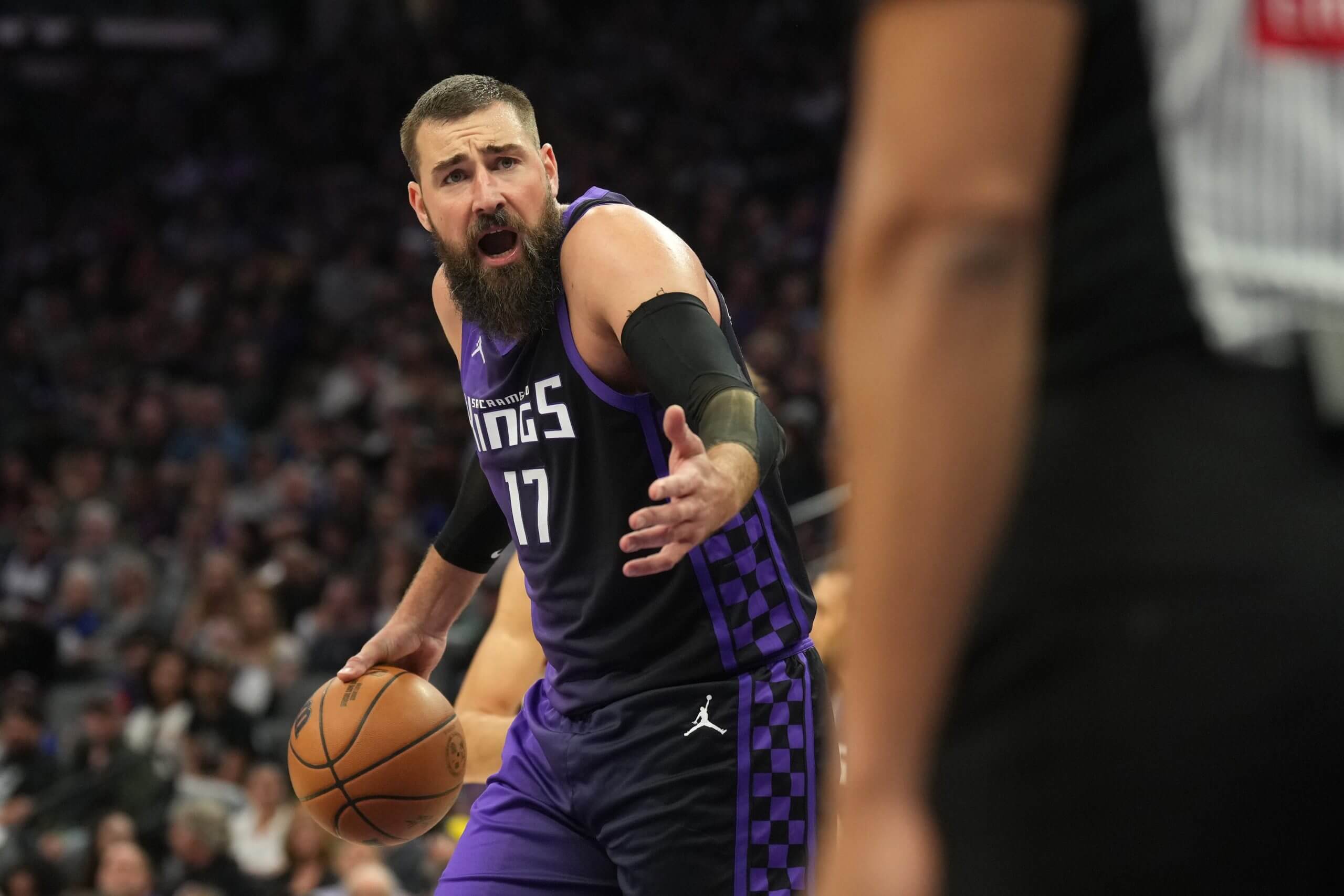
Jonas Valančiūnas left Sacramento in the offseason. (Darren Yamashita / Imagn Images)
What we thought at the time: The Kings needed some rough-and-tumble size as a backup for Domantas Sabonis, and that’s exactly what they’re getting with this trade. All it cost was Cissoko, whom they acquired in the Fox trade, and a couple of second-rounders. The Wizards were never going to get a first for Valančiūnas, so getting a couple of second-round picks was good enough. With the Kings, you never know if a second-round pick is going to be in the low 30s.
What it looks like a year later: The Kings would eventually flip Valančiūnas this summer to the Denver Nuggets for Dario Šarić. The Wizards did not retain Cissoko, who is now playing for the Portland Trail Blazers. It kind of just looks like a salary dump by the Wizards.
Did this really help either team? In the long run, no. The Kings moving on from him for Šarić meant nothing positive. The Wizards are unlikely to get much from this.
Trade Deadline FOMO score (scale of 1-10): 7 for Kings; 6 for Wizards
Deadline Day: Celtics dump Springer
Houston Rockets acquire: Jaden Springer, protected 2027 second, 2030 second
Boston Celtics acquire: Protected 2031 second
What we thought at the time: Maybe we’re doing some musical chairs with future second-round picks. Two of those picks are top-55 protected, so they’re unlikely to convey, but for the Rockets, maybe they’ll want the athletic guard in their rotation?
Advertisement
What it looks like a year later: The Rockets did not want Springer in their rotation. They waived him almost immediately. This was essentially the Celtics saving some money by dumping his salary and the Rockets getting a 2030 second.
Did this really help either team? Financially, it helped the Celtics a little.
Trade Deadline FOMO score (scale of 1-10): 10 for Rockets; 9 for Celtics
Deadline Day: Hawks dump Zeller
Rockets acquire: Cody Zeller, 2028 second
Atlanta Hawks acquire: Rights to Alpha Kaba
What we thought at the time: Yes, we still had Zeller in the NBA as recently as a year ago. The Hawks wanted to dump a salary, and the Rockets were happy to take that salary, just as they did with Springer above. It would only cost the Hawks a 2028 second.
What it looks like a year later: Straight salary dump, homie. By the way, Kaba is 30 years old and was the last pick of the 2017 draft. He’s probably not coming over.
Did this really help either team? It helped the Hawks financially a little.
Trade Deadline FOMO score (scale of 1-10): 10 for Rockets; 9 for Hawks
Deadline Day: 76ers dump Martin
Detroit Pistons acquire: KJ Martin, protected 2027 second, 2031 second
76ers acquire: Cash considerations
What we thought at the time: A third straight salary dump in this succession of deadline deals! The Pistons brought in Martin, an athletic wing you hope will be able to knock down 3-pointers. For their troubles of taking the deal off Philly’s books, they received a couple of second-round picks.
What it looks like a year later: Almost nothing, really. The Pistons ended up flipping Martin that same day in the trade that landed them Schröder.
Did this really help either team? It ended up helping the Pistons with their next move. I have no idea how the Sixers spent those cash considerations.
Trade Deadline FOMO score (scale of 1-10): 3 for Pistons; 9 for Sixers
Advertisement
Deadline Day: Wizards grab a first
Wizards acquire: Reggie Jackson, 2026 first
76ers acquire: Jared Butler, 2027 second, 2028 second, 2030 second, 2030 second
What we thought at the time: In a nightmare season for the Sixers, they wanted to get off Jackson’s roster spot, so they sent him with a first to the Wizards. Washington had gone into full-on asset-acquisition mode now that its rebuild was in full bloom. Getting a first for taking Jackson to the waiver wire was a big-time win. It cost them four second-round picks, but that move was efficient. The Sixers brought in Butler to see if he could be a piece to keep an eye on the rest of the season. He was a two-way player with the Wizards.
What it looks like a year later: Mostly just an exchange of draft picks. The Wizards waived Jackson immediately. The Sixers brought in Butler, converted him to a full contract and then let him become a free agent this past summer. This deal was just a first-round pick (least favorable of the Wizards, Clippers and Rockets and also top-four protected) for four second-round picks.
Did this really help either team? It might help both of them in the future, but it’s too early to tell.
Trade Deadline FOMO score (scale of 1-10): 1 for Wizards; 5 for Sixers
Deadline Day: Kings get LaRavia, Wizards get Smart
Kings acquire: Jake LaRavia
Wizards acquire: Marcus Smart, Colby Jones, Alex Len, 2025 first
Memphis Grizzlies acquire: Marvin Bagley III, Johnny Davis, 2025 second, 2028 second
What we thought at the time: Three teams just swapping out extraneous pieces on their roster. For the Kings, bringing in LaRavia was to provide some wing depth, and all they were really giving up for the impending free agent was Len (they’d already brought in Valančiūnas) and Jones. It felt like a low-risk move, even if they didn’t keep LaRavia. The Wizards were bringing in those two from the Kings, as well as Smart’s veteran presence for the young roster. Most importantly, they were getting another first-round pick thrown their way. As for the Grizzlies, this was really kicking the tires on Bagley and grabbing a couple of second-round picks for their troubles.
Advertisement
What it looks like a year later: Other than the first-round pick, this turned into a whole lot of nothing. LaRavia had a nice finish to the season, but he left for the Lakers in free agency. Smart left for the Lakers, too. That first-rounder was the 18th pick, which ended up being the aforementioned Clayton in a previous trade. The Wizards moved him for Will Riley, Jamir Watkins and two future seconds. Bagley left in free agency to return to Washington and was traded to Dallas in the Davis deal this week. Memphis did end up with Javon Small from that 2025 second-round pick. He’s played a little bit this season.
Did this really help either team? It did not help the Kings. It did not really help the Grizzlies. The Wizards got Riley out of it. He’s a nice role-player prospect.
Trade Deadline FOMO score (scale of 1-10): 8 for Kings; 3 for Wizards; 9 for Grizzlies
Deadline Day: Wiseman salary dump
Toronto Raptors acquire: James Wiseman, cash considerations
Pacers acquire: 2026 protected second
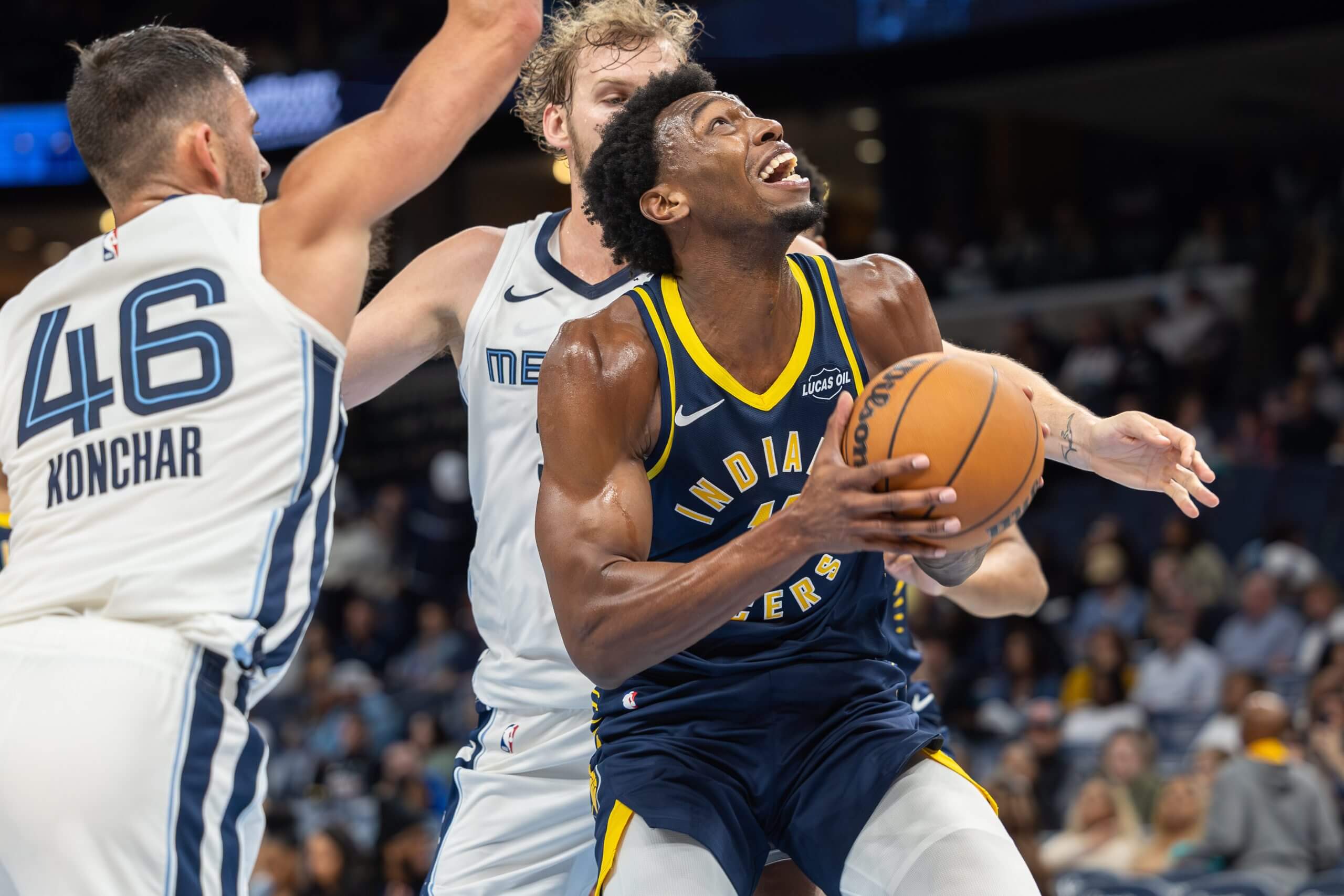
James Wiseman works against the Grizzlies defense during his time with the Pacers. (Wesley Hale / Imagn Images)
What we thought at the time: By my count, this is the sixth salary dump of the 2024-25 trade season. This opened up a roster spot for the Pacers with Wiseman out for the year. Also, the Raptors got a little cash in the process.
What it looks like a year later: Exactly that. Wiseman actually went back to Indiana this summer in free agency but was released in December.
Did this really help either team? Not in the slightest.
Trade Deadline FOMO score (scale of 1-10): 10 for Raptors; 7 for Pacers
Deadline Day: Nurk to the Hornets
Hornets acquire: Jusuf Nurkić, 2026 first
Suns acquire: Cody Martin, Vasilije Micić, 2026 second
What we thought at the time: It’s our second trade of the season between the Suns and Hornets. It’s also the second one sending a big man in the trade. This time, Nurkić was headed to Charlotte. It cost the Suns a first-round pick. Nurkić wasn’t going to do much for the Hornets, maybe create a must-see hipster jersey sighting at a music festival in the future. This was about the pick. As for the Suns, they wanted to get out of the Nurkić business, and maybe getting a couple of wing options was better for some depth? Remember, this Booker-Durant-Beal team was devoid of playmakers.
Advertisement
What it looks like a year later: The Hornets turned Nurkić into Collin Sexton, and they’ll get the least favorable of the Wizards, Suns, Grizzlies and Magic pick in June. That could be somewhere in the late teens or early 20s. The Suns waived Martin at the end of the season. Micić left the NBA to play in the Israeli League.
Did this really help either team? The Hornets definitely flipped this into a great get for them. The Suns will get the least favorable of Denver’s and Golden State’s second-round pick, but so far, there is no help in this team for them.
Trade Deadline FOMO score (scale of 1-10): 3 for Hornets; 9 for Suns
Deadline Day: Warriors get Butler
Warriors acquire: Jimmy Butler
Heat acquire: Andrew Wiggins, Kyle Anderson, Davion Mitchell, 2025 first
Jazz acquire: KJ Martin, Josh Richardson, 2028 second, 2031 second, cash
Pistons acquire: Dennis Schröder, Lindy Waters III, 2031 second
Raptors acquire: P.J. Tucker, 2026 second, cash
What we thought at the time: Here we go! This trade was the month-plus work of Butler trying to get out of Miami because the Heat didn’t want to pay him. It was also part of the Warriors trying to figure out how to make one more significant push in the Steph Curry era. For the Warriors, it was a very easy justification. Butler is one of the most impactful players in the league. The Heat were getting three decent-to-solid role players with Wiggins, Anderson and Mitchell. Mostly, receiving a first-round pick in 2025 was the big win for them.
The Jazz got a couple of decent win options and more second-round picks. The Raptors were bringing Tucker back to the mix, but it seemed unlikely he was going to play for them. And the Pistons were getting some much-needed point guard depth for their playoff run.
What it looks like a year later: It got sad for the Warriors. They had a brilliant finish to the season and a first-round playoff victory before a Curry hamstring sank their season against Minnesota. Last month, Butler tore his ACL and will miss the rest of the season. He’s signed for one more season north of $50 million and hopefully will come back to full health. The Heat have received solid contributions from Wiggins, and they moved Anderson in an offseason deal to bring in Norman Powell. That’s been a massive boost for the Heat. So has Mitchell, who has played the best basketball of his career; they re-signed him to a two-year deal this summer. They also used that first-round pick for Kasparas Jakučionis.
Advertisement
The Jazz waived Richardson right after the trade and Martin in September. The Raptors waived Tucker a couple weeks later. And the Pistons got some good run out of Schröder before a sign-and-trade deal sent him to Sacramento this summer. Detroit got a top-55 protected second out of that deal.
Did this really help either team? Despite the injury, it greatly helped the Warriors. I’m also a big fan of what the Heat did here, even if the Jakučionis pick still makes you wonder what the future holds for him. The Pistons briefly saw a boost. The Jazz and Raptors did not get better.
Trade Deadline FOMO score (scale of 1-10): 1 for Warriors; 1 for Heat; 7 for Jazz; 3 for Pistons; 10 for Raptors
Deadline Day: Bucks land KPJ
Milwaukee Bucks acquire: Kevin Porter Jr.
Clippers acquire: MarJon Beauchamp
What we thought at the time: The Bucks are buying super low on Porter and hoping they can find a diamond in the rough. The Clippers hoped to find that same diamond, but it just did not work out. The Clippers were too loaded on the wings, and Porter was not going to get minutes over Amir Coffey. It was going to cost them Beauchamp, who also wasn’t panning out. Basically, it was a trade of “take this young guy who isn’t working for us, but maybe he’ll work for you.”
What it looks like a year later: It worked out a lot better for one team than the other. We saw the Clippers waive Beauchamp a couple of weeks later. For the Bucks, Porter made enough nice contributions that they re-signed him on a “prove it” deal in the summer. Porter has played solidly this season, but he’s also missed a lot of games.
Did this really help either team? It helped the Bucks, but not the Clippers.
Trade Deadline FOMO score (scale of 1-10): 4 for Bucks; 4 for Clippers
Deadline Day: Clippers get Bogdanović
Clippers acquire: Bogdan Bogdanović, 2025 second, 2026 second, 2027 second
Hawks acquire: Terance Mann, Bones Hyland
Advertisement
What we thought at the time: Speaking of Coffey, his presence allowed the Clippers to make the tough decision of moving on from Mann. They sent him to the Hawks for Bogdanović, which was designed to give them more scoring punch and shooting in the backcourt. Maybe he’d play next to James Harden, or maybe he’d come off the bench to boost the second unit. The Hawks were getting a pretty valuable wing at a low cost, as they tried to put a more complementary piece around Trae Young.
What it looks like a year later: Mann had a pretty good finish to the season for the Hawks, and they ended up flipping him to the Nets in the deal that landed Kristaps Porziņģis in Atlanta. Bogdanović played well for the Clippers the rest of the season, but he had a brutal postseason appearance. He’s missed the majority of this season, and he has a team option for next season. It’s a low number ($16 million), but it wouldn’t shock me to see the Clippers decline that option — unless they can trade it.
Did this really help either team? It helped the Hawks acquire Porziņģis, which should ultimately be good at some point. It hasn’t really helped the Clippers much, but a healthy Bogdanović would change that.
Trade Deadline FOMO score (scale of 1-10): 3 for Clippers; 2 for Hawks
Deadline Day: Middleton leaves Milwaukee
Bucks acquire: Kyle Kuzma, Jericho Sims, 2025 second, 2026 second
Wizards acquire: Khris Middleton, AJ Johnson, rights to Mathias Lessort, 2028 first swap (with Bucks)
New York Knicks acquire: Delon Wright, rights to Hugo Besson, cash
Spurs acquire: Patrick Baldwin Jr., cash
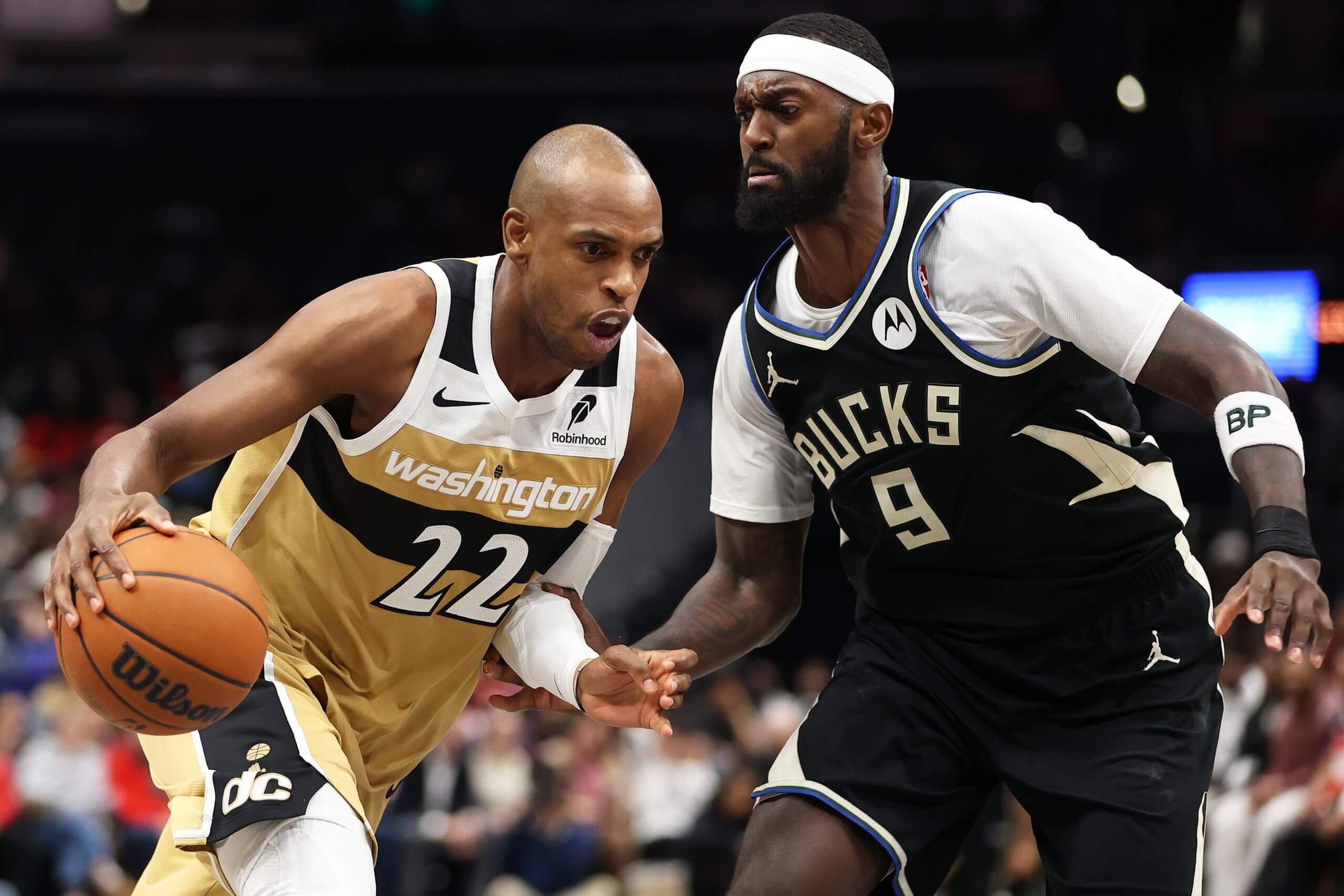
Khris Middleton drives past his former Bucks teammate Bobby Portis during a game last week in Washington. (Daniel Kucin Jr. / Imagn Images)
What we thought at the time: Middleton’s body kept failing him, so the Bucks needed a jolt in the lineup to try and get them back into the mix with the Eastern Conference’s powerhouses. Kuzma was supposed to be that guy. The Wizards would bring in a pick swap from the Bucks in 2028, and getting Johnson as a young player to add to their core would bring in more development. Now the Wizards had Middleton and Smart in the locker room to help the younger guys.
The Knicks gave up some big-man depth to bring in a veteran point guard. And the Spurs? They’d grab some cash to have the honor of waiving Baldwin.
Advertisement
What it looks like a year later: I could not have been more wrong about the Kuzma aspect of this. At the end of his Lakers tenure and in the first couple of years in his Wizards era, Kuzma was an excellent role player. He did a great job of adding a scoring punch and playing some defense. Even though that went away in the last year or two of his Wizards time, I figured being on a playoff team like Milwaukee would reinvigorate him. It has not. The Wizards sent Middleton and Johnson to Dallas in the Davis trade at this deadline. Wright had a nice run in the postseason for the Knicks. The Spurs did, in fact, waive Baldwin.
Did this really help either team? It did not help the Bucks. It didn’t really help the Wizards. The Spurs had nothing to gain, and the Knicks got a little help in the postseason.
Trade Deadline FOMO score (scale of 1-10): 1 for Bucks; 1 for Wizards; 4 for Knicks; 10 for Spurs
Deadline Day: Cavs bring in Hunter
Cleveland Cavaliers acquire: De’Andre Hunter
Hawks acquire: Caris LeVert, Georges Niang, 2026 first swap, 2027 second, 2029 second, 2031 second
What we thought at the time: What a massive swing by the Cavs to bring in another big-time weapon to an already historic Cleveland squad. Giving up a first was a good risk for adding a Sixth Man of the Year candidate. Remember, this Cavs team was already dominating on offense, so adding Hunter as the ultimate 3-and-D guy who can also score felt like the rich getting richer. The Hawks got a first and some seconds; they also brought in a solid bench scorer in LeVert and a great shooter in Niang.
What it looks like a year later: Hunter played great to finish the season, but he struggled a bit in the postseason. He was awful shooting the ball for the Cavs this season and was sent to Sacramento for Schröder and Keon Ellis, mainly to save the luxury-tax bill. The Hawks lost LeVert in free agency, and they moved Niang in the deal for Porziņģis.
Did this really help either team? The Cavs definitely got better but didn’t get the result they wanted. The Hawks set themselves quite well with this trade.
Trade Deadline FOMO score (scale of 1-10): 1 for Cavaliers; 1 for Hawks
Advertisement
Deadline Day: Raptors get Ingram
Raptors acquire: Brandon Ingram
Pelicans acquire: Bruce Brown Jr., Kelly Olynyk, 2026 first, 2031 second
What we thought at the time: What are the Raptors doing? They have an expensive team, and they’re adding a free agent-to-be with Ingram. He hasn’t been healthy all year, and there’s no guarantee he’ll play for them the rest of the season. Was that worth a first-round pick?
What it looks like a year later: What a great move by the Raptors. Ingram didn’t play at all the rest of last season, but he re-signed on a big four-year deal with Toronto. Now he’s been a borderline All-Star and remarkably healthy. The Raptors went from a bad team last year to one of the four best in the East this season. As for the Pelicans, they flipped Olynyk in the CJ McCollum deal that brought Jordan Poole, Saddiq Bey and Micah Peavy to New Orleans. And they still have that first coming to them.
Did this really help either team? It helped both squads. The Pelicans got to move on from Ingram while making more moves thanks to this deal. The Raptors are getting great help from Ingram in their march toward returning to the postseason.
Trade Deadline FOMO score (scale of 1-10): 2 for Raptors; 3 for Pelicans