
This post was originally published on this site.
Most NBA trade deadlines revolve around a few big names. Trae Young has already been moved. Anthony Davis and Ja Morant easily could be. Giannis Antetokounmpo is looming in the background. But deals of that size are enormously complicated. Moving stars usually involves some sort of substantial organizational pivot. Several contracts are involved. Owners often need to be convinced. Moves like that dominate the headlines, but they’re often extraordinarily difficult to functionally make.
Teams don’t always have to drastically change their long-term plans at the deadline. Sometimes, they have some smaller goal to achieve. They need to save a bit of money. They need to move someone before free agency. That sort of thing. So rather than focus on the best players who might get traded at the deadline, we’re going to lean into the ones who probably will. The names aren’t all going to be flashy, but these are 10 of the likeliest players to move between now and Feb. 5.

The reporting on Kuminga’s trade demand was largely met with a collective “duh.” Of course Kuminga wants out of Golden State. The Warriors have been yanking him around for years. They’ve refused to give him the minutes and shots he’s needed to grow or trade him to a team willing to do so, asking him instead to focus on role player skills he seemingly believes himself overqualified for.
There’s justifiable blame on both sides here. Kuminga never became the player the Warriors wanted him to be. Golden State asked him to sacrifice long-term upside and earning power for the sake of a team he never asked to join. This breakup is inevitable. We’ve known it for years. Some players don’t work in this motion offense. Kuminga seems to be one of them.
One way or another, this is going to end. Maybe someone legitimately wants Kuminga and thinks the former No. 7 pick still has star potential. The Kings seemingly fit that bill. More likely, the Warriors will focus on making the addition(s) they want to make and include Kuminga as matching salary. Golden State has precious little of it with Draymond Green seemingly untouchable and Stephen Curry and Jimmy Butler locked into max contracts. It seems like the fitting end to this depressing saga. Rather than a glorious escape to the team of his choosing, Kuminga becomes collateral damage in Golden State’s latest scheme to extend the Curry era.

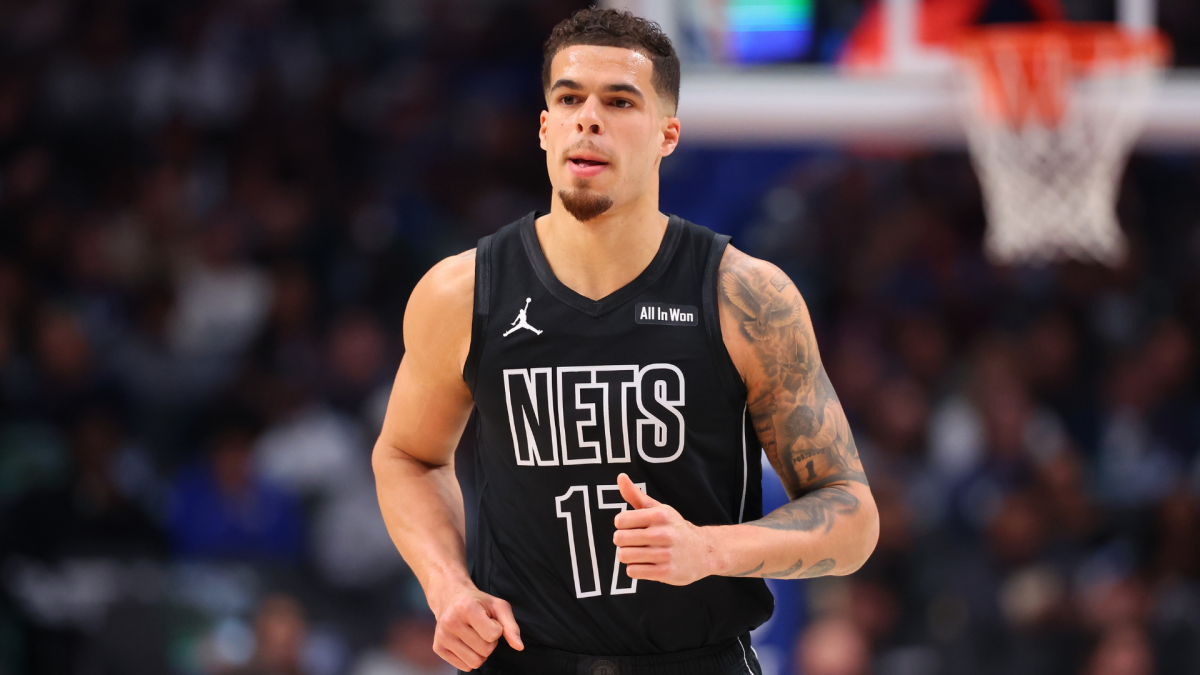
The Nets have signaled lately that they are willing to keep Porter if the right trade doesn’t come along. Their history suggests as much. They held onto Mikal Bridges and Cam Johnson far longer than most thought they should and they still haven’t traded Nic Claxton. The Nets have historically let great be the enemy of good when it comes to trades. They view each deal in a vacuum and don’t seem to make major moves for the sake of pushing in a bigger picture direction.
But count me as a skeptic that they keep that trend up. They could afford to be patient with Bridges. He’s literally never missed an NBA game. Porter’s history of back injuries and extension eligibility make him something of a time bomb. Besides, the Nets don’t control their first-round pick next season and they won’t want to keep tanking into 2028. Sean Marks has proven to have quite a bit of job security, but getting ownership to buy into that would be a stretch. Brooklyn paid a premium to regain control of its picks in 2025 and 2026. Last year, doing so yielded almost no benefit. They have to maximize this year’s pick, and Porter has played too well for them to do so. The Nets have stacked enough long-term asset value through other moves. It’s time to focus on maximizing their own pick.

Indulge my cap nerdery for a moment. Sacramento had a team option on Keon Ellis last offseason for basically the minimum. This is a pretty common feature in second-round and undrafted contracts. It has become standard operating procedure among the smart teams (specifically, Oklahoma City) to decline these options when the player has value beyond the minimum. Why? Because doing so makes the player a restricted free agent. That allows him to get paid earlier, but the team to control the process, thus getting him at a good long-term value.
So naturally, the Kings decided to pick up that option, keeping him at roughly the minimum so they could sign Dennis Schröder. In the process, they allowed Ellis to become an unrestricted free agent in 2026. They then proceeded to play him far less than they should while knowing there is pretty substantial interest in him from winning teams. So basically, the Kings could have secured the best defender on their roster to a team-friendly deal. Instead, they’re going to have to trade him for what will probably be less than fair value because he’s going to leave otherwise. Even if they hadn’t prevented him from signing early last summer, even if they hadn’t lowered his value by giving him inconsistent minutes this year, what winning player is ever eager to play for the Kings?

The Knicks are deceptively well-equipped to make a trade, at least for a reserve, from an asset standpoint. Why? Because of the top-eight protected 2026 first-round pick they own from the Wizards. That pick won’t convey, but it becomes Washington’s next two second-round picks if it doesn’t. Both are valuable. The Knicks can flip those for bench help. The issue is money. The Knicks are pressed up against the second apron. Their big contracts are all attached to important players.
Yabusele hasn’t lived up to the team’s expectations since the front office signed him with the taxpayer mid-level exception last offseason. At $5.5 million, he’s by far the biggest expendable salary on the team. The Knicks could use another big man — that’s why they signed him in the first place — but they’ve also been linked to a number of guards. Ellis would make sense, given his cheap salary and on-ball defense. If the Knicks make a meaningful move, it’s a safe bet that Yabusele is involved.

The same basic concept we just covered with Yabusele and the Knicks applies to Kyle Kuzma and the Bucks. The numbers are just way bigger. Assume Giannis Antetokounmpo and Myles Turner are staying. The Bucks have only one more player making above the non-taxpayer mid-level exception. That’s Kuzma. If they want to reel in a big fish or even a medium fish, his $22.4 million salary is going to be necessary.
Is that advisable? Kuzma hasn’t played well in Milwaukee, but his salary declines next season and his contract expires after that. Given their lack of draft capital, Milwaukee’s likeliest path to adding talent would be using the Kuzma money to take on a longer, pricier contract attached to a better player. Milwaukee’s problems are too big to be solved with a single such move. In the end, such a trade would probably only leave the Bucks in more dire financial straits in the near future.

We’ve reached the “duck the tax” stage of this story. Jones makes $7 million. The Magic are about $5.5 million above the luxury tax line. Getting below the line this year is important with Paolo Banchero‘s rookie extension kicking in next season and a big Anthony Black contract looming down the line. The Magic will be paying the tax for a long time. Delaying the repeater clock as long as possible is vital. If it costs some second-round picks to get below the line, then so be it.

Phoenix is already a repeater tax team, but the Bradley Beal waive-and-stretch was designed to help them get the below the line for the next two years and reset the clock. The Suns are only about $1 million above the tax line and Richards, the fourth-most important center on the team’s roster, makes $5 million. In other words, he’s an obvious candidate to be moved for the sake of getting below the line.

Denver has the smallest tax bill to figure out here. The Nuggets are only $400,000 or so above the line. But with Christian Braun‘s rookie extension kicking in next year and Peyton Watson set for restricted free agency, they’re going to have a monster tax bill for the 2026-27 season. Getting below the line now and reaping a tax dispersal will be a priority, especially for a team that’s tended to be relatively conservative financially. Tyson is the least important minimum salary they have. If they could move the bigger Zeke Nnaji contract they likely would.

The Raptors are a likely tax-ducker as well, but there’s the added caveat here that Toronto has been linked to just about every big name on the market. Whether they’re trading someone to get below the line or stacking salary to get a star, Agbaji, as an expiring $6.4 million deal whose role has been diminished this season, is the likeliest contract for them to move. He’s a former lottery pick in just his fourth season, though, so there’s still upside here for the right team.

Chris Paul, Los Angeles Clippers
And we conclude this exercise with the player who got banished earlier in the season. The Clippers have since turned their season around, but reports indicate they’re looking to buy at the deadline. If they do so, expect Paul to get tossed into the deal as an extra contract. Maybe the acquiring team wants to keep him and using him the rest of the year. Maybe it gives him a buyout so he can finish his career where he sees fit. But the Clippers aren’t going to eat the dead money on Paul’s contract even if it’s a minimum deal. They’re going to find a way to trade him.