
This post was originally published on this site.
Campaign finance reform is undoubtedly Mississippi Secretary of State Michael Watson’s legislative priority this year.
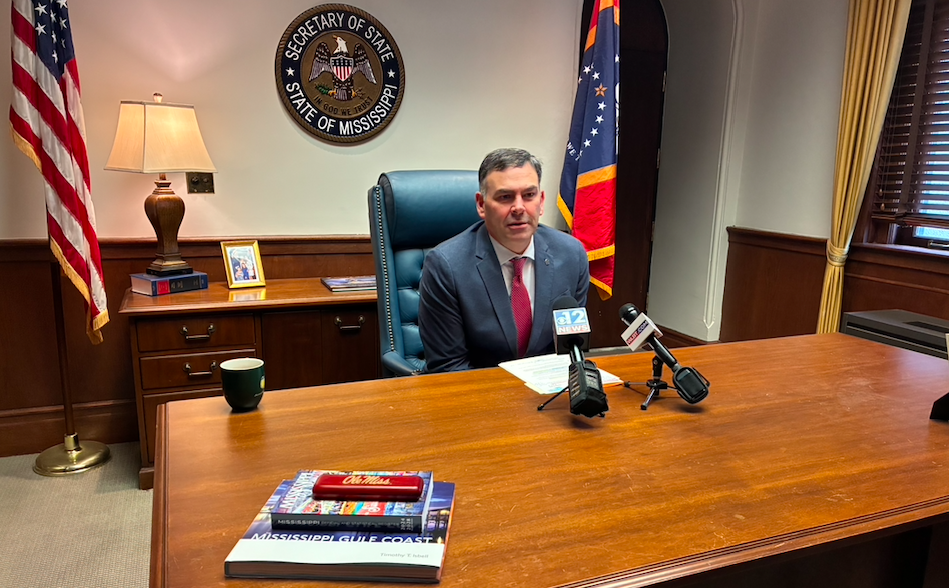
During a press conference earlier this week, the statewide official announced that his office is creating an online campaign finance filing system but needs help from lawmakers to make it mandatory for candidates to file. The system would apply to candidates at all levels — local, county, and state.

Watson, who has pushed for more transparency when it comes to the public being able to keep up with the money political candidates receive, is confident that lawmakers will heed his advice this session due to a couple of scandals as of late where elected officials in Mississippi allegedly accepted campaign contributions for nefarious purposes.
With the spotlight on the alleged corruption in Jackson and the Delta, Watson added that 2026 presents a golden opportunity for the legislature to strike while the proverbial iron is hot.
In Jackson, a multitude of elected officials, including former Mayor Chokwe Lumumba and sitting District Attorney Jody Owens, are under federal indictment for allegedly accepting bribes to steer contracts for a downtown development. In the Delta, two sitting sheriffs are among more than a dozen law enforcement officers accused of accepting bribes to aid drug trafficking in the region.
“I think it’s really important for Mississippians to understand that we work for [the taxpayers],” Watson said. “Every elected official who puts their name on the ballot gains my respect just because they’re willing to serve, but on the back end of that, we get a little lax on holding them accountable, and so, I think when we can tell Mississippians, ‘Look, we want you to hold us accountable, because when you hold us accountable, you get better government.’”
The online database for candidates to file is expected to be operational by this summer, Watson said. If the measure is given the greenlight by the legislature, candidates would be required to disclose campaign finances within the online system beginning Jan. 1, 2027. For a candidate who may lack access to the internet, information can be submitted to their local clerk’s office, where it will then be filed online.
Additionally, Watson’s proposal limits cash contributions to a candidate, and corporations would be limited in how much they can donate to a political figure. A candidate would also be required to have a bank account registered with the Mississippi Secretary of State’s Office or a local clerk’s office to be able to accept money.
“Every opportunity we can give Mississippians the ability to say, ‘Hey, I saw that you took a donation from so-and-so. They don’t necessarily believe like you. What’s going on?’ I’m not saying that’s happening, but just giving them the ability to do that is a good thing,” Watson said. “The more accountable you hold government, the better government that you get.”
When it comes to enforcing the regulations set under the bill, the responsibility for assessing civil penalties and managing non-compliance with campaign finance disclosure reports will shift from the Mississippi Ethics Commission to the Secretary of State’s Office. Mississippi Attorney General Lynn Fitch’s Office, which is backing the proposal, would work alongside the Secretary of State’s Office in enforcing the law.
Watson was accompanied by Sen. Jeremy England, R-Vancleave, in putting campaign finance reform into writing. Senate Bill 2558 was introduced on Wednesday and referred to the Senate Elections Committee, which England chairs.
“This is an important job we have. Every elected official, from dog catcher up to governor, is very important,” England said. “We make policy decisions that affect everyone’s lives, so it’s very important to be as transparent as possible and to make sure that anything that’s happening that may be nefarious is taken care of through the law.”
Both Watson and England are hopeful that the legislation will pass and will give voters a better perception of the work elected officials do, as they would be held under a more finely-tuned microscope.