
This post was originally published on this site.
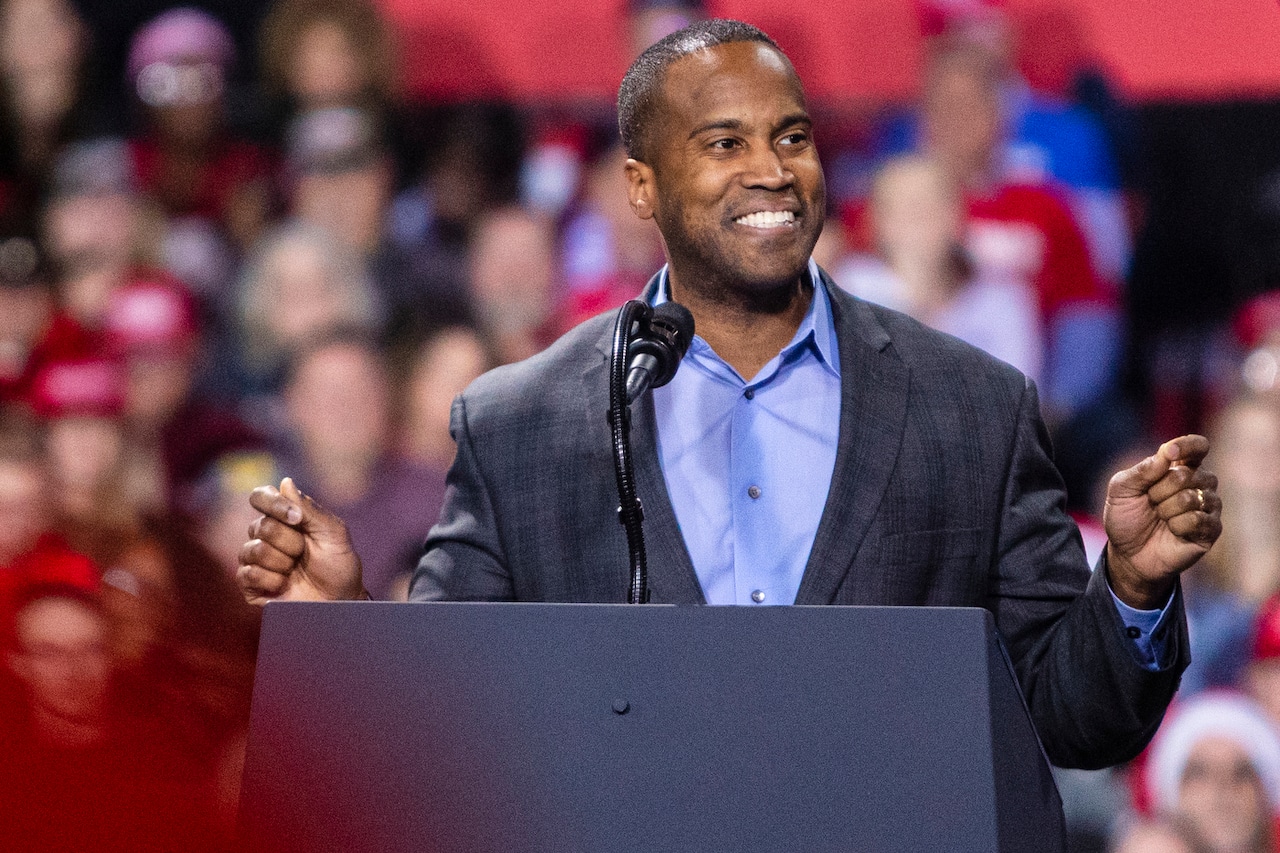
LANSING, MI – U.S. Rep. John James, R-Shelby Township, said if elected the state’s next governor, he would open the office to public records requests and implement detailed financial disclosures for himself and top state officials.
James, one of a handful of prominent Republicans running for Michigan’s highest office, launched the transparency plan last week. It’s the first official policy his campaign has rolled out since launching his gubernatorial bid in early 2025, and includes priorities echoed by state House Republicans.
James said changes are necessary to clean up what he described as a mess in Lansing – “an endless cycle and revolving door of corruption and dishonesty.”
“Authentic freedom for the citizens of Michigan can only be achieved by restoring trust in our leaders,” he said.
His campaign team did not return an interview request to discuss details of his transparency plan.
James has stood out as an early frontrunner in the race, leading other Republican candidates in November polling.
In response to the policy plan release, Michigan Democratic Party spokesperson Derrick Honeyman said James “hides from Michiganders for his votes to cut health care, breached ethics laws, was fined tens of thousands of dollars for campaign finance violations and refuses to call for the full release of the Epstein files. Pretending to care about transparency is laughable.”
Other Republicans now in the race include Senate Minority Leader Aric Nesbitt, R-Porter Township, former Republican House Speaker Tom Leonard, former Republican Attorney General Mike Cox, Ax MI Tax Executive Director Karla Wagner, Pastor Ralph Rebandt and business owners Perry Johnson and Anthony Hudson.
Prominent Democrats running are Secretary of State Jocelyn Benson, Genesee County Sheriff Chris Swanson and Marni Sawicki, former mayor of Cape Coral, Florida.
Former Detroit Mayor Mike Duggan, elected as a Democrat, is running as an independent.
In 2025, Michigan lawmakers passed legislation to increase transparency around how they disclose special funding requests.
But advocacy groups like Voters Not Politicians still point to previous reports ranking Michigan at the bottom of the nation for ethics and transparency standards, and say much still needs to change.
A 2020 report ranking corruption standards for state officials put Michigan in 48th place.
Michigan voters recently surveyed by MLive most frequently listed bipartisanship (16.3%) and improved transparency (13.04%) as the things they’re looking for a gubernatorial candidate to focus on.
Among the policies James highlighted as being part of his transparency plan was implementing full financial disclosures.
“As governor, John James will publicly disclose all of his personal finances, using the same standard under which he disclosed his finances during his service in Congress,” his campaign website reads.
James said he would require the same of all senior appointed executive branch officials, and would call upon the Legislature and judiciary to adopt the same standard.
The plan also centers around ending exemptions for the Freedom of Information Act (FOIA), which allows individuals and news agencies to request public records from local governments and other public bodies, like universities.
Michigan is one of just two states where residents cannot submit a FOIA request to get public records from the governor’s office or legislative branch.
James is not the first gubernatorial candidate to promise an expansion of FOIA. Now-Gov. Gretchen Whitmer, who is term-limited in 2026, said the same on the campaign trail ahead of her first term.
While bills have been introduced to end the FOIA exemptions, Republican leaders in the state House haven’t shown much interest in moving them.
In a press conference held in November of last year, House Speaker Matt Hall, R-Richland Township, said “We’re just not going to do FOIA.”
James did not detail how he would work with the Legislature to advance this priority.
Some other key components of James’ transparency plan include:
- Conducting a “comprehensive audit” of all state government expenditures over the past 10 years, including by the Michigan Economic Development Corporation, the state Department of Health and Human Services and money handed out during the COVID-19 pandemic. James cited a series of major fraud cases in Minnesota, which recently got fresh attention, as reason why. Nesbitt also recently called for an audit of the state’s child care program for the same reason.
- Investigating the $8.5 billion in unemployment fraud that was paid out during the pandemic.
- More funding for the state’s auditor general.
- Stronger whistleblower protections for state employees, including confidentiality protections against retaliation, and increased financial rewards for employees identifying and reporting waste, fraud and abuse.
- An independent audit of the state’s voter rolls.
- Investigating “ghost employees,” which House Republicans have described as those remaining on state payrolls despite not being filled positions.
- Investigating the $9 million contract for Benson’s campaign finance and lobbying disclosure website, which faced a host of technical difficulties when it was rolled out in 2025.
- Enacting a ban on all fundraising by state officials and their staff during legislative session.
- Limiting legislative budget earmarks, or funds for special projects, to be allowed only when there is a budget surplus, and increasing the disclosure period from 45 to 90 days before a vote.
- Enacting a ban on state legislators and elected officials becoming lobbyists for four years after they leave office. A two-year ban has been proposed in the House, but has not yet moved through the Senate.
- Prohibiting elected officials from directing public grants to organizations tied to personal or romantic relationships.
- Prohibiting public officials from signing non-disclosure agreements with any private entities. Non-disclosures are now used by some state legislators when they participate in talks to bring economic development projects to Michigan. Critics say they limit transparency, and the state House has passed bills to also ban them, but they haven’t yet moved in the Senate.
Along with transparency priorities, James also pitched a COVID-19 pandemic accountability and relief plan, called the CLEAR Initiative – COVID Legal Enforcement Accountability and Relief.
He said CLEAR would “confront the overreach, double standards and lasting harm caused by the government’s enforcement of COVID-19 mandates from 2020 onward,” referencing public gathering restrictions and mask-wearing requirements that were protested by some Michiganders before they ended in June 2021.
The plan includes establishing an independent commission to audit all pandemic-era enforcement actions, including citations, fines, license suspensions and shutdowns.
The commission would create a report outlining enforcement patterns, identifying “double standards” and naming cases where public officials broke their own rules.
“Michigan deserves one set of rules for everyone,” James said. “We’ll expose the truth, correct past wrongs and build a culture of duty so government serves the people, not itself.”
James also said he would open a public submission portal for individuals and businesses to report their experiences and request inclusion in the review.
He would automatically clear non-violent, low-level or first-time citations, “especially those related to mask mandates, distancing rules or business capacity limits,” and would refund or cancel fines for individuals and small businesses caught in “the web of unclear or unfair rules.”
James also proposed legislation that would, among other things, require state government approval to extend emergency orders beyond 14 days, and create a fund to support small businesses financially harmed by shutdowns or loss of licenses.