
This post was originally published on this site.
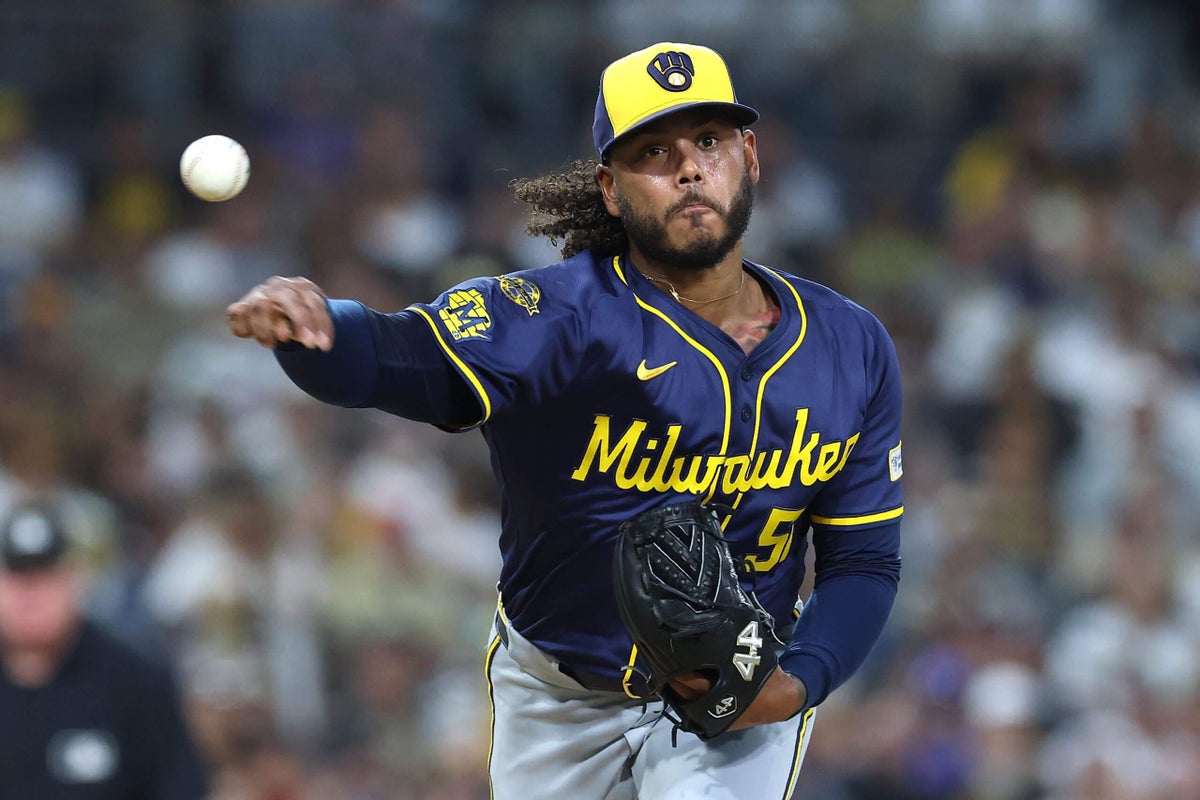
Mets get: RHP Freddy Peralta, RHP Tobias Myers
Brewers get: SS/CF Jett Williams, RHP Brandon Sproat
Stephen J. Nesbitt
Mets: A-
Brewers: B+
Eight hours before executing this trade, at a media event announcing Bo Bichette as a New York Met, the team’s president of baseball operations, David Stearns, telegraphed that, while he was happy with the position player core, he wanted to add a starting pitcher.
Advertisement
“I’ve been open and honest about that through the entirety of the offseason,” Stearns told SNY. “I can’t say with certainty we’re going to be able to do that.”
Go ahead and say it with certainty now!
What started as a slow offseason for Stearns, drawing the ire of impatient Mets fans, has evolved this past week with a series of seismic moves.
First came Bichette, the star free-agent signing to fortify an infield that already added Marcus Semien and Jorge Polanco this winter. Then a trade for a center fielder, Luis Robert Jr. Then the signing of reliever Luis García, another newcomer in the Mets’ bullpen alongside Devin Williams and Luke Weaver. And now the acquisition of two pitchers, Peralta and Myers, providing an ace to a unit that doomed the Mets in 2025 and bullpen depth, respectively.
It all adds up to a rather radical overhaul of an 83-win ballclub.
Still, it’s a painful price to pay in prospect capital in a 24-hour span, losing Luisangel Acuña and top-100 prospects Williams and Sproat. Peralta is the bonafide front-line starter the Mets needed, a guy coming off a season in which he went 17-6 with a 2.70 ERA. He has made 30-plus starts each of the past three seasons. But Peralta will be a free agent next offseason unless Stearns (and owner Steve Cohen’s pocketbook) persuade him to sign long-term.
Would the Mets give up both Williams and Sproat in this deal if they didn’t think a Peralta extension was possible? We’ll see. Either way, the Mets must make this season count. The good news there: Their 2026 outlook is a whole lot better than it was a week ago.
Cody Stavenhagen
Mets: A-
Brewers: A
Here’s one of the many stories people around the Milwaukee Brewers tell about Pat Murphy: While coaching at Arizona State, Murphy grew tired of the recruiting battles for young players who sometimes looked better in batting practice than they played in the game. He told his staff one fall to go find him a short, scrappy redhead.
Advertisement
Soon enough, assistant coach Josh Holliday brought in a picture and placed it on Murphy’s desk. The kid was Kole Calhoun, a 5-foot-10 hitter who went on to play 12 years in the major leagues.
Fitting, then, that Murphy now manages the team that just traded a two-time All-Star for a prospect package that includes a 5-foot-7 hitter who does a little bit of everything.
In fact, maybe the Brewers should file a patent for these types of moves. They’re trading a very good starter before his final year of team control and selling high on Tobias Myers, who has a 3.15 ERA in parts of two MLB seasons but doesn’t grade out as well metrically.
In exchange, they get an upside arm in Sproat, who happened to have a 112 Stuff+ grade in his first taste of the major leagues, and a player in Williams who very much fits their M.O. — speed, on-base ability and (lack of) size. Williams was a first-round pick and a ranked prospect, so he’s far from one of Murphy’s diamonds in the rough. But this trade might ultimately be judged on what type of player Williams becomes. Is he a middling utility guy, or will he become another 3- or 4-WAR player disguised as one of the Brewers’ Average Joes?
Knock Milwaukee all you want for the small-market style. The Brewers made similar trades with Corbin Burnes, Devin Williams and Josh Hader and just keep on churning. Neither Sproat nor Williams are sure things, but this return has a chance to be their best yet.
Dennis Lin
Mets: B
Brewers: A-
Almost two years after they traded Corbin Burnes to the Baltimore Orioles, the Milwaukee Brewers are at it again, doing Brewers things. Rather than owe Peralta just $8 million before inevitably losing him to free agency, the reigning, resourceful champs of the National League Central have returned to a familiar formula.
It’s a proven one that, in the context of baseball’s smallest media market, makes sufficient sense. While Burnes starred as a rental for the 2024 Orioles, infielder Joey Ortiz fit the Brewers like a glove on their way to a successful division defense. That swap came less than two years after Milwaukee shook the clubhouse by shipping star closer Josh Hader to the San Diego Padres.
Advertisement
Stearns, then the Brewers’ head of baseball operations, eventually acknowledged that move was a miscalculation; without Hader, a disenchanted team went on to miss the postseason. Still, the return included young left-hander Robert Gasser, the kind of controllable talent Milwaukee continuously craves.
Now in Queens, Stearns is the one trading multiple top-100 prospects to his former club for an established pitcher.
As it did in the Burnes trade, the cold, hard math suggests this deal could benefit both sides. Peralta gives Stearns’ Mets the frontline starter they sought amid a high-pressure offseason. The inclusion of Myers provides additional bullpen depth. Meanwhile, the Brewers get another controllable starter, as well as a speedy, undersized prospect to add to Murphy’s stable of Dustin Pedroia types.
In another year, perhaps, the Brewers would have been better served hanging on to Peralta and his eminently affordable salary until closer to the trade deadline. But the leaguewide demand for starting pitching continues to soar, and the addition of Sproat means the Brewers might have effectively augmented their rotation depth beyond 2026.
After all that Peralta has done in Milwaukee, now was a perfectly understandable time to cash in.