
This post was originally published on this site.
Harry Ford had been a jewel of the Mariners’ minor league system ever since he was drafted in 2021. Unfortunately, it just so happens that his professional baseball journey started right around the same time Cal Raleigh’s big league career was ascending to new heights. Since 2025 saw Raleigh sign a long-term extension while also changing the course of the team, it seemed pretty clear that Ford was becoming more valuable as a trade candidate than as a backup backstop.
Coupled with some justifiable concerns around his defensive abilities moving forward, it makes sense that he was finally traded to the Washington Nationals, but what Seattle got back may be less clear.
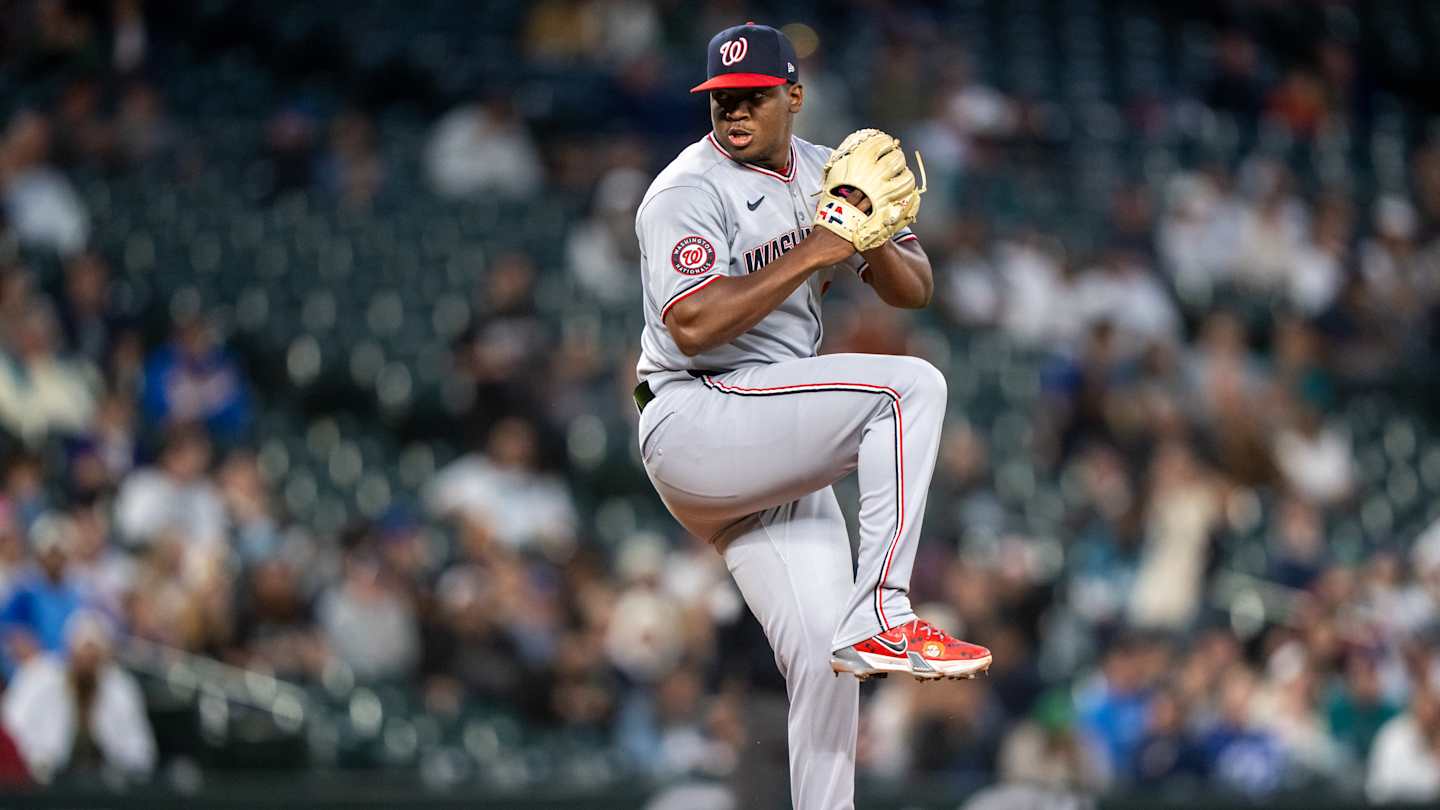
In return for Harry Ford, the Mariners will receive left-handed reliever Jose A. Ferrer from the Nationals
At first glance, this deal seems lopsided in favor of the Nationals, especially since the Mariners are also sending Isaac Lyon, a starting pitching prospect taken in the 10th round of the 2025 draft. The Nationals, who produced the lowest fWAR (-1.2) at the catcher position, are filling a major positional need with a premier young talent who they’ll have full team control of, in addition to some pitching prospect depth with upside. The Mariners are getting a medium-leverage bullpen arm who had an ERA north of 4 last year.
How did a front office as typically savvy as Seattle’s sign off on a seemingly uneven deal?
It makes sense to start by looking at exactly who Ferrer is, which is far more than meets the eye. While his 4.48 ERA and 1.27 WHIP are far from elite numbers for a reliever, it’s his in-depth numbers that make him stand out. His FIP over the past two seasons has been 2.95, which is on-par with Andrés Muñoz (2.88) over that span. He accomplished this with a strikeout rate of just 21.9 thanks to his elite walk (4.9) and home run rate (1.5). For context, Muñoz had a home run rate of 2.6 in 2024.
Ferrer is a master of limiting walks and hard contact because he almost exclusively throws a sinker. In 2025, his sinker utilization jumped to 70.6 overall and 78 vs. left-handed hitters. His barrel rate (4.8) placed him in the 93rd percentile while his groundball rate of 64.3 was in the 99th percentile of qualified pitchers. Focusing on inducing contact did come back to bite him a bit as hitters averaged .309 against his primary pitch, but rarely did those hits go for extra bases. It might even play to his advantage next year as this batted ball profile should pair extremely well with a Mariners infield which placed second in MLB for Defensive Runs Saved (28) last year.
The biggest area of opportunity for Ferrer is to continue fleshing out an effective secondary offering. His changeup was great at inducing whiffs and soft contact, but its tendency to be a waste pitch limited its ability to be an effective complement to his sinker. Instead, his slider might be the focus of Seattle’s pitching staff as it had an astounding 52.5 whiff rate and .158 slugging percentage against.
If anything, the pursuit of a pitcher with a deceptively high ERA shows that the Mariners are doing their due diligence when it comes to evaluating arms through a modern lens. Just like batting average ceded ground to more advanced hitting metrics like OPS, wOBA, and air pull rate, ERA is undergoing a similar gradual retirement.
Lot of money & trade capital spent so far on pitchers with 4+ ERAs last year. Of course those pitchers all still have great stuff and/or great K-BB rates.
Don’t use ERA to evaluate pitchers. Teams don’t.
It’s the batting average of pitching. Some signal, more noise.
— Eno Sarris (@enosarris) December 2, 2025
There’s more than meets the eye with Jose A. Ferrer, and the Mariners are well aware that they may have a diamond in the rough waiting to blossom into the team’s next high-leverage bullpen threat.