
This post was originally published on this site.
Many of Maine’s health systems find themselves teetering on the edge of financial viability, less than a year before the bulk of federal Medicaid cuts will start hitting hospital budgets.
About 40% of Maine’s hospitals are currently losing money, said Steven Michaud, president of the Maine Hospital Association. The pending Medicaid cuts are expected to cost hospitals millions more.
“We are in such a hole collectively, that even if a hospital ekes out a little bit of a margin, we are still in a hole,” Michaud said.
Most of the state’s health systems are recovering from years of big losses due, in part, to the rising costs of drugs, equipment and labor, low reimbursement rates and insurance claims being denied, hospital officials say.
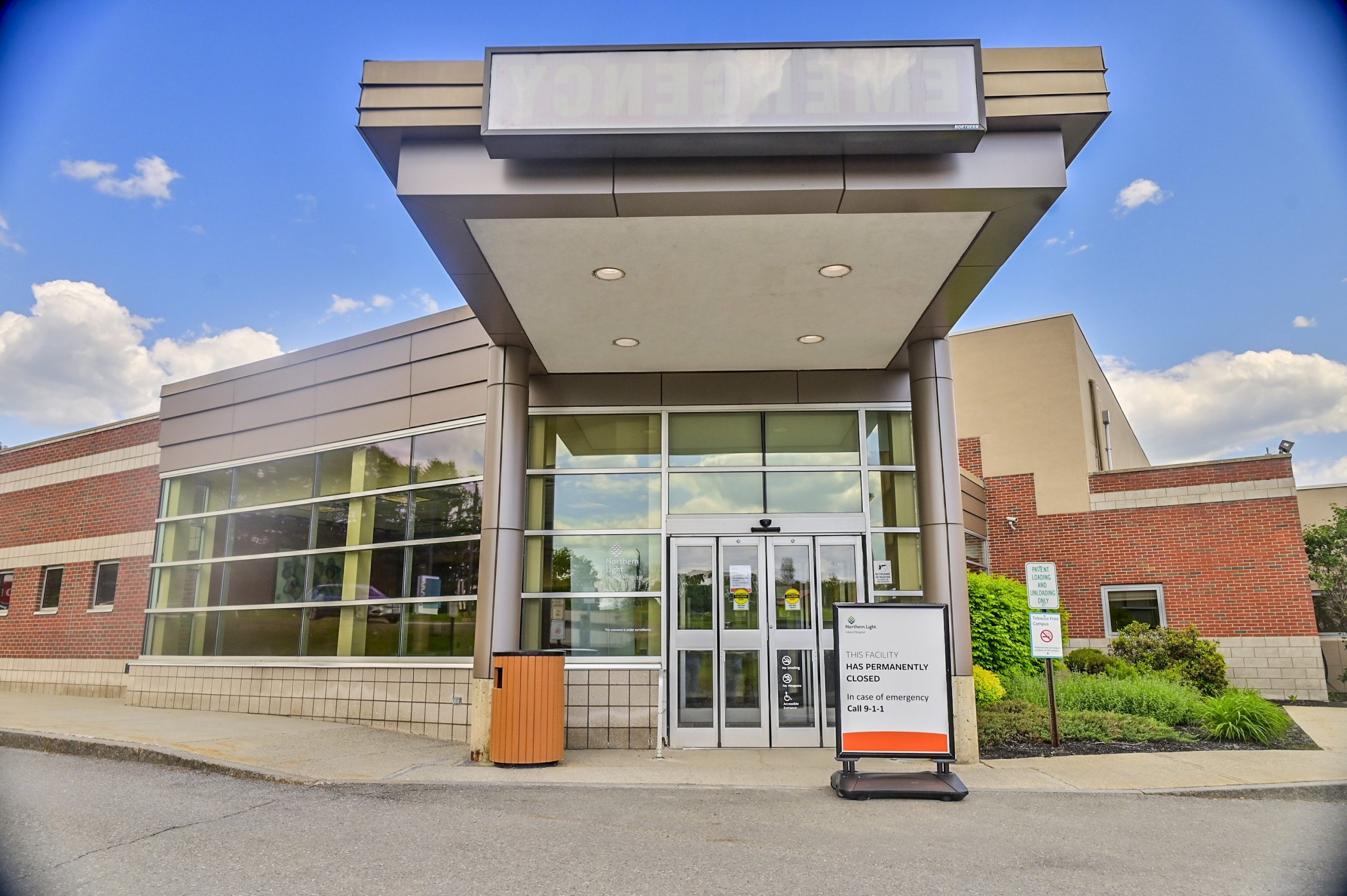
Those financial pressures last year led Northern Light Health to close Inland Hospital in Waterville; MaineGeneral Health to close the Edmund N. Ervin Pediatric Center in Augusta; and Houlton Regional Hospital and MaineHealth Waldo Hospital closed their birthing centers, continuing a long pattern of hospitals in the state shuttering maternity wards.
Northern Light Health, which lost $156 million in 2024, ended last year with a $15-million deficit after closing the hospital and cutting labor costs, said James Rohrbaugh, an executive vice president and chief financial officer for the system. Others, including MaineHealth, reported thin profits.
Dr. Andy Mueller, MaineHealth’s CEO, said the system, which operates Maine Medical Center in Portland and seven other hospitals in the state, finished 2025 with a 1.6% budget surplus and is in “decent financial shape.”
Still, he said, the impending federal cuts threaten to upend it all.
The Republican-backed budget bill passed last summer made sweeping cuts to Medicaid. State officials estimate work requirements implemented in the law will cause more than 31,000 Mainers to lose Medicaid coverage next year. Experts say Maine’s health systems, which receive a large percentage of their revenue from Medicare and Medicaid, will take a significant hit as a result.
Rohrbaugh said the Medicaid cuts would cost Northern Light, which owns nine hospitals and dozens of health care facilities across Maine, $27.3 million over the next two years.
Rural hospitals, which often have a higher number of Medicare and Medicaid patients, will be especially impacted, Michaud said.
“We’re concerned about what’s coming,” he said.
IMPACT ON SERVICES
 WATERVILLE, ME – MAY 22: Sara Wing said she can no longer get needed diagnoses and help for her two elementary school daughters, Kenzie Burton-Wing, 11, left, and Amy Burton-Wing, 8, both who have anxiety disorder, since the closure of the Edmund N. Ervin Pediatric Center. The center – part of MaineGeneral Medical Center – closed earlier this month after 67 years of service to families of children with developmental and behavioral disabilities. (Staff photo by Derek Davis/Staff Photographer)
” data-image-caption=”
Sara Wing, of Waterville, with her daughters Kenzie Burton-Wing, left, and Amy Burton-Wing, last year. (Derek Davis/Portland Press Herald)
” data-medium-file=”https://www.pressherald.com/wp-content/uploads/sites/4/2026/02/42176719_20250522_ervinfolo_2.jpg?w=300″ data-large-file=”https://www.pressherald.com/wp-content/uploads/sites/4/2026/02/42176719_20250522_ervinfolo_2.jpg?w=780″ height=”717″ width=”1024″ src=”https://www.pressherald.com/wp-content/uploads/sites/4/2026/02/42176719_20250522_ervinfolo_2.jpg?w=1024″ alt class=”wp-image-7579277″ srcset=”https://www.pressherald.com/wp-content/uploads/sites/4/2026/02/42176719_20250522_ervinfolo_2.jpg 3000w, https://www.pressherald.com/wp-content/uploads/sites/4/2026/02/42176719_20250522_ervinfolo_2.jpg?resize=300,210 300w, https://www.pressherald.com/wp-content/uploads/sites/4/2026/02/42176719_20250522_ervinfolo_2.jpg?resize=768,538 768w, https://www.pressherald.com/wp-content/uploads/sites/4/2026/02/42176719_20250522_ervinfolo_2.jpg?resize=1024,717 1024w, https://www.pressherald.com/wp-content/uploads/sites/4/2026/02/42176719_20250522_ervinfolo_2.jpg?resize=1536,1076 1536w, https://www.pressherald.com/wp-content/uploads/sites/4/2026/02/42176719_20250522_ervinfolo_2.jpg?resize=2048,1434 2048w, https://www.pressherald.com/wp-content/uploads/sites/4/2026/02/42176719_20250522_ervinfolo_2.jpg?resize=1200,840 1200w, https://www.pressherald.com/wp-content/uploads/sites/4/2026/02/42176719_20250522_ervinfolo_2.jpg?resize=2000,1401 2000w, https://www.pressherald.com/wp-content/uploads/sites/4/2026/02/42176719_20250522_ervinfolo_2.jpg?resize=780,546 780w, https://www.pressherald.com/wp-content/uploads/sites/4/2026/02/42176719_20250522_ervinfolo_2.jpg?resize=400,280 400w” sizes=”(max-width: 1024px) 100vw, 1024px”>
A 2025 report conducted for the Maine Hospital Association by PYA, a national health care consulting firm, found 76% of Maine’s hospitals have a medium to high risk of severe financial problems in the near future.
And the Center for Healthcare Quality and Payment Reform, a national think tank, projects 14 of Maine’s 24 rural hospitals are at risk of closing.
Cuts across Maine’s health systems have already been impacting patients, including Sara Wing of Waterville.
Wing, a mother of two, said she was devastated when MaineGeneral Health’s pediatric center in Augusta closed because it was one of the few places in the state that offered developmental disability diagnoses for children.
The center’s closure was among other cuts made by the MaineGeneral system, which operates MaineGeneral Medical Center in Augusta.
Terry Brann, chief financial officer for MaineGeneral Health, said the hospital finished 2025 with $6.1 million in profits, after two years of operating with more than $15 million in annual losses. He said the system also consolidated offices and did not fill about 90 vacant positions.
Wing said since the closure of the pediatric center, which was a 20-minute drive from her home, she has tried to get her daughters into other agencies. The only places she can get appointments, she said, are more than an hour from home and out-of-network for her insurance, which would cost thousands of dollars.
“It’s hard and disheartening,” Wing said. “As a parent, you feel like you’re failing your kids.”
HOSPITAL SYSTEMS CHANGING HANDS
Central Maine Healthcare — which owns Central Maine Medical Center in Lewiston, as well as critical access hospitals in Bridgton and Rumford — finished 2025 with a profit margin of $5 million after losing $20 million the year prior, said Steven Littleson, president and CEO.
The system saved $500,000 by not recertifying the Lewiston hospital as a trauma center last year, he said. Officials have said the move cut out “burdensome costs” related to the trauma center certificate program, which is regulated by the American College of Surgeons, and that the hospital will continue to offer trauma care.
Littleson said there are plans to reestablish a certified trauma center once the system is acquired by Prime Healthcare Foundation, a California-based nonprofit that owns dozens of hospitals and has pledged to invest $150 million in Central Maine Healthcare over five years.
The acquisition process began last May and is pending final approval by the state. Littleson said he and other Central Maine Healthcare leaders are “getting very anxious” to complete the acquisition. He said the state is considering whether the systems can go through with the sale, as long as they work to become reaccredited through the trauma certificate program, which could take more than a year. A spokesperson for the Maine Department of Health and Human Services did not immediately respond to a request for comment Wednesday.
“The heat’s broken in this building,” Littleson said in an interview, motioning around a conference room in the Lewiston hospital. “The infrastructure here is really aged.”
In southern Maine, York Hospital, which intends to merge with MaineHealth, spelled out its dire financial situation in an application in January to the Maine Department of Health and Human Services.
Dr. Patrick Taylor, York Hospital’s president and CEO, said in an interview that merging with MaineHealth is the path to financial stability. If the merger does not go through, the application says, the hospital could close or face cuts to services, including diagnostic screenings, emergency care and surgery.
“With less than 10 days’ cash on hand and projected losses well into the future, York Hospital faces an existential threat in the near term,” according to the application.
LOOMING CUTS
The Medicaid cuts, which mostly start in 2027, will largely be spurred by new work requirements and other changes that will make it more difficult for enrollees to keep their insurance.
Hospitals are required by state law to provide free, medically necessary services to low-income and uninsured patients. Rural hospitals, which serve a higher proportion of the uninsured population, would be most impacted, said James Myall, an analyst at the Maine Center for Economic Policy.
“Hospitals in those rural areas already tend to have a payer mix that is more reliant on Medicaid,” Myall said. “And because these cuts are largely tied to work reporting, those rural parts of Maine are also the areas where it’s more difficult for folks to have reliable, long-term employment.”
Partially offsetting the Medicaid cutbacks is new federal money coming through the Rural Health Transformation Program, which will pay for technology improvements, workforce development and expansion of telehealth.
While Maine could receive over $500 million from the fund in the next five years, the state is projected to lose $5 billion in Medicaid funding over the next decade, according to state estimates.
Maine’s hospitals could lose more than $66 million a year from Medicaid cuts, according to an analysis by national think tank Third Way.
Central Maine Healthcare relies on Medicare and Medicaid for 70% of its revenue and the increase in the state’s uninsured population under work requirements will cost the health system $11 million a year, Littleson said.
Rohrbaugh said about 66% of Northern Light Health’s revenue comes from Medicare and Medicaid. Cuts already made by the system — including shuttering Inland Hospital, which he said lost $55 million from fiscal years 2015 to 2024 — have left some patients having to drive farther for preventative care and sometimes facing long wait times for appointments.
Rohrbaugh said “the increasing burden on patients is certainly challenging, especially if they’re having trouble accessing programs like the Medicaid program.”
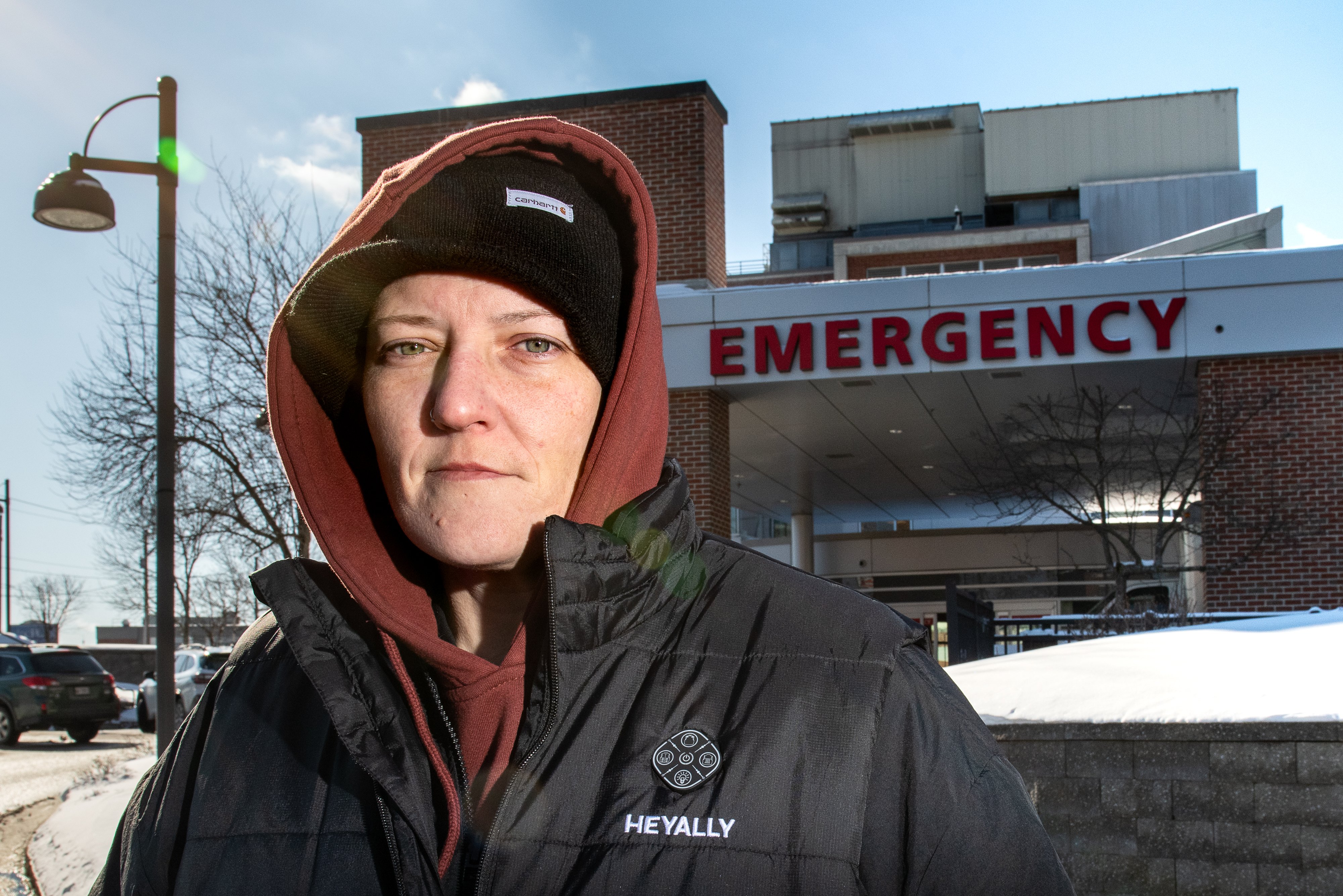 LEWISTON, January 28, 2026 – Trish Farr stands Wednesday morning, in front of Central Maine Medical Center in Lewiston. (Russ Dillingham/Staff Photographer)
” data-image-caption=”
Trish Farr stands in front of Central Maine Medical Center in Lewiston on Jan. 28. (Russ Dillingham/Staff Photographer)
” data-medium-file=”https://www.pressherald.com/wp-content/uploads/sites/4/2026/02/43380277_ph.hospitalfinances.02015.jpg?w=300″ data-large-file=”https://www.pressherald.com/wp-content/uploads/sites/4/2026/02/43380277_ph.hospitalfinances.02015.jpg?w=780″ height=”684″ width=”1024″ src=”https://www.pressherald.com/wp-content/uploads/sites/4/2026/02/43380277_ph.hospitalfinances.02015.jpg?w=1024″ alt class=”wp-image-7579278″ srcset=”https://www.pressherald.com/wp-content/uploads/sites/4/2026/02/43380277_ph.hospitalfinances.02015.jpg 4000w, https://www.pressherald.com/wp-content/uploads/sites/4/2026/02/43380277_ph.hospitalfinances.02015.jpg?resize=300,200 300w, https://www.pressherald.com/wp-content/uploads/sites/4/2026/02/43380277_ph.hospitalfinances.02015.jpg?resize=768,513 768w, https://www.pressherald.com/wp-content/uploads/sites/4/2026/02/43380277_ph.hospitalfinances.02015.jpg?resize=1024,684 1024w, https://www.pressherald.com/wp-content/uploads/sites/4/2026/02/43380277_ph.hospitalfinances.02015.jpg?resize=1536,1025 1536w, https://www.pressherald.com/wp-content/uploads/sites/4/2026/02/43380277_ph.hospitalfinances.02015.jpg?resize=2048,1367 2048w, https://www.pressherald.com/wp-content/uploads/sites/4/2026/02/43380277_ph.hospitalfinances.02015.jpg?resize=1200,801 1200w, https://www.pressherald.com/wp-content/uploads/sites/4/2026/02/43380277_ph.hospitalfinances.02015.jpg?resize=2000,1335 2000w, https://www.pressherald.com/wp-content/uploads/sites/4/2026/02/43380277_ph.hospitalfinances.02015.jpg?resize=780,521 780w, https://www.pressherald.com/wp-content/uploads/sites/4/2026/02/43380277_ph.hospitalfinances.02015.jpg?resize=400,267 400w” sizes=”(max-width: 1024px) 100vw, 1024px”>
Trish Farr, of Lewiston, said it’s “terrifying” that Maine could lose more hospitals. She said three years ago she had a severe cut that required emergency care. A police officer arrived at her apartment, tied a tourniquet and drove her to Central Maine Medical Center a few blocks away, she said.
Farr, 39, said she was surrounded by trauma surgeons and placed in emergency surgery within minutes.
“That hospital being right at my front doorstep and having a trauma center and the surgeons there that they needed,” Farr said, “it literally saved my life.”