
This post was originally published on this site.
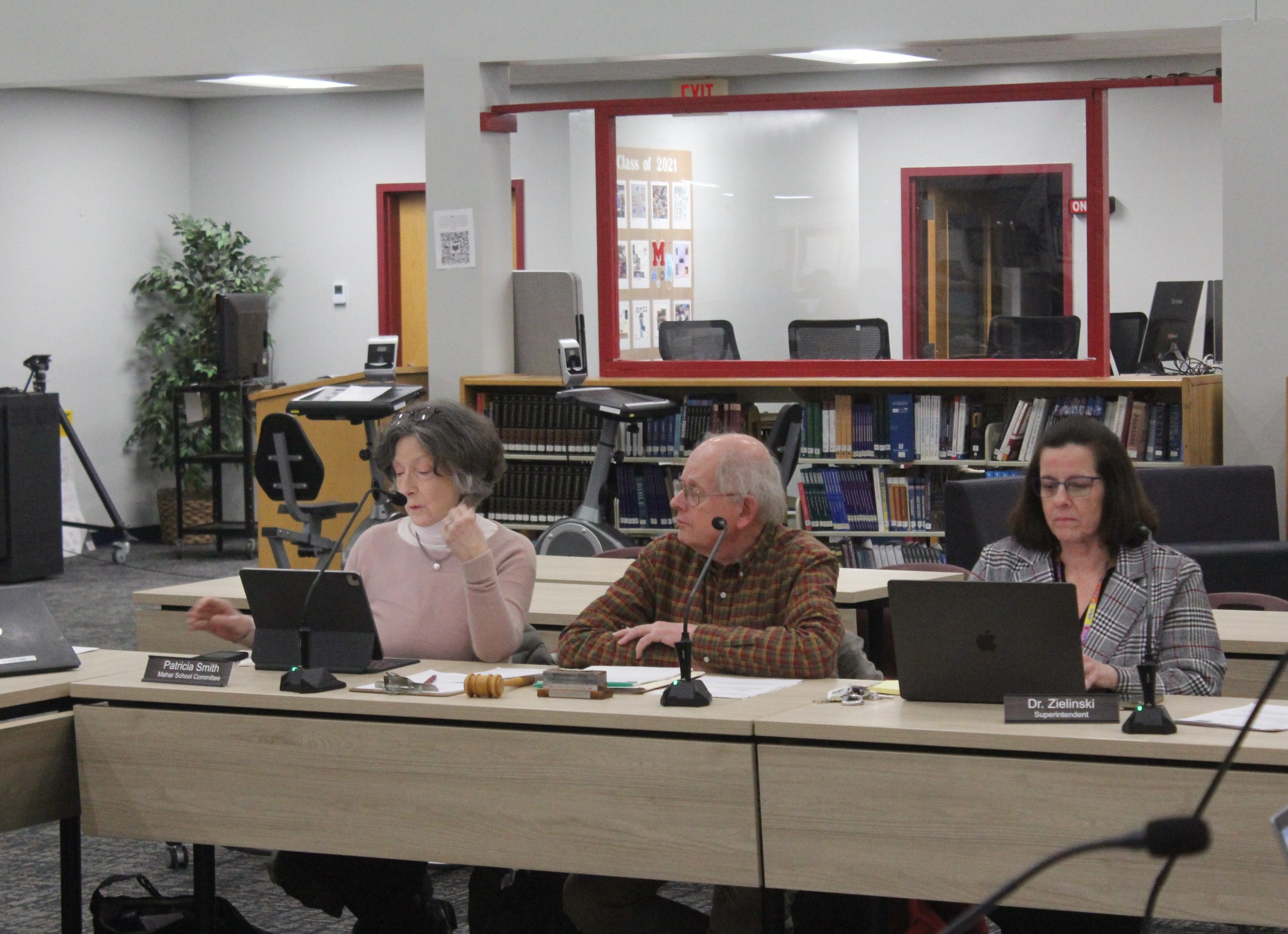
ORANGE — The director of finance and operations for the Ralph C. Mahar Regional and Union 73 school districts attended this month’s Mahar School Committee to discuss the fiscal year 2027 school budget, detailing preliminary figures and explaining the benefits of having students choice in.
Michele Tontodonato walked committee members through a budget presentation ahead of May’s annual Town Meeting. Members of New Salem, Orange and Wendell finance committees also were present. Petersham representatives could not be there due to a joint meeting of the Finance Committee and Selectboard.
The current proposed overall figures sit at $16,110,503, an increase of $282,326, or 1.78%.
“We are trying to be fiscally responsible and transparent,” School Committee member Sharon Gilmore said.
Tontodonato said special education is always among the biggest expenses.
“And it should be,” she said.
The proposed special education budget figures are $3,939,741. That’s up from $32,418, or .8%, from the current fiscal year. The proposed figures would make up 24.7% of the total budget.
According to information from Tontodonato, the increase can be attributed to contract rate increases, as well as out-of-district costs. There are 21 students anticipated to be placed in out-of-district programming for the FY27 school year, and five students are expected to either age out of services or graduate prior to the 2027 academic year’s start. Tontodonato reports that there are four rising seventh-grade students that will enroll in the district that are currently receiving services out of district. Also, $500,000 in circuit breaker funds will be used to offset out-of-district expenses, decreasing the General Fund line.
The proposed School Choice budget goes from $600,000 to $717,734, a 19.62% increase.
Under state law, the School Choice program allows families to enroll their children in schools in communities other than the city or town they reside in. The tuition is paid by the sending district to the receiving district, but districts can elect not to enroll School Choice students if space is unavailable. According to Tontodonato, the School Choice formula is capped at $5,000 per student, with additional increments for students with individualized education plans.
School Choice students make up 16.18% of the Mahar district’s total student enrollment, Tontodonato reports.
“Over the past several years, the district has been able to leverage the School Choice program in a positive manner,” she wrote in a presentation. “In general, School Choice students do not increase staffing needs. Choice students fill seats in classrooms that would otherwise not be at maximum capacity. Our choice students contribute to a rich and diverse academic environment.
“Our School Choice families place a high value on their child’s education at Mahar and their inclusion into our community,” she continued. “The consistently high number of School Choice students reflects the desirability of Mahar’s academic environment, unique pathway programs, and reputation for a positive, inclusive and enriching school culture.”
Tontodonato mentioned that the choice-out numbers include only students who are member-town residents that choiced out to other public schools. This does not include homeschoolers, Franklin County Technical School, private schools, or special education placements.
The projected insurance costs are estimated to balloon to $2.9 million, a 9.9% increase. The final figure will be given at the end of February or the beginning of March.
General education includes a proposed decrease of $28,326, to $4,058,766. This includes the elimination of one teaching position and moving another from the General Fund to the School Choice. The proposed $465,682 Central Office budget constitutes a 3.7% increase. Tontodonato said the increase is due to salaries and the cost of software.
“The presentation went well,” Tontodonato told the Recorder in an email. “We appreciated the attendance of Finance Committee members from three of the four member towns, which allowed them to receive the same information simultaneously and ask questions in advance of the Superintendent’s and my presentations at their respective committee meetings.
“Their participation also created an opportunity to engage directly with the School Committee regarding any concerns or perspectives on the budget, helping to ensure a collaborative and transparent budget development process,” she added.