
This post was originally published on this site.
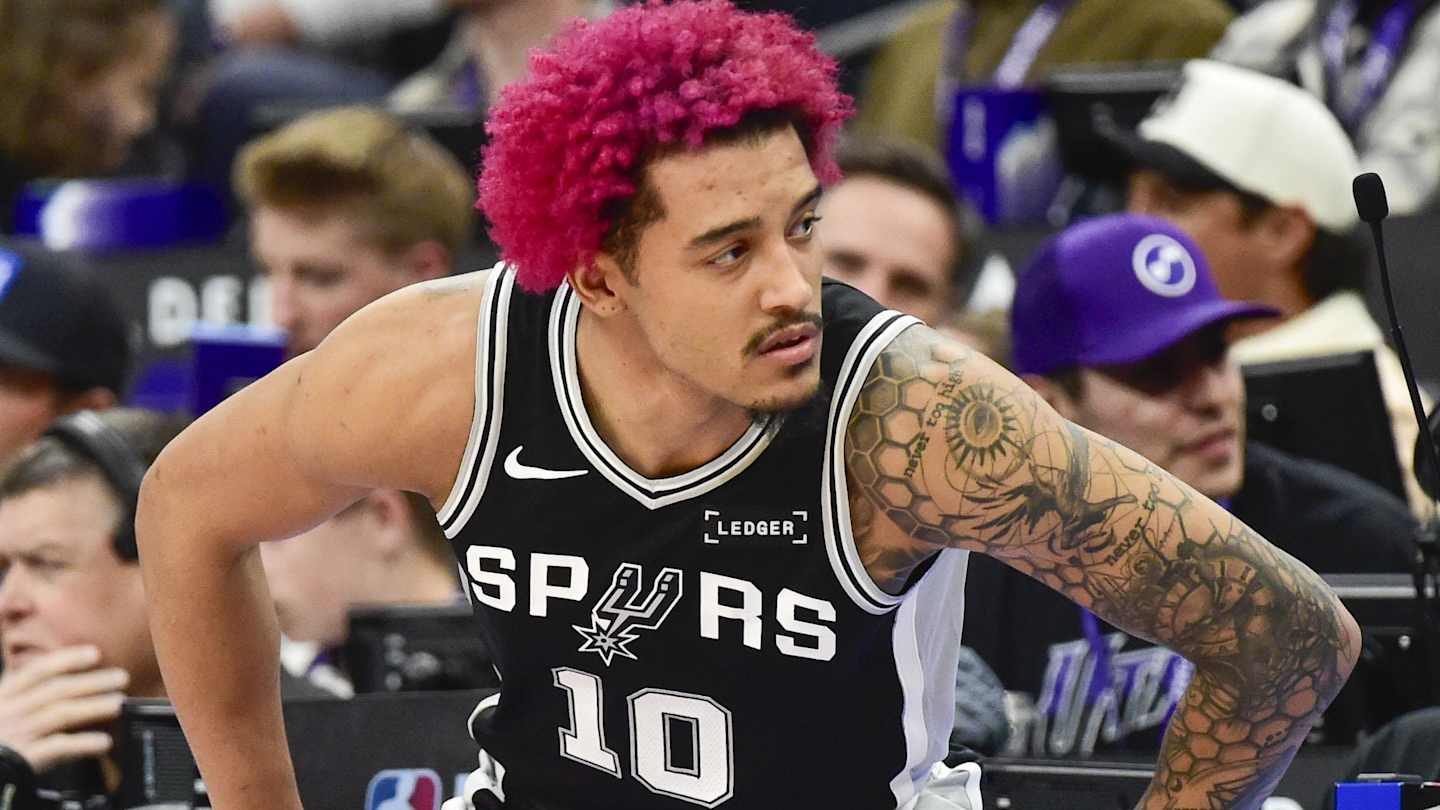
The New York Knicks’ addition of Jeremy Sochan is equal parts intriguing, encouraging, and not at all taking place in a vacuum. Instead, his midseason arrival is the culmination of every trade-deadline move made by the front office, a true order-of-operations tour de force.
New York has essentially turned Guerschon Yabusele and two second-rounders into Sochan, and Jose Alvarado. That framing is impressive enough on the most basic level.
Yabusele wasn’t in Mike Brown’s rotation, Jose Alvarado is already making his presence felt, and Sochan is a 22-year-old top-10 pick with an imperfect-but-versatile skill set who’s worth further exploration. New York emerges from this as a winner. End of story.
Yet, the under-the-radar machinations involved to get here reveal something else.
The Knicks just taught a masterclass roster management
Let’s consider everything the Knicks were up against entering the trade deadline:
- They had just $150,000 in room beneath the second apron, which meant they couldn’t sign another player until April
- Yabusele’s value sank so low that his $5.8 million player option became immovable without attaching assets
- According to Michael Scotto of HoopsHype, the San Antonio Spurs were among the teams unwilling to take on Yabusele’s player option, effectively nuking trade talks for Sochan
- Yabusele was also a hang-up in negotiations for Alvarado, because the New Orleans Pelicans wanted no part of said player option, per ClutchPoints’ Brett Siegel
Despite all of this, the Knicks will come out of the All-Star break with both Alvarado and Sochan, and having traded only two second-round picks.
Now, let’s recap the brilliance behind how they did it:
- The Knicks found a team in the Chicago Bulls that promised to play Yabusele, which convinced him to decline his 2026-27 player option.
- Yabusele’s $5.5 million salary was then flipped for Dalen Terry’s $5.4 million expiring contract
- No longer encumbered by Yabsuele’s player option, the Knicks attached Terry’s expiring deal to a pair of second-round picks and cash to land Alvarado
- Since Alvarado is on the books for just $4.5 million, the Knicks saved a total of $1 million, giving them around $1.2 million in wiggle room beneath the second apron
- This $1.2 million was more than enough to immediately offer a rest-of-season contract, which the Knicks gave to Sochan, a player for whom they were actively attempting to give up assets
But wait, it gets even better!
New York quietly maximized draft assets
Not enough can be said about the Yabusele-to-Chicago scenario. Getting him to decline his player option saved the Knicks multiple second-round picks.
The Sacramento Kings needed two seconds to dump Dario Saric’s salary, and he was on an expiring contract. Offloading Yabusele with that player option would have cost the same—at minimum.
Oh, and the cherry atop this sundae that was the Knicks’ trade deadline? They held onto the Washington Wizards’ top-eight-protected first-round pick that converts to two second-rounders.
As things stand now, one of those selections will convey at No. 32—a fringe first-rounder. That slot increases the likelihood they unearth another cheap young prospect worth developing. It could also be a valuable throw-in to an eventual trade.
Zoom out, and this entire process is a stroke of genius. The Knicks took a player with negative value and two seconds, and parlayed him into an everyday rotation player, a wing they’ve had their eyes on for a while, and additional flexibility—all without having to fork over any of their most intriguing youngsters or draft assets.
The Knicks aren’t just a trade-deadline winner. They’re the biggest winner. Period.