
This post was originally published on this site.

Features writer
Connor Sephton
Features writer

Share

Fact Checked by
Elena Bozhkova

Features Lead
Only yesterday, we explained how Donald Trump runs his White House like a reality TV competition. Nominees for high office are turned into contestants vying for his approval, and the frontrunner could switch at any minute.
Lo and behold, that’s exactly what’s happened in the race to become the next chairman of the Federal Reserve. BlackRock’s Rick Rieder had been regarded as the favorite, but that suddenly changed late on Thursday.
Odds from the prediction market Kalshi had suggested Rieder had a 41% chance of securing the nomination — but just 12 hours later, this had crumbled to an extremely unlikely 5%.
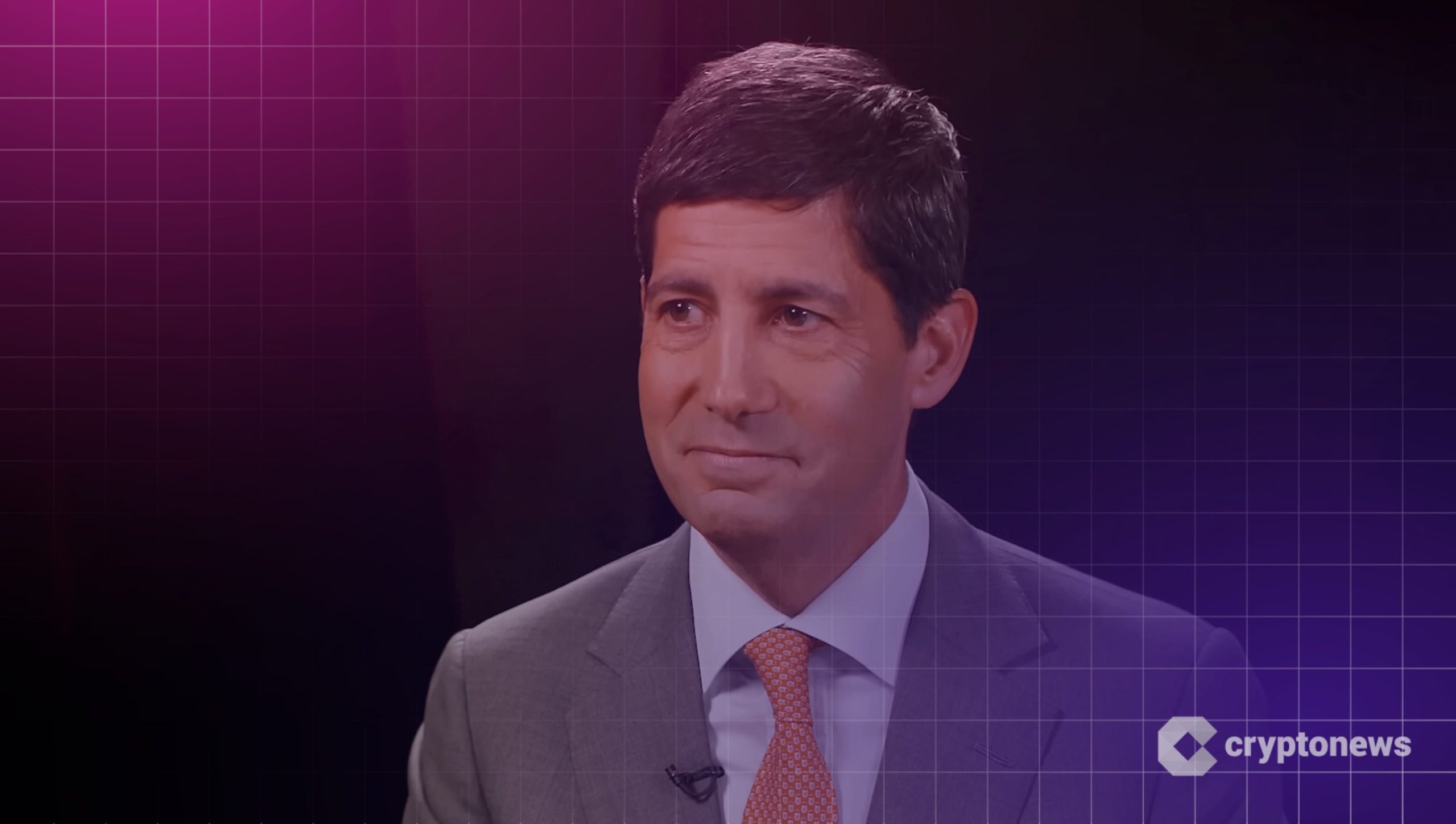
Over the same period, Kevin Warsh’s star has risen substantially. The latest figures suggest he now has a 93% chance of being asked to succeed Jerome Powell as head of the world’s most influential central bank.
So… why the reversal? Well, it’s linked to remarks Trump made to reporters. He confirmed that his chosen nominee will be unveiled on Friday, adding: “A lot of people think this person could have been there a few years ago.”
Rewind back to 2017, Warsh had also been in the running to lead the Fed — but was pipped to the post by Powell.
[embedded content]
Kevin Warsh’s Views on Bitcoin
Like many of those jostling for the top job, Warsh has an optimistic attitude towards Bitcoin.
When interviewed by the Hoover Institute last May, he challenged host Peter Robinson for using a “condescending” tone when talking about the world’s biggest cryptocurrency.
Robinson challenged Warsh on whether BTC was a good thing — pointing to remarks by Berkshire Hathaway’s late chairman Charlie Munger, who had described this digital asset as “evil.” He replied:
“Bitcoin does not make me nervous … Bitcoin doesn’t trouble me, I think of it as an important asset that can help inform policymakers when they are doing things right and wrong. It is not a substitute for the dollar, I think it can often be a very good policeman for policy.”
Warsh went on to describe the Bitcoin blockchain as “just the newest, coolest software that will provide us an ability to do things that we could never have done before.”
“Can the software be used for good or evil? Yes — both — like all software, so I don’t cast aspersions like that.”
Despite his complimentary tone, Bitcoin fell to lows of $81,000 in the early hours of Friday as markets digested the news. Why? Because one of things Warsh has repeatedly called for is a smaller Fed balance sheet, meaning the central bank may no longer fuel the markets with liquidity. Wilson Asset Management’s portfolio strategist Damien Boey told Reuters:
“As you start to talk about pulling the rug out from underneath that … all the hedges against balance sheet expansion that people have been going for — gold, crypto, obviously bonds start to sell a little bit.”
Indeed, gold has been plummeting over the past 24 hours, with sell-offs that far outpace Bitcoin’s 6% drop. The yellow metal was on the brink of its biggest one-day plunge for more than 10 years — tumbling from close to $5,600 an ounce to back down below $5,000. Silver and platinum also suffered from double-digit losses, in what some analysts are describing as “top of the market” behavior.
Kevin Warsh has been signalling his enthusiasm for interest rate cuts of late, in line with Trump’s wishes, but concerns linger over the Fed’s independence — and whether the Federal Open Markets Committee, which makes decisions on the cost of borrowing, would allow more aggressive reductions.
Nonetheless, analysts are describing Warsh as a “steady pair of hands” who is known to the markets, and someone who is less likely to embark on erratic policies that could weaken the economy over the long term.
Of course, in a Trump White House, nothing is straightforward. Republican Senator Thom Tillis, a member of the Senate Banking Committee, has vowed to oppose the confirmation of any Fed nominee until the legal matter involving Jerome Powell is fully resolved.