
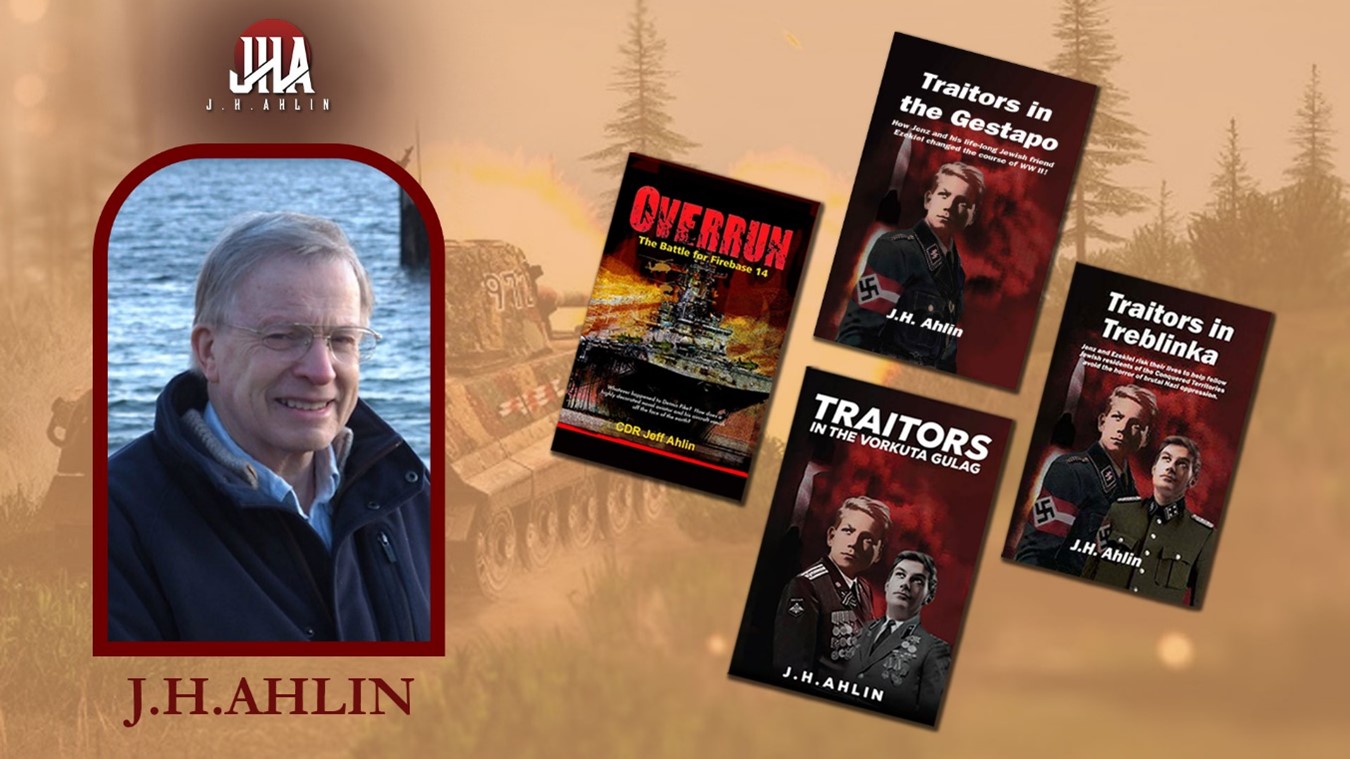
Jeffrey Allen’s journey from dentistry to writing is a testament to following passion wherever it leads. With a foundation in rigorous academics and decades of professional experience, Allen has transformed his life into a platform for storytelling that educates, inspires, and preserves history. His works merge historical accuracy with compelling narratives, revealing the courage and resilience of humanity even in its darkest moments.
Born with a keen mind and a curiosity for learning, Allen first pursued English at Tulane University before embarking on a career in dentistry, earning advanced degrees from Temple University and Boston University, with a focus on pediatric dentistry and orthodontics. His professional path included teaching at Harvard and Tufts and serving as a Navy dentist during the Vietnam War. These experiences, especially his time in Vietnam, shaped his worldview and ultimately informed the emotional depth of his writing.
Allen’s literary career began with academic texts, publishing two authoritative books on maxillofacial orthopedics. Yet it was his personal experiences during the Vietnam War that inspired a turn toward fiction. His debut novel, Overrun: The Battle for Firebase 14, draws on his wartime experiences and is dedicated to Dennis Pike, a close friend and fellow service member lost in the conflict. The book combines thrilling narrative with emotional truth, honoring the sacrifices of soldiers while examining the human cost of war.
Encouraged by this first success, Allen turned to historical fiction, tackling some of the most harrowing chapters of modern history. His trilogy—Traitors in the Gestapo, Traitors in Treblinka, and Traitors in the Vorkuta Gulag—explores oppression, resilience, and the indomitable human spirit across World War II and the Cold War.
In Traitors in the Gestapo, readers meet Jens Ramsk, a young man of Jewish descent who, thanks to his Aryan appearance, infiltrates the Gestapo alongside his lifelong friend Ezekiel, disguised as an Italian citizen. Together, they undermine Nazi operations from within. Allen’s narrative highlights both the horrors of antisemitism and the bravery of those who resisted it, connecting historical lessons to the present day.
Traitors in Treblinka continues the saga, taking Jens and Ezekiel into the heart of the infamous death camp. Allen’s meticulous research paints a vivid picture of life—and survival—within Treblinka, offering readers a gripping account that balances historical fidelity with emotional depth. The story underscores the enduring importance of remembrance and the consequences of hatred left unchecked.
The trilogy concludes with Traitors in the Vorkuta Gulag, set in the brutal Soviet labor camps of Siberia. Here, Jens’s daughter becomes entangled in dangerous political games, allowing Allen to explore the horrors of the Soviet regime while drawing subtle parallels to modern events, including Russia’s aggression toward Ukraine. The novel reinforces the timeless relevance of history and the lessons it offers for understanding contemporary conflicts.
For Allen, writing is not merely storytelling; it is a mission. His novels confront ignorance, challenge prejudice, and inspire empathy. By immersing readers in historical realities, he provides more than entertainment—he provides a lens through which to examine human behavior, the dangers of authoritarianism, and the cost of intolerance.
Looking ahead, Allen continues to develop ideas for future works, promising more narratives rooted in historical truth and moral inquiry. His dedication to accuracy and meaningful storytelling suggests that his upcoming projects will continue to engage readers in reflection on resilience, humanity, and social responsibility.
For aspiring writers, Allen emphasizes research, perseverance, and passion. His own journey—from Navy dentist to acclaimed historical fiction author—demonstrates how personal experience can inform and transform storytelling. His works serve as a bridge between past and present, offering readers insight, empathy, and inspiration.
Through his novels, Jeffrey Allen reminds us that even the darkest chapters of history can teach powerful lessons. His stories honor the courage of individuals, illuminate human resilience, and encourage reflection on the present. In blending history with fiction, Allen proves that storytelling can be a force for understanding, empathy, and hope.