
This post was originally published on this site.
Surprising though it was to see the headline hit late Monday night, it seems pretty easy to sketch out the reasons why the Los Angeles Clippers and James Harden are heading for Splitsville.
Look at Harden — still producing like an All-Star in Year 17, but about to reach age 37 with only a partially guaranteed player option for next season to bank on — and you see a man seeking longer-term security. Look at L.A.’s books, which feature just one player (Ivica Zubac) with a non-rookie-scale salary guaranteed past the end of next season, and you see a team likely unwilling to grant that kind of multi-year re-up as it prepares to clear the decks in search of a fresh start come the summer of 2027. When the parties involved want to move in different directions, well, then, the party’s over; that’s not too hard to understand.
Advertisement
[NBA trade deadline: The latest rumblings around the league]
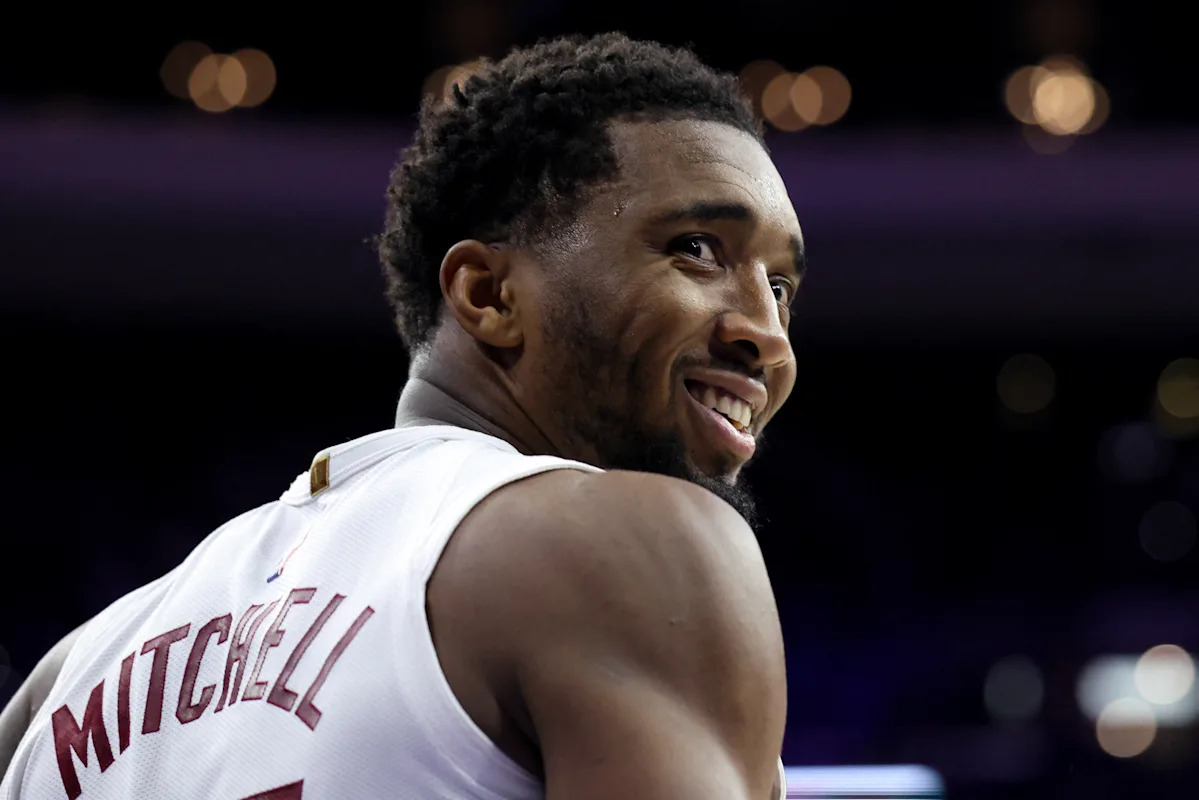
It’s the other side of the reported potential transaction, though, that feels a bit more curious. Why would the Cleveland Cavaliers — who, ICYMI, have won eight of 10 and 13 of their last 18 to move into a tie for fourth place in the East, just two games behind the Knicks and Celtics for the No. 2 spot behind Detroit — suddenly be so keen to take a massive swing for Harden, one of the league’s highest-usage and most ball-dominant players … to put next to their own high-usage, ball-dominant offensive supernova, Donovan Mitchell … while reportedly sacrificing Darius Garland, a two-time All-Star who’s more than a decade Harden’s junior, in the process?
You can make a reasonable player-for-player case. While Garland’s a more accurate shooter, Harden’s been a more valuable player overall over the last five seasons — a more efficient scorer, thanks to a higher volume of both 3-point attempts and trips to the free-throw line, who’s also posted a better assist-to-turnover ratio and a rebound rate twice as high as Garland’s.
The gap has widened considerably this season. Harden’s averaging more than 25 points and eight assists per game at the helm of a near-top-10 Clippers offense, stirring the drink as the Clips have set about pulling off the dramatic in-season turnaround that’s gotten them back in play-in position. Garland, on the other hand, has seen his shooting efficiency dip, his turnover rate rise, and his overall impact wane from last season’s All-Star bounce-back due in large part to a persistent issue with his right big toe that has cost him 25 games this season — and counting.
Advertisement
The counter to that case: OK, maybe Harden, even at 36, is a better player right now. But Garland’s 10 years younger, under contract for two more seasons, and more neatly fits the multi-year timetable the Cavs have been operating under since putting together the “core four” of Mitchell, Garland, Evan Mobley and Jarrett Allen. Why unnecessarily accelerate that timetable by trading up in age by a decade for a player who might not even be on your team two years from now?
One potential answer: Maybe the Cavs feel like it’s actually very necessary to accelerate that timetable …
… and, in fact, have already started operating that way.
Maybe you’re willing to trade up 10 years in age in a Garland-for-Harden deal — one in which Cleveland is also reportedly sending out a second-round pick — and you’re checking around on the possibility of offloading Allen’s three-year, $90.7 million contract extension (which hasn’t even kicked in yet), and you’re in on Giannis Antetokounmpo and Anthony Davis and now Harden because you’ve decided your runway isn’t as long as you thought it was. Maybe you’ve decided you can’t wait around for your “core four” to get healthy and coalesce.
Advertisement
And maybe you’ve made those decisions because you feel like you need to maximize the window you have with Mitchell — which, with him holding a $53.8 million player option for the 2027-28 season, might only be open for two more years if you don’t take concerted action to make sure he wants to stick around.
Step No. 1 in that process? Do everything in your power to put together a roster that can get out of the second round of the playoffs — something Mitchell, for all the individual success he’s experienced on the way to six All-Star selections and two All-NBA nods, has yet to do in eight pro seasons. (And while you’re certainly within your rights to wonder whether James Harden is the man for that particular job, it seems notable that, according to Marc Stein and Jake Fischer, it’s “believed that [Mitchell] would welcome the addition of an experienced ball-handler like Harden to ease some of the playmaking burden he has shouldered this season.”)
As generally successful as the Cavs have been of late — three straight playoff trips, the league’s fourth-highest winning percentage since the start of the 2022-23 season, the first postseason series wins the franchise had managed without LeBron James since 1993 — this era still bears the stain of disappointment, and the weight of unmet expectations. The Round 1 bullying by the Knicks in 2023; the summary second-round dismissal by the Celtics in 2024; buckling before the team-of-destiny Pacers last spring; now, going from preseason favorites to make the NBA Finals to scraping just to get out of the play-in mix: it’s all left a thick, acrid aftertaste.
There were, if not excuses, then at least explanations for those disappointments — chiefly that the Cavs have routinely not had a full complement of healthy bodies available. (This year’s model has lost more player games to injury than all but five teams, according to Spotrac, with expected starting small forward Max Strus still yet to suit up after offseason foot surgery.)
Advertisement
That’s the rub, though: The “core four” have played just 161 minutes together over 13 games this season, and ESPN’s Brian Windhorst reported Tuesday that, while Garland “is making progress” and could return soon from his latest toe sprain, there is also “some concern about whether [his foot] injuries could be a longer-term issue.” Maybe those concerns informed Cleveland’s first move of this transaction cycle: this past weekend’s deal shipping out small forward De’Andre Hunter for a pair of guards, Keon Ellis and Dennis Schröder. And maybe that’s not all they’ve informed.
While Danny Cunningham of The Inside Shot reported Tuesday that Cleveland’s decision-makers “still believe in their core group of players and are more likely to make a smaller move on the margin,” rumblings persisted that the Cavs were “looking around to see if they can do more” before Thursday’s 3 p.m. ET deadline, with an eye toward shedding more salary to get under the second apron, unlocking the opportunity to aggregate salaries in trades in pursuit of some more aggressive moves. Setting the table to go after Harden and Giannis — and, potentially, another pretty big name around Northeast Ohio — would certainly qualify as “more aggressive.”
Advertisement
Since trading for Mitchell before the 2022-23 season, the Cavs have angled themselves toward an aspirational future — one in which Garland firmly establishes himself as a perennial All-Star, Mobley’s offensive game catches up to his Defensive Player of the Year work on the other end, Allen connects the dots on both ends, and Mitchell shines as the kind of star capable of being the preeminent offensive force in whatever seven-game series he enters. After years of that bitter aftertaste, though, and sitting at 30-21, you can understand why the Cavs might feel pressure to make decisions based not on what they might be, but on what they are: a team with one bona fide All-NBA-caliber offensive player — one who’s eligible for a contract extension this summer, and who could become the belle of the 2027 free agency ball if he doesn’t sign it — and a whole lot of questions to answer beyond that.