
This post was originally published on this site.
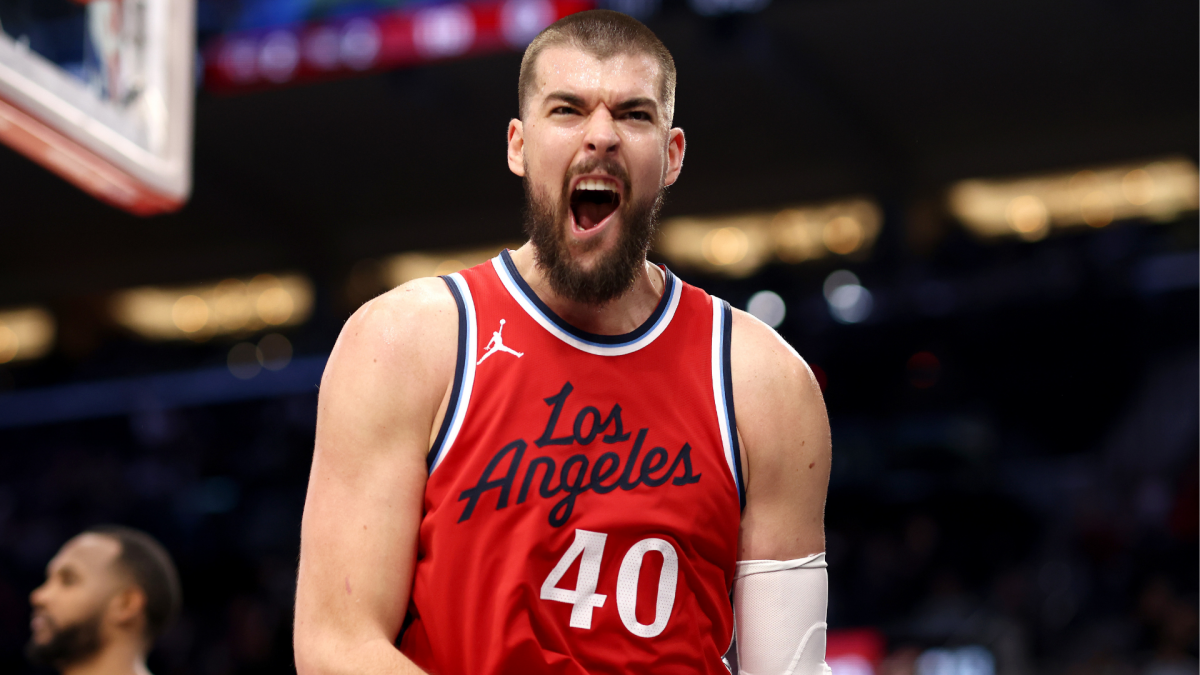
Last offseason, the Indiana Pacers stunningly lost Myles Turner to the Milwaukee Bucks in free agency after their surprising trip to the NBA Finals. That left the Pacers without a big man moving forward. Now, Indiana may have actually improved at the center spot, landing All-Defensive Team center Ivica Zubac from the Los Angeles Clippers.
The cost of getting that center was significant. Indiana will send Los Angeles former No. 6 pick Bennedict Mathurin, Isaiah Jackson, and two first-round picks. One of those picks, an unprotected 2029 selection from Indiana, is unremarkable. The second is one of the more interesting draft picks ever traded. It is Indiana’s 2026 first-round pick, but it has multiple protections. If the pick lands between No. 1 and No. 4, or No. 10 and No. 30 this spring, the Pacers keep it and send the Clippers their unprotected 2031 pick. If it lands between No. 5 and No. 9 in this May’s lottery, however, it goes to the Clippers and the Pacers keep their 2031 selection.
So, what should we make of this unconventional deal? Let’s grade it to find out.
Indiana Pacers: B
When Turner was a free agent last offseason, the Pacers could have used Bird Rights to re-sign him to anything up to the max. When they were in the middle of the NBA Finals, they appeared poised to go into the tax to keep him. Once Tyrese Haliburton tore his Achilles and Indiana’s 2025-26 hopes were dashed, however, the Pacers took a longer view. Turner was in his late 20s. His defense had started to slip. And Milwaukee ultimately elected to pay him at the top of the market: $108 million over four years that will take him through his age-32 season.
Zubac is, in many ways, Turner’s opposite in those respects. He’s only gotten better as he’s aged, making an All-Defensive Team and mounting a late push for All-NBA last year, in his age-27 season. He will make around $11 million less over the next two seasons than Turner will, and he’s only locked in through his age-30 season.
At this point, he’s a better player than Turner was last season, though he’s stylistically quite different. Indiana will have to adjust to having a center that does not shoot 3s, as that spacing meant a good deal to their offense. Zubac isn’t an obvious fit in Indiana’s up-tempo system either having spent most of his career playing for the slow, plodding Clippers. His stellar passing and screening, however, should fit like a glove in Rick Carlisle’s free-wheeling offense, and his excellent floater is a great end-of-clock release valve for an offense that doesn’t have a typical one-on-one shotmaker.


The biggest difference here, though, is his rebounding. Turner has never provided much of anything on the glass. The Pacers ranked 28th in the NBA in rebounding rate last season, and while they survived by rebounding as a team in the playoffs, this group has never really had a high-end individual rebounder. That’s going to make a real difference, especially on offense as the NBA has embraced the offensive glass more than ever this season.
Giving up Mathurin was a necessary evil. He was headed for restricted free agency over the summer, and the Pacers weren’t going to have the dollars or shots he’d want next season. The real value proposition of this trade comes down to that enormously unconventional draft pick they traded in 2026. If the picks land in 2029 and 2031, while it deprives Indiana of trade ammunition, they shouldn’t worry too much about giving away great selections. Prior to this season, Indiana had missed the playoffs just nine times since 1990. The Pacers are almost never bad. They shouldn’t expect to be in 2029 and 2031–especially if they’re adding a top-four pick in 2026.
But that’s a double-edged sword. Never being bad means never having upside in the lottery. This 2026 draft—loaded not just at the top, but throughout the lottery — represented what might have been a once-in-an-era opportunity to get a top prospect on a cost-controlled rookie deal while Tyrese Haliburton is still in his prime. It obviously still could. If this pick lands in the top four and the Pacers get a potential superstar, they win this trade running away. If they give up a pick between No. 5 and No. 9? Well, that’s a bit more complicated. Still worthwhile? I’d say potentially. The Pacers came one game short of winning the championship last season. With Zubac, they could be right back in the Finals.
But the prospect of giving up a mid-lottery pick in a loaded draft for someone who’s never made an All-Star Game is admittedly terrifying. As of this moment, the Pacers have a 52.1% chance of landing in the top four and a 47.9% chance of handing this pick to the Clippers. It’s basically a coin flip. Most teams would do everything in their power to keep it that way, but the Pacers don’t really tank like normal teams do. Even this season, Pascal Siakam has played enough for them to make the All-Star team. There’s a good chance they play their guys down the stretch and decrease their odds at keeping this pick as everyone around them races to the bottom. We won’t truly be able to evaluate this deal until lottery night, but for now. we’ll call it a short-term win for Indiana that comes with long-term risk.

Los Angeles Clippers: B+
Ivica Zubac is coming off of a career year, is 28 and has a very team-friendly contract. In other words, this is probably the peak for him as a trade asset. He’s simply more valuable to a team trying to win a championship in the somewhat near future than he is to a team like the Clippers, that has clearly determined that doing so is no longer possible. That’s why they traded James Harden for Darius Garland. They took on a worse player with more injury question marks because he’s a decade younger and offers them a path to whatever comes next.
This trade works for the same reasons. Indiana was never going to re-sign Mathurin, but the Clippers, with a clean cap sheet moving forward, can pay him easily to be Garland’s long-term backcourt partner. He never quite fit into Indiana’s movement-heavy system, and he had clearly been supplanted by Aaron Nesmith and Andrew Nembhard in the team’s pecking order, but on a more traditional roster, his athleticism and shotmaking still have a chance to be quite valuable. Remember, he’s had eight 25-point playoff games in the last two years and he’s averaging just under 18 points per game this season. There’s more to his game than we’ve seen in Indiana. Think of the way we talk about Jonathan Kuminga in Golden State. Mathurin is a version of that with far more evidence backing up his potential value.
The basic idea of turning Zubac into picks — especially with the investigation into Kawhi Leonard and his dealings with Aspiration looming here as a threat to their future draft capital — made sense, though at his age, he also could have reasonably partnered with Garland moving forward.
But really, as it does for Indiana, this trade hinges on the lottery. If the Clippers get a pick between No. 5 and No. 9 in this, specific class in exchange for what is ultimately a high-end role player, they get an A+. If they don’t, the trade still makes sense. It’s just more like a C+ or a B-. Those deep future picks from Indiana are nice assets. They at least represent liquidity, things to trade for different players to pair with Garland and Mathurin when the time is right. But they’re unlikely to be high lottery picks. The 2026 selection could be.
And so, we await what should be one of the most important lottery nights in NBA history. Just imagine the drama. The final pick the Clippers owe the Thunder for Paul George, who now plays for the 76ers, may also be in this lottery, and if it jumps up for Oklahoma City, that may nudge Indiana far enough down the draft order to secure a top pick for the Clippers.
That will have to wait until May. For now, the Clippers have refilled their pick coffers, added an interesting young prospect, and accepted defeat on this failed era in their history. We may not know how strong their return is for a few months, but that was broadly speaking the right approach to this deadline.