
This post was originally published on this site.
The most frenzied week of the winter is near. MLB’s annual Winter Meetings begin Monday in Orlando, and the St. Louis Cardinals figure to be one of the more active teams in the trade market.
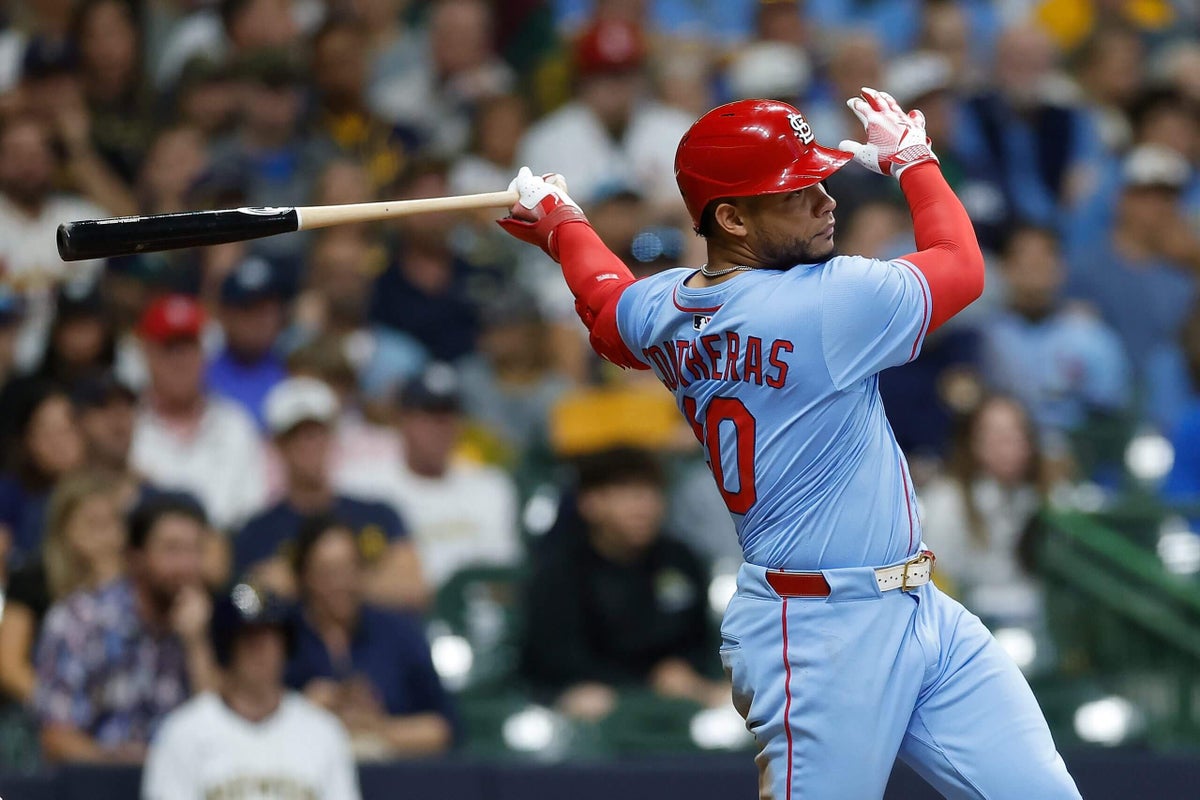
They also have another name to consider shopping. Despite saying at the end of the season that he’d prefer to stay with the Cardinals, Willson Contreras is open to trade offers and has become more willing to waive his full no-trade clause for the right fit, multiple league sources told The Athletic. Contreras has two years and $36.5 million remaining on the five-year, $85 million contract he signed ahead of the 2023 season, along with a club option worth $17.5 million in 2028.
Advertisement
This will not necessarily change the Cardinals’ order of operations, but they will continue to gauge interest on Contreras and present the 10-year veteran with the option to approve a trade, should one arise.
St. Louis has established a clear line of offseason priorities. None is more pressing than trading Nolan Arenado, but that’s far easier said than done. The Cardinals are committed to increasing roster flexibility and are actively listening on their left-handed hitters. Brendan Donovan continues to garner the most interest, but rival clubs are also engaged on Lars Nootbaar and Nolan Gorman, to a lesser extent.
President of baseball operations Chaim Bloom already completed his first major deal, trading Sonny Gray to the Boston Red Sox in exchange for right-handed starting pitcher Richard Fitts and left-handed pitching prospect Brandon Clarke, along with a player to be named later or cash considerations. The Cardinals included $20 million in the trade, marking a significant change in spending under chairman Bill DeWitt Jr. The trade also served as a clear indicator of where the Cardinals are heading, and helped lay the groundwork for what comes next.
Here’s what we’re hearing as the Cardinals head into the Winter Meetings.
How will Cardinals approach Contreras’ market?
The corner-infield market is still being defined, but Contreras could be intriguing for a team looking for a bat-first option. Contreras, 33, clubbed 20 homers and set a career high in RBIs (80) in 135 games for the Cardinals last season, his first as a full-time first baseman.
The Cardinals do not view trading Contreras as something they must do. They are not nearly as motivated to move him as they are Arenado. Trading Contreras would open up first base full-time for Alec Burleson and could alleviate some payroll concerns. If a suitable partner does not jump out, St. Louis could also hold onto Contreras to open the season and pursue moving him at the trade deadline.
Another quality season from Willson Contreras! pic.twitter.com/NNSlmIhHdX
— MLB (@MLB) September 29, 2025
What about Donovan?
Donovan continues to be one of the most coveted trade candidates available, but the Cardinals are not inclined to move him unless they receive an offer they simply can’t refuse. On the surface, it makes sense for St. Louis to trade their lone All-Star representative. Donovan is fresh off the best year of his career and will be a free agent after the 2027 season, a timeline multiple sources within the organization concede will not line up with the team’s next competitive window.
Advertisement
But the Cardinals have the leverage here, and while they are looking to alleviate their logjam of left-handed hitters by trade, that doesn’t make a Donovan deal an automatic guarantee. The same can be said of Burleson, whom the Cardinals do not regard as untouchable but are not motivated to trade, one team source described. The likelihood Donovan is traded remains high due to his heavy interest, but if asking teams do not meet the Cardinals’ high price, they won’t deal him.
What does that mean for Nootbaar?
This ups the percentage that Nootbaar is traded this winter. Like Donovan, Nootbaar will be a free agent come 2028. The 28-year-old is recovering from double heel surgery, which has put his Opening Day availability somewhat in jeopardy. But teams interested in Nootbaar haven’t seemed deterred by his potential early-season unavailability.
Nootbaar’s price won’t be as hefty as Burleson’s or Donovan’s, even though some rival clubs view Nootbaar as the hitter with the highest ceiling in the group. After battling injuries through the first four years of his career, Nootbaar posted a career-high 135 games played and battled through recurring heel pain due to Haglund’s deformities. The Cardinals believe that to be the driving factor in his drop in production last season. Nootbaar hit just .234 with a .686 OPS.
But the underlying metrics suggest a bounce-back season. Fifty percent of balls hit registered as hard-hit, and his average exit velocity (91 percent) ranked just outside the top 20 percent of qualified hitters last season. Nootbaar has consistently shown steady plate discipline. He posted a chase rate just over 20 percent, which put him in the 87th percentile of the league and also registered an 11 percent walk rate. Some teams, including the Cardinals, believe the implementation of the Automatic Ball-Strike system next year will also serve to boost his production.
The Cardinals will continue fielding interest in Nootbaar, and if they are unable to find a strong return for Donovan, they will pivot to shopping their corner outfielder.
Advertisement
Will they actually trade Arenado?
This remains the most crucial task for Bloom, but just because it’s at the top of the priority list doesn’t mean the executive will operate in order. Multiple team sources agree that trading Arenado will be the most difficult endeavor of the offseason. The reasons are essentially the same as last year. Arenado’s full no-trade clause, his preference to play for a contender and the lack of clarity in the third-base market all signal a trade taking place in the latter half of the winter. One aspect that has changed is ownership’s willingness to include money in a deal, as evidenced by the Gray trade.
Arenado’s list of teams he’d waive his full no-trade clause for is more flexible than last year’s, team sources say. That’s something the 34-year-old indicated would happen at the end of the season. Similar to last year, the third-base market has to develop for the Cardinals to know what options are available. Multiple industry sources pointed towards Eugenio Suárez and Alex Bregman (again) as names to watch before Arenado’s market forms. The Japanese market, particularly corner infielder Munetaka Murakami, will also come into play.
Bloom has shown urgency in his first two months as president of baseball operations. Along with trading Gray, he’s made multiple 40-man roster changes, finalized the 2026 coaching staff and added several positions within player development, pro scouting and international scouting. There is no doubt the Cardinals are committed to trying to trade Arenado, but it will require patience.