
This post was originally published on this site.
India, EU Clinch Long-Delayed Trade Deal Amid Trump’s Tariff War
The agreement highlights a wider global trend to diversify markets away from the United States.

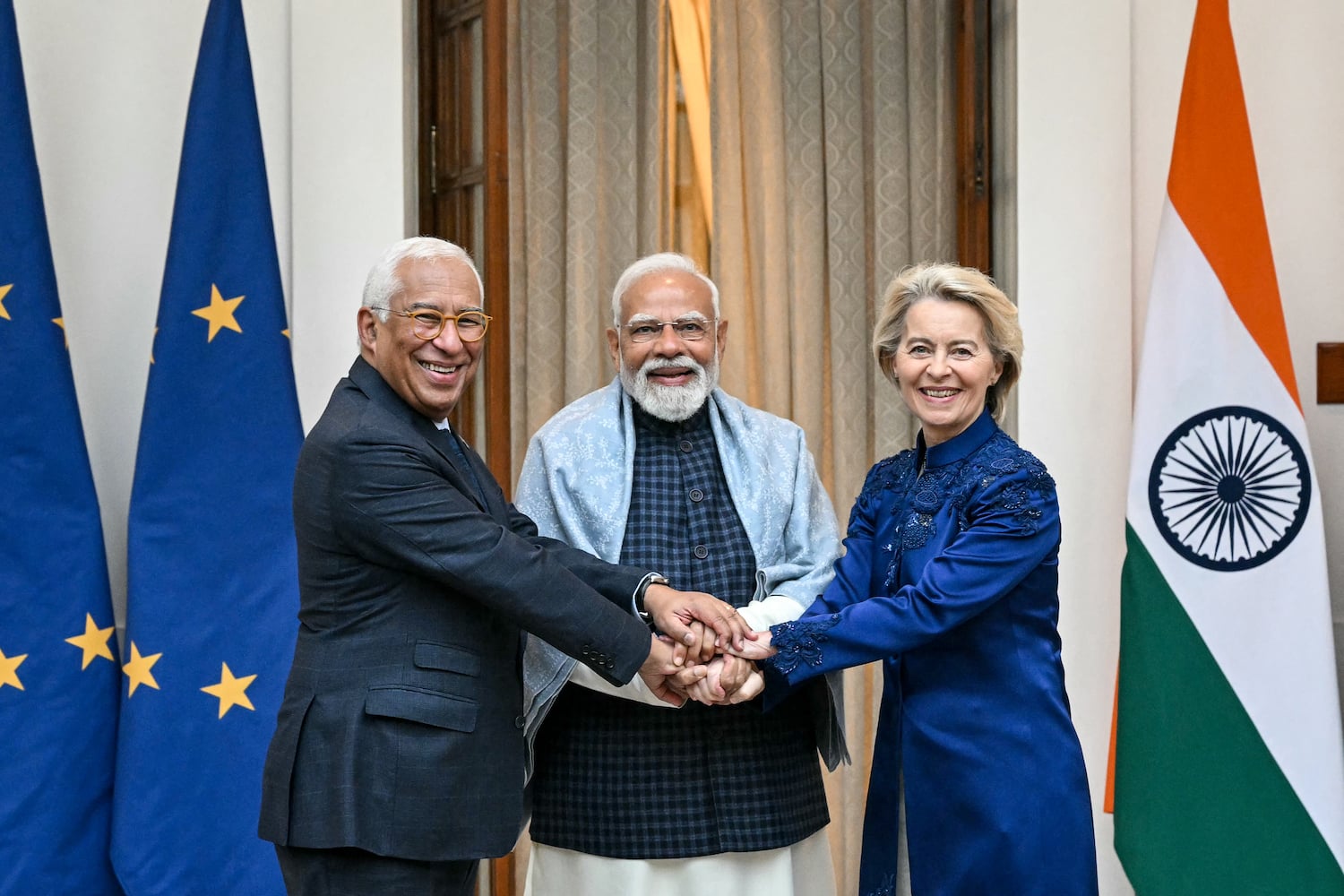
From left, European Council President António Costa, Indian Prime Minister Narendra Modi, and European Commission President Ursula von der Leyen pose before their meeting at the Hyderabad House in New Delhi on Jan. 27. Sajjad Hussain/AFP via Getty Images
Welcome back to World Brief, where we’re looking at the India-European Union free trade deal, the United Kingdom’s shift toward Chinese investments, and the United States officially exiting the Paris Agreement.
‘The Mother of All Deals’
After nearly 20 years, India and the European Union clinched a massive free trade deal on Tuesday aimed at deepening strategic and economic ties between two of the world’s biggest markets. But more than its content, the agreement’s timing highlights how much of the world is seeking to combat U.S. President Donald Trump’s unpredictable trade policies.
Welcome back to World Brief, where we’re looking at the India-European Union free trade deal, the United Kingdom’s shift toward Chinese investments, and the United States officially exiting the Paris Agreement.
‘The Mother of All Deals’
After nearly 20 years, India and the European Union clinched a massive free trade deal on Tuesday aimed at deepening strategic and economic ties between two of the world’s biggest markets. But more than its content, the agreement’s timing highlights how much of the world is seeking to combat U.S. President Donald Trump’s unpredictable trade policies.
This is “the mother of all deals,” European Commission President Ursula von der Leyen wrote in a post on X on Tuesday. In a separate statement, she said that in concluding the deal, India and the European Union “have sent a signal to the world that rules-based cooperation still delivers great outcomes.”
In his second term, Trump has pursued strong-arm trade tactics against both allies and adversaries alike as part of his “America First” agenda. Last summer, the United States imposed an extra 25 percent duty on Indian goods to punish New Delhi for its continued purchases of Russian oil. And in recent weeks, the White House has threatened its European allies with stiff duties over their objections to Trump’s ambitions to acquire Greenland—though Trump has since walked back those punitive measures amid a potential deal with NATO.
Still, the U.S. president’s volatile trade strategy has all but halted separate U.S. trade talks with India and the European Union. This has incentivized both markets to seek not only closer ties with each other but also with other major economies. Since Trump’s trade war began, the EU has advanced deals with Indonesia, Japan, Mexico, and Switzerland as well as with South America’s Mercosur bloc. At the same time, India has finalized pacts with New Zealand, Oman, and the United Kingdom.
“An irritated Trump might ask which economy is the biggest perpetrator” of the United States’ growing trade deficit, FP columnist Agathe Demarais writes. “For the first time in recent memory, the answer will not be China.”
Under Tuesday’s trade deal, New Delhi is expected to reduce or eliminate tariffs on 96.6 percent of exports from the EU in exchange for Brussels slashing duties on 99.5 percent of Indian goods over the course of seven years. Among the biggest industries affected will be textiles, alcohol, automobiles, and pharmaceuticals. Tariffs on key foodstuffs—such as dairy products, sugar, beef, and poultry—will not be touched.
With around 2 billion people affected by the deal (representing 25 percent of global GDP and one-third of world trade), the agreement could lead to more than $4.8 billion worth of savings in duties for European companies and increase bilateral trade to roughly $200 billion by 2030. The deal must still go through several legal and procedural steps and be ratified by both sides, but India’s trade minister said that he expects the agreement to go into effect by the end of 2026.
On top of the trade agreement, India and the EU on Tuesday also signed a security and defense partnership. That deal will “help us work more closely on counterterrorism, maritime security, and cybersecurity,” Indian Prime Minister Narendra Modi said.
Today’s Most Read
- As Generals Fall, Xi Jinping’s Anti-Corruption Campaign Is Eating Itself by Deng Yuwen
- What Kent State Taught the Country About State Violence by Julian E. Zelizer
- Ukraine’s Answer Might Be Kosovo by Paul Hockenos
What We’re Following
Beijing’s friends in the West. British Prime Minister Keir Starmer flew to China on Tuesday to seek better trade relations with the world’s second-largest economy and, in turn, reduce London’s dependency on the United States. During the three-day visit—the first by a British leader in eight years—Starmer is expected to court greater Chinese investments; Beijing only accounts for 0.2 percent of foreign direct investment in Britain, compared to Washington’s roughly 33 percent.
Starmer’s visit comes just days after the United Kingdom approved controversial plans to build a Chinese mega-embassy in the heart of London, despite concerns that the facility’s size and location could make it easier for Beijing to conduct espionage operations. In permitting the new embassy—which Beijing has made a key focus of bilateral relations—Starmer appears to have prioritized offsetting London’s Brexit-weakened economy and countering high U.S. tariffs. This comes amid a new report on Tuesday that poverty in Britain has reached its highest level in 30 years.
The United Kingdom is far from the first country to put its eggs in China’s basket. Earlier this month, Canadian Prime Minister Mark Carney struck a preliminary trade deal with Chinese President Xi Jinping, slashing Ottawa’s 100 percent tariff on Chinese electric vehicles in exchange for Beijing reducing its duties on Canadian canola. In response, Trump has threatened to impose a 100 percent levy on all Canadian goods, warning that the deal will “go down as one of the worst deals, of any kind, in history.”
Forget Paris. The United States officially exited the Paris climate change agreement for the second time on Tuesday, fulfilling a key promise of the Trump administration and leaving the rest of the world to tackle global warming without help from one of its top polluters. The United States is the only country to have left the international treaty and joins Iran, Libya, and Yemen as the only countries not party to the deal.
Under the Paris Agreement, nearly 200 nations pledged to pursue efforts to limit the global temperature increase to 1.5 degrees Celsius (about 2.7 degrees Fahrenheit) above preindustrial levels in order to avert the worst impacts of climate change. However, contention over the future of oil, gas, and coal—worsened by Washington’s notable absence from the United Nations Climate Change Conference in Brazil in November—has stymied policymakers from enacting meaningful legislation that will help curb fossil fuels, the biggest contributor to global warming.
During Trump’s first term in 2017, the United States announced that it planned to withdraw from the Paris Agreement within four years, doing so on Nov. 4, 2020—the day after the U.S. presidential election. However, then-U.S. President Joe Biden reversed that decision shortly after taking office in January 2021. During Trump’s second term, though, the U.S. president once again vowed to leave the agreement as part of Washington’s shift away from multilateral commitments. He has repeatedly engaged in climate denialism and called climate change the “greatest con job” during his U.N. General Assembly speech last September.
Rising fatality count. The death toll from Iran’s brutal crackdown on anti-government protesters in recent weeks has risen to at least 6,159 people, according to the U.S.-based Human Rights Activists News Agency on Tuesday, though the group said that the number may be much higher. More than 42,200 people have been arrested, the group added.
The Iranian government’s official tally puts the death toll at a far lower 3,117 people.
Protests first erupted on Dec. 28 over Iran’s high inflation and currency crisis but quickly spiraled into major demonstrations calling for an end to the Iranian regime. The government’s violent response—one of the deadliest in recent Iranian history—appears to have effectively halted the protest movement. Although Trump has, on several occasions, threatened U.S. intervention if Tehran continued its deadly assault on demonstrators or carried out mass executions of those arrested, he stayed his hand after saying that he’d received word from Tehran that it would not go ahead with executions.
However, the White House has said that military action remains on the table, with Trump telling Axios on Monday that the situation in Tehran is “in flux” because of the “big armada” he sent to the region. The USS Abraham Lincoln and three accompanying warships arrived in the Middle East on Monday. Yet Trump said that he thinks Iran wants to find a diplomatic solution. “They want to make a deal,” Trump told Axios. “I know so. They called on numerous occasions. They want to talk.”
Odds and Ends
After a nearly four-year hiatus, South Korean boy band BTS is back for a whirlwind world tour, but that may not be enough to satisfy the demands of its global audience. On Monday, Mexican President Claudia Sheinbaum sent a letter to South Korean Prime Minister Kim Min-seok requesting more performance dates for Mexico City. “We have not yet received a response, but we hope it will be positive,” Sheinbaum said.
BTS is slated to appear at the Mexican capital’s GNP Seguros Stadium—named the world’s top concert venue in 2025 by Pollstar—on May 7, 9, and 10. But despite the stadium’s 65,000-person capacity, tickets have already sold out, and demand remains high.
Alexandra Sharp is the World Brief writer at Foreign Policy. Bluesky: @alexandrassharp.bsky.social X: @AlexandraSSharp
Stories Readers Liked
-
Central American migrant children play on a seesaw at a shelter in Ciudad Juárez, state of Chihuahua, Mexico. -
An illustration shows Donald Trump from the nose down with a red oil rig as a tie. -
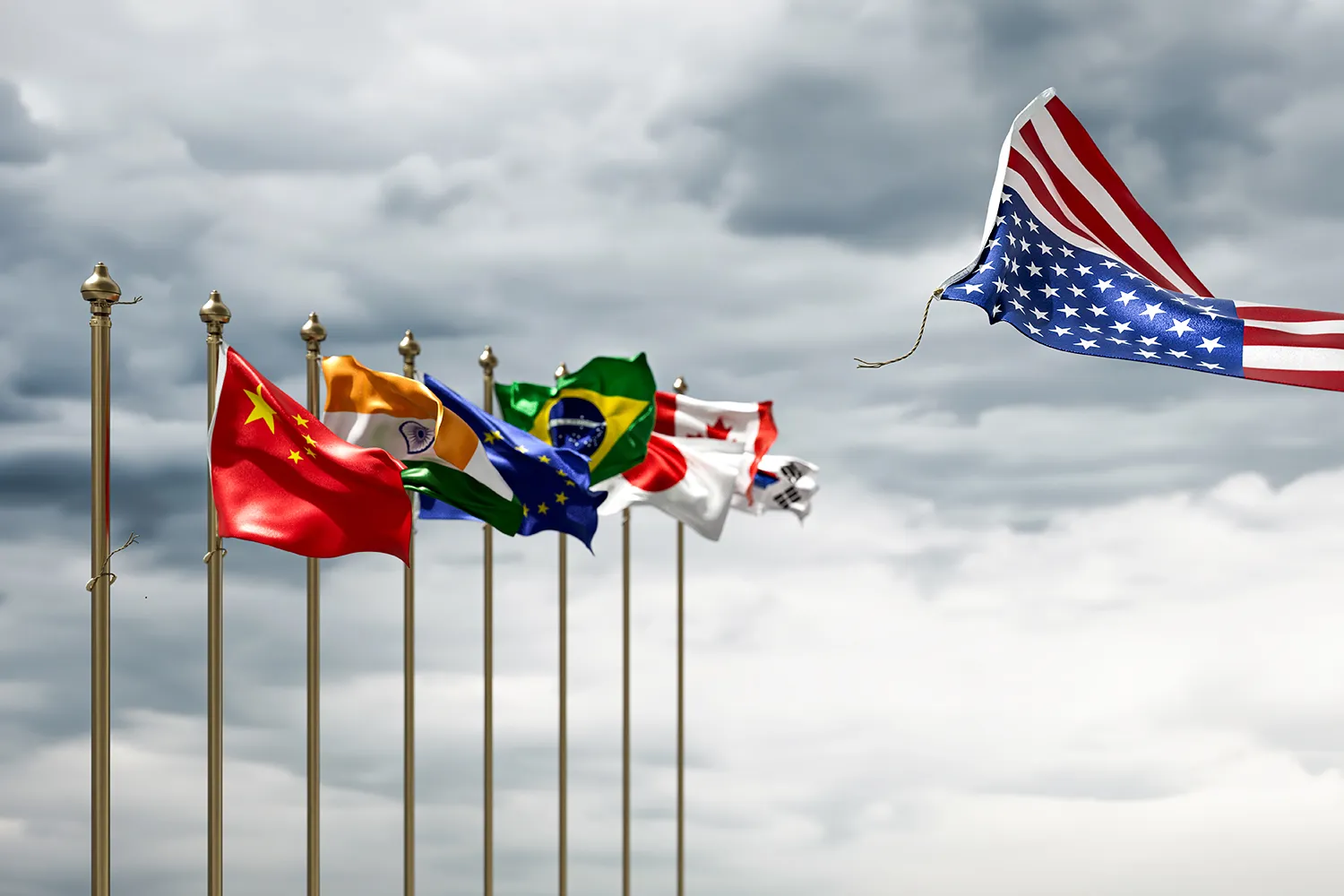
An illustration shows one empty flagpole alongside the flags of multiple countries. The U.S. flag is seen at far right, untethered, flying out of frame. -
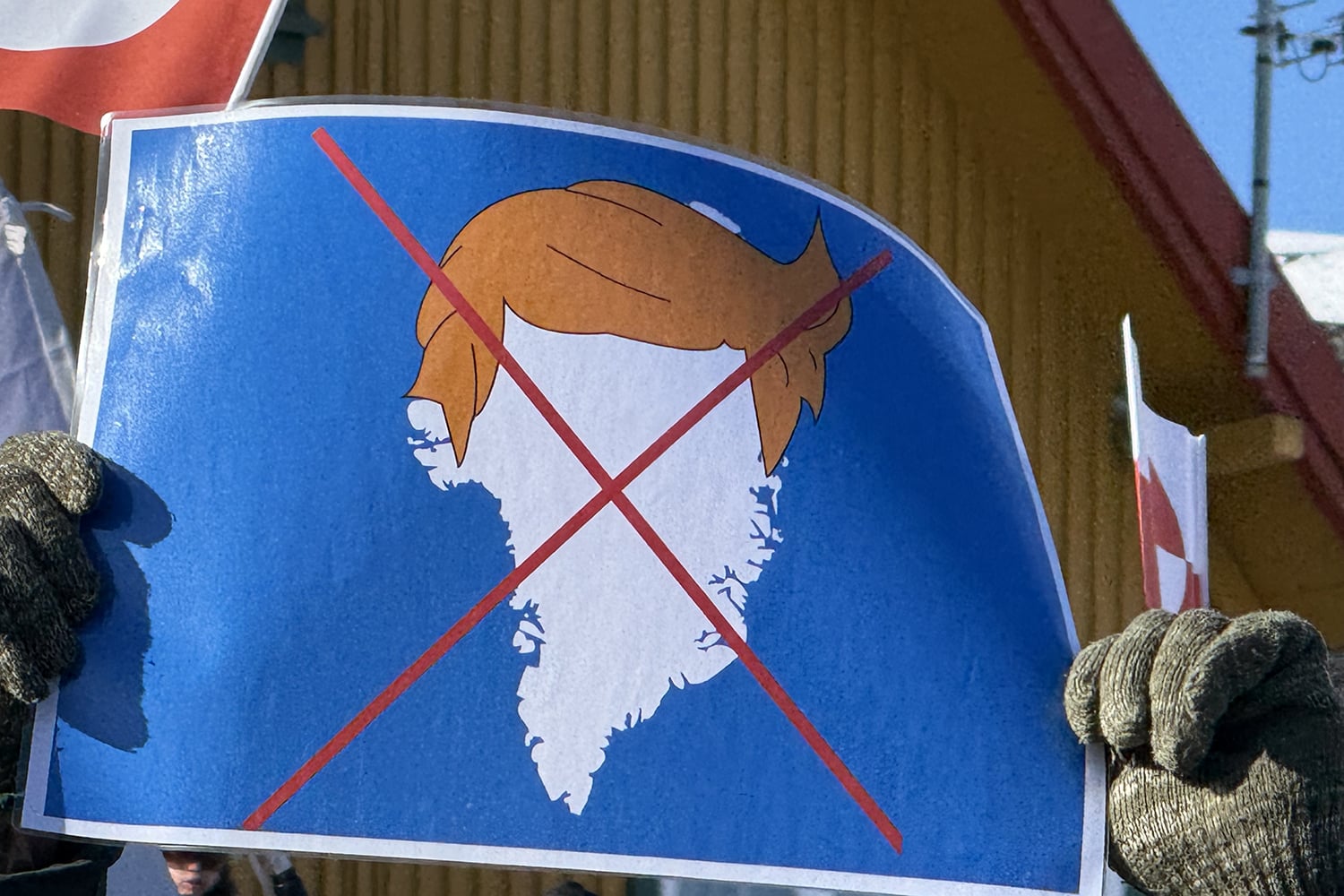
A protester holds up a sign depicting U.S. President Donald Trump’s signature hair atop the outline of Greenland during a demonstration near the U.S. Consulate building outside Nuuk, Greenland. -
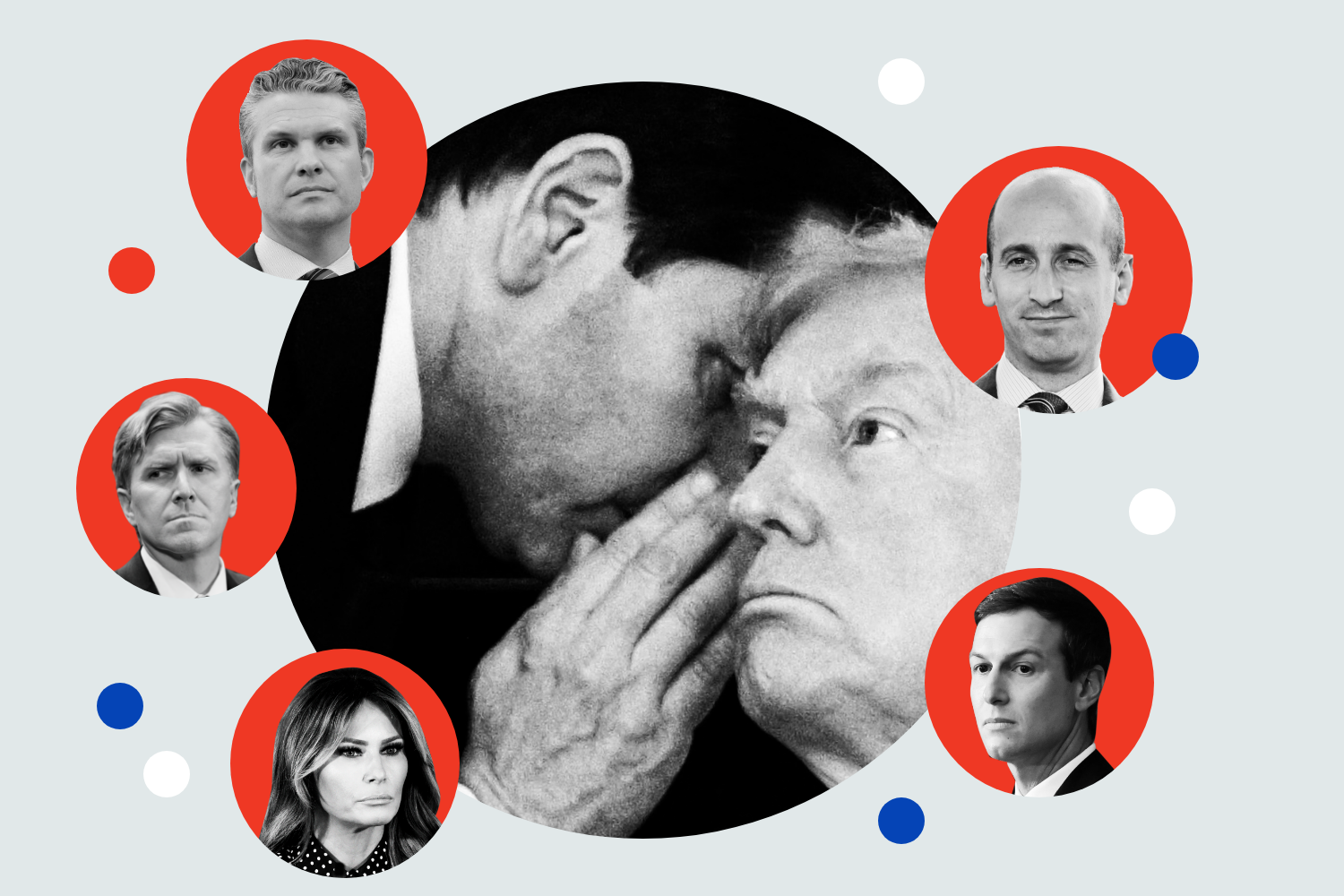
An illustration with Donald Trump listening as Marco Rubio leans in with a hand cupped to whisper in Trump’s ear. Around the circular images are headshots of four men and one woman. -

A man is silhouetted from behind in front of a bright window as he walks down a dark, empty hallway. -
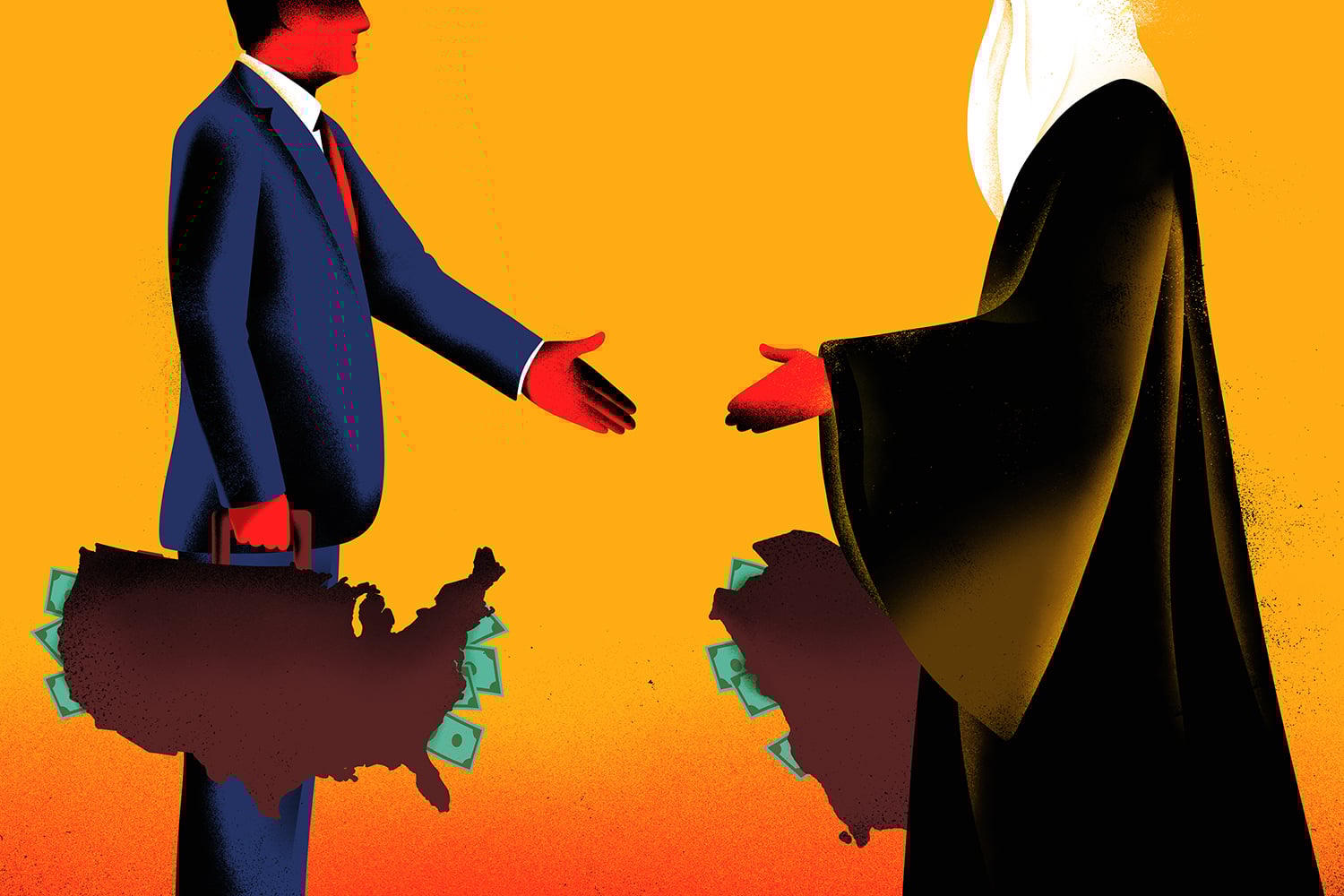
An illustration shows two men against a bright yellow background. One man wears a Western-style business suit and the other wears a black robe and white head covering. The men are shaking hands. Each holds a briefcase with money spilling out, the left man’s briefcase shaped like the United States’ and the right man’s like the Arabian Peninsula. -
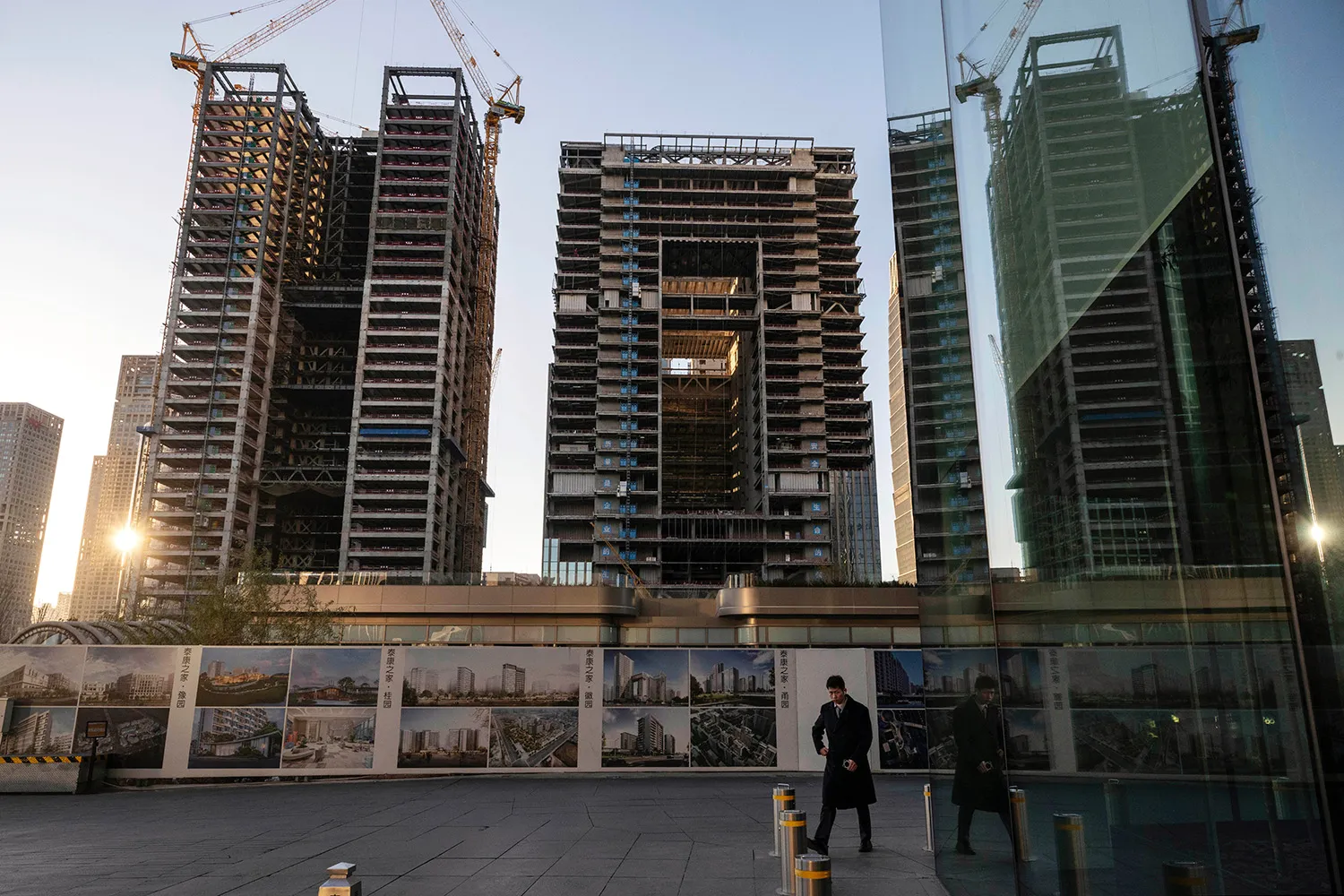
A man in a coat outside of a glass office building, with high rise buildings under construction in the background. -
Photos of two men speaking each shown as a negative color inside a red and blue circle.
Trump at Davos
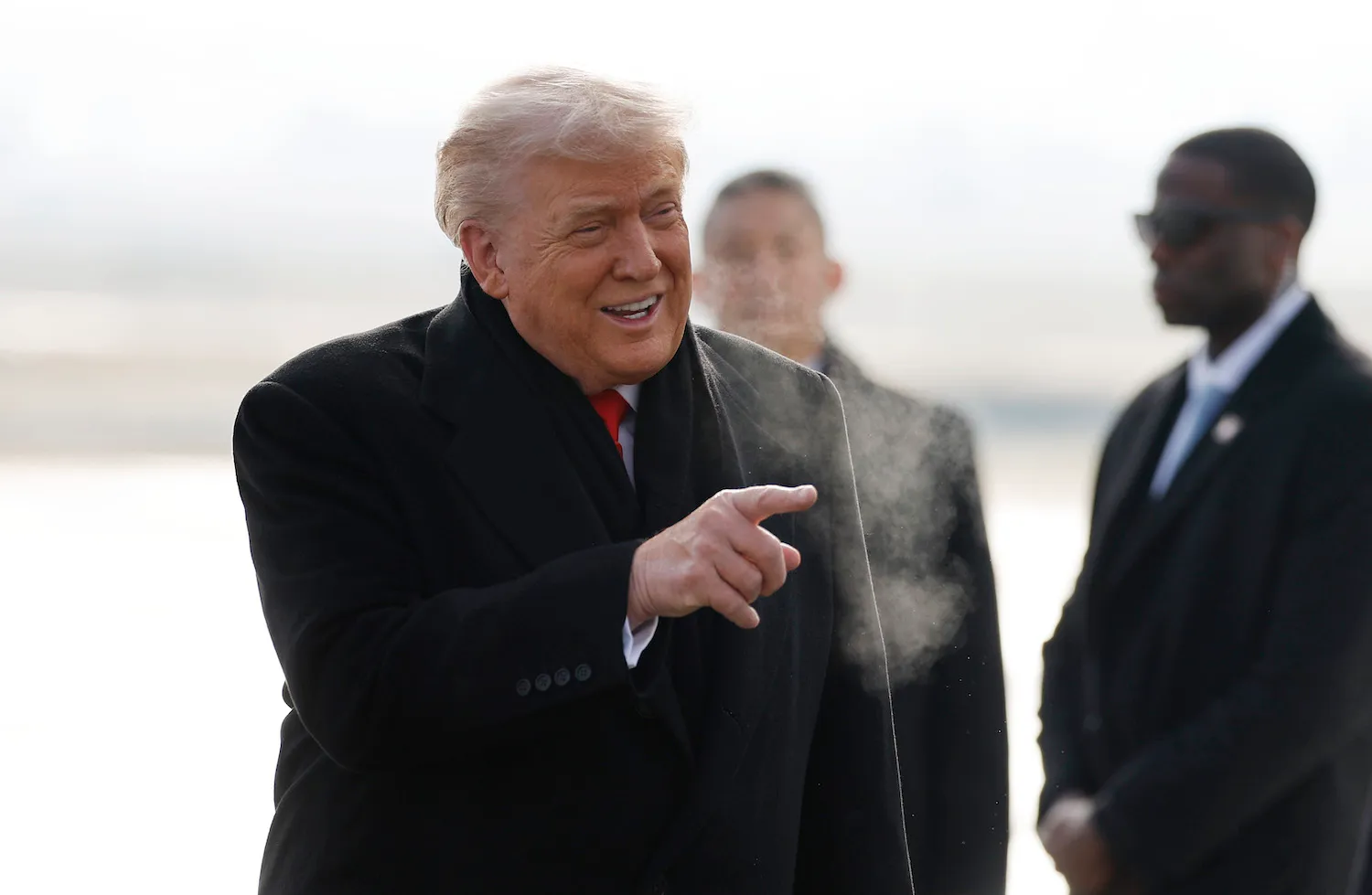
In Davos, a Tale of Two Speeches
Trump follows Greenland threats by announcing a “future deal,” while Canada’s prime minister describes it all as a “rupture in the world order.” 
-
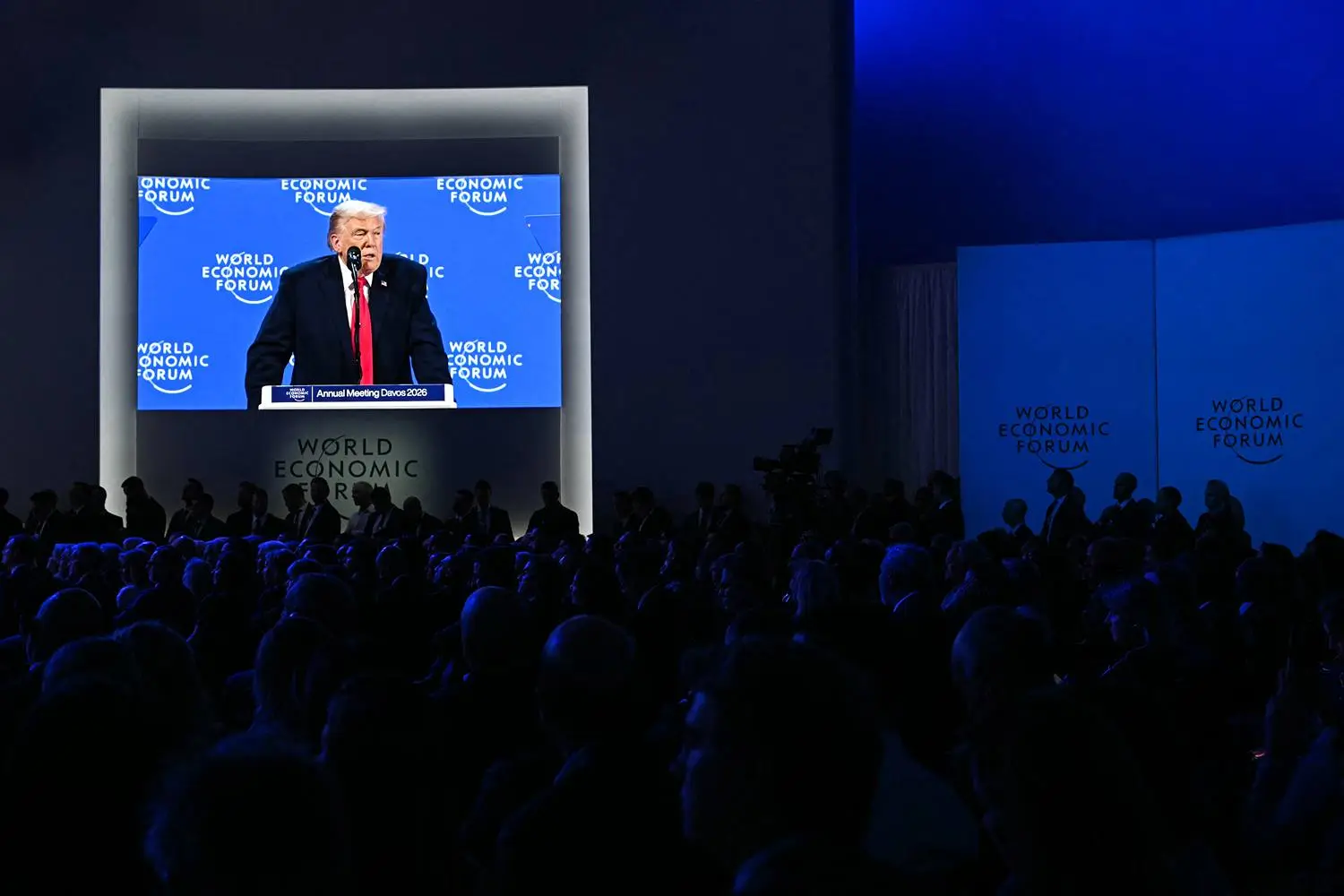
Trump is shown standing at a lectern on a large screen while the audience looks on in a darkened room. -
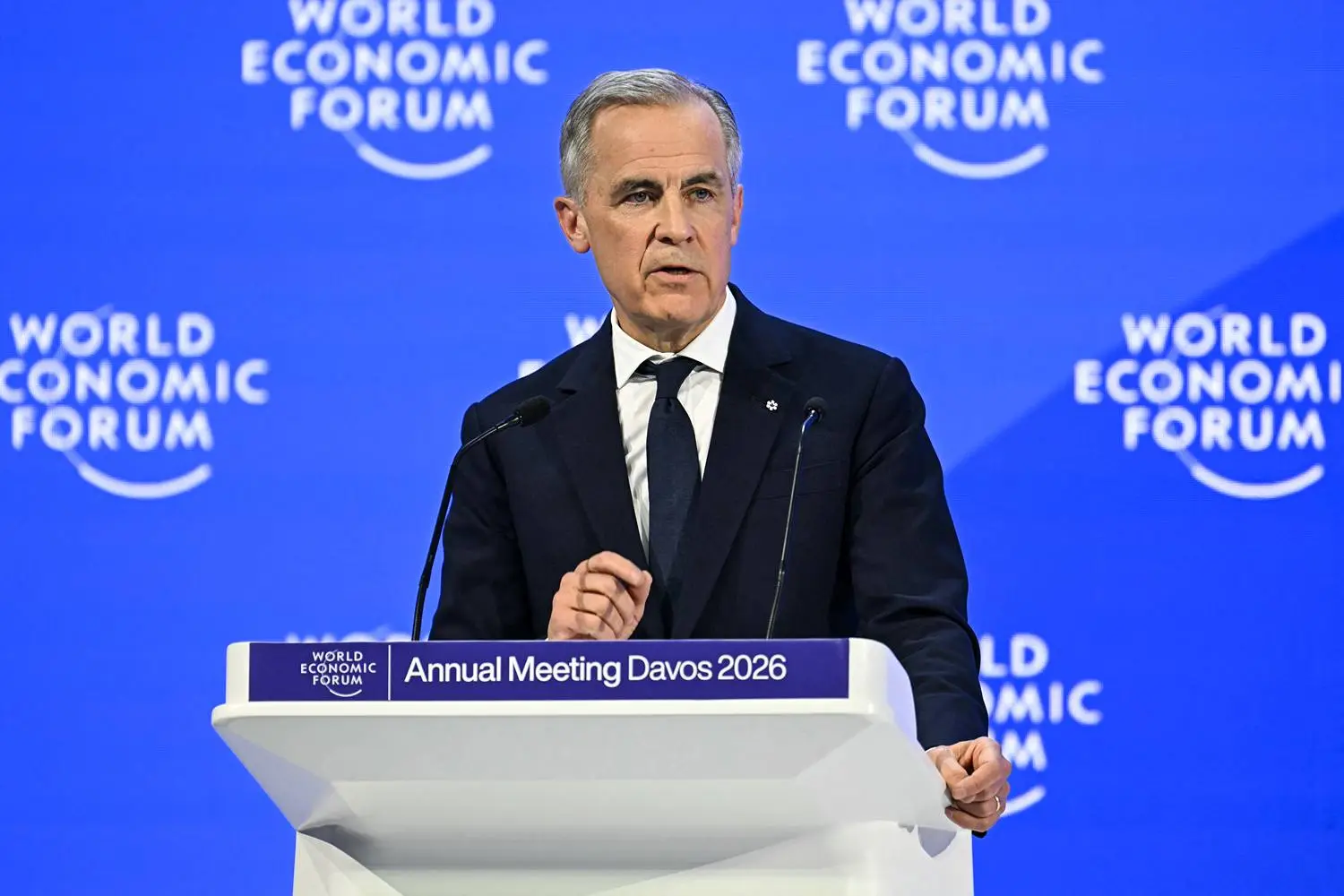
Carney stands at a lectern in front of a blue backdrop featuring the World Economic Forum logo. He wears a black business suit suit and tie. -
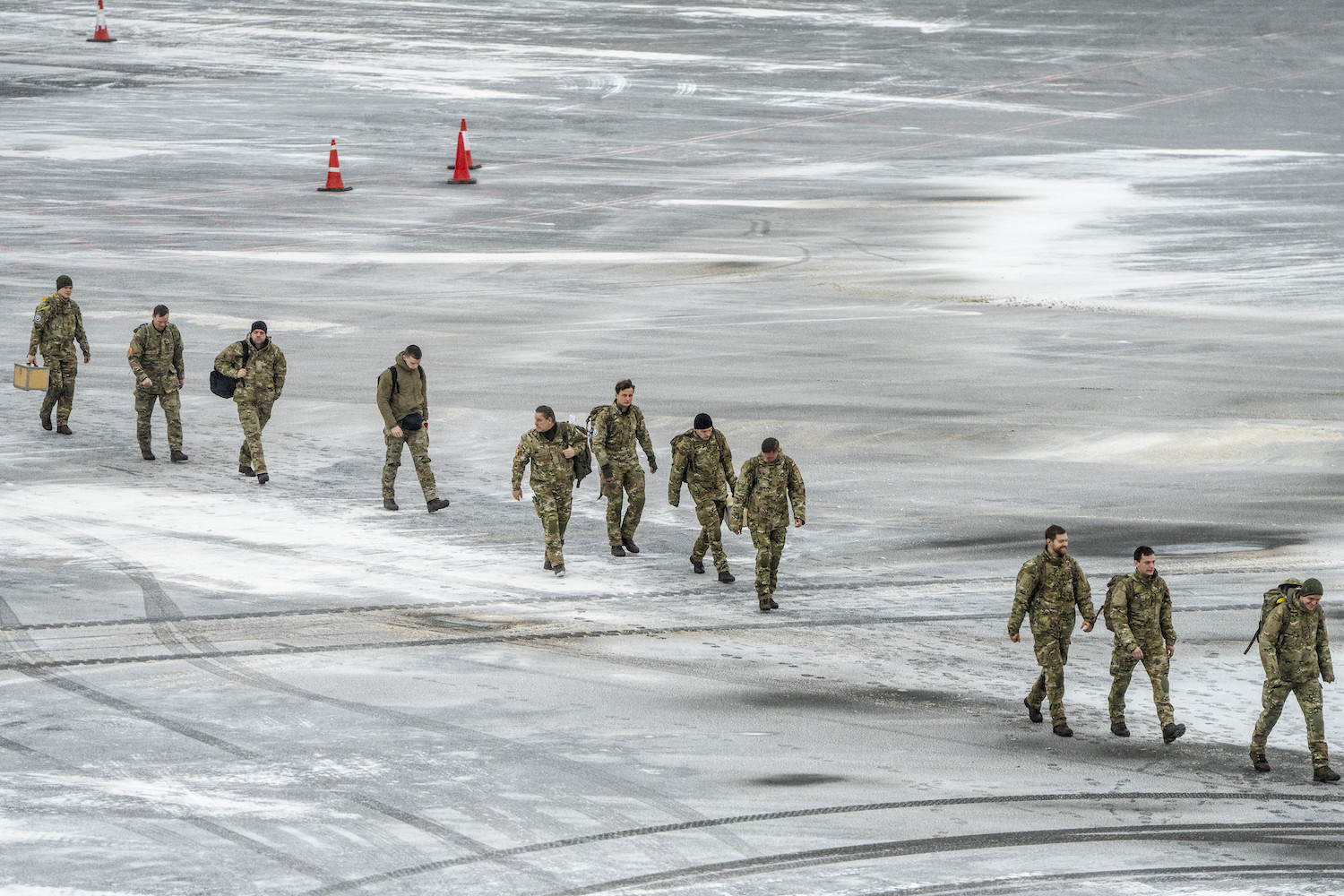
Danish soldiers walk across the frozen tarmac after arriving at Nuuk Airport in Greenland.
Join the Conversation
Commenting is a benefit of a Foreign Policy subscription.
Subscribe
Subscribe
Already a subscriber?
.
View Comments
Join the Conversation
Join the conversation on this and other recent Foreign Policy articles when you subscribe now.
Subscribe
Subscribe
Not your account?
View Comments
Join the Conversation
Please follow our comment guidelines, stay on topic, and be civil, courteous, and respectful of others’ beliefs.
View Comments
Change your username |
Log out
Change your username:
CANCEL
Confirm your username to get started.
The default username below has been generated using the first name and last initial on your FP subscriber account. Usernames may be updated at any time and must not contain inappropriate or offensive language.