
This post was originally published on this site.
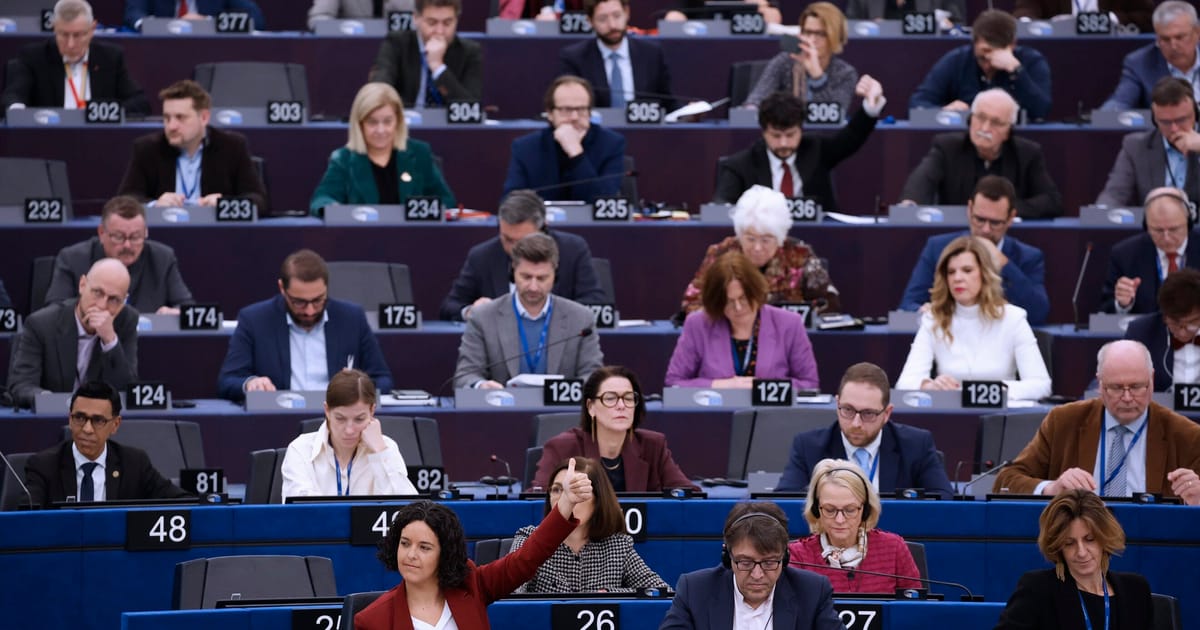
MEPs ultimately backed a resolution to seek an opinion from the Court of Justice of the EU on whether the texts of the agreement — with the Mercosur countries of Argentina, Brazil, Paraguay and Uruguay, and which was in the works for over 25 years — comply with the EU treaties. The motion was carried by a margin of 334 to 324 with 11 abstentions. The Parliament now cannot give its assent to the deal until the court has ruled, which can take between 18 and 24 months.
The suspension of the deal’s legislative approval sent shockwaves across Europe, especially as von der Leyen had hailed the agreement as a way to bolster EU trade amid turbulent relations with Washington.
On a granular level, the freezing of the Mercosur deal can be traced to a handful of MEPs — notably from Romania’s Socialists and Hungary’s center right — whose last-minute U-turns tipped the balance. But it was national politics that really crashed the party, carving deep fault lines in the Parliament’s political groups that will leave deep scars.
Mainstream political parties in the likes of Romania, Hungary, Spain, France and Poland are dealing with far-right and right-wing populist movements at home that have made Mercosur a central campaign issue, criticizing Brussels for a deal they claim harms European farmers, which in turn makes it difficult for their MEPs to openly support Mercosur in Europe.
“National everyday politics prevailed over the bigger picture, which the EU is trying to present since the start of this Commission,” Željana Zovko, vice-chair of the European People’s Party, told POLITICO. She said she was “totally upset” with those EPP members who had voted to freeze the Mercosur deal out of the “selfishness of national day-to-day politics and elections.”
A bitter taste
The centrist coalition that in 2024 supported a second term for von der Leyen — the EPP, the Socialists and Democrats and the liberals of Renew — all backed Mercosur, but many of their members did not. Across political parties, certain national delegations have been against the deal for months, if not years, including the Irish, the French and the Poles.