
This post was originally published on this site.
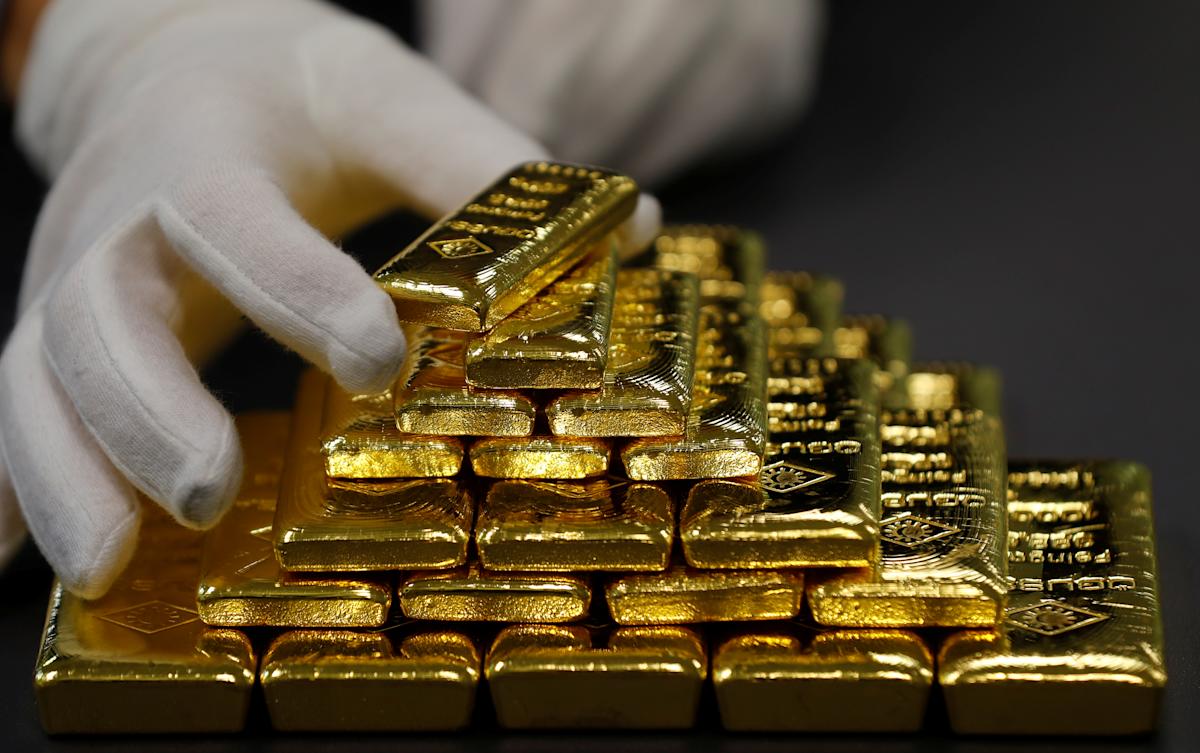
Gold prices have surged beyond $5,100 an ounce on Monday morning as investors seek refuge in traditional safe assets amid renewed trade threats from Donald Trump and growing concern over another US government shutdown.
Gold futures (GC=F) were rose 2.3% to $5,094.20 a troy ounce, while spot prices climbed 2.2% to $5,097.44 at the time of writing. Prices touched a new all-time high of $5,110.50 an ounce earlier in the session.
The rally comes after Trump warned Canada that it could face tariffs of 100% if it “makes a deal with China”. The comments followed a confrontation with European leaders over the future of Greenland.
Investors are also watching Washington, where the risk of a second government shutdown in recent months is rising. Democrats have threatened to withhold funding for the Department of Homeland Security following the weekend shooting of a man in Minneapolis by federal immigration agents.
Ipek Ozkardeskaya, senior analyst at Swissquote, said: “What’s striking is that this renewed flight to safe havens is unfolding without any major geopolitical headline this morning. There has been no new escalation over the weekend — no fresh breach of international law, no invasion, no immediate military threat.
Read more: Should you invest in gold?
“The US did, however, threaten Canada with 100% tariffs, after Mark Carney approached China last week, defying the White House — a reminder that trade tensions remain alive and well. Beyond that, the news flow is thin. Yet the bid for precious metals suggests that market stress is far from over.”
Gold has risen 64% in 2025, marking its strongest annual performance since 1979, fuelled by demand from investors seeking protection against political and economic uncertainty.
“This Trump administration has caused a permanent rupture in the way things are done, and so now everyone’s kind of running to gold as the only alternative,” said Kyle Rodda, senior market analyst at Capital.com.
Analysts expect prices to rise further this year, supported by escalating global tensions and continued demand from central banks and retail investors.
“We expect further upside [for gold]. Our current forecast suggests that prices will peak at around $5,500 later this year,” said Philip Newman, director at Metals Focus.
“Periodic pullbacks are likely as investors take profits, but we expect each correction to be short lived and met with strong buying interest,” he added.
Oil prices were largely steady on Monday following strong gains in the previous session, after a report that the oil cartel OPEC and allies signalled steady output.
Brent crude (BZ=F) futures was flat at $65.01 a barrel, while West Texas Intermediate (CL=F) slipped 0.3% to $60.86 at the time of writing.
OPEC+ delegates said they expect to stick with plans to keep oil production steady next month when they meet on Sunday, as the group grapples with a global surplus and a spate of geopolitical risks, Bloomberg reported.
“Oil prices are being tickled this week by signs of production disruptions in the US, coupled with persistent geopolitical risk against the notion of an oversupplied 2026,” said Priyanka Sachdeva, senior market analyst at Phillip Nova.
“Winter storm Fern struck the US coast, forcing shut-ins in major crude and natural gas producing regions and adding stress to the power grid,” she said, adding that oil markets are experiencing a mild upswing as outages tighten physical flows.
Geopolitical risks are also in focus, analysts said, with tensions between the US and Iran keeping investors on edge.
Read more: FTSE 100 LIVE: London mining stocks jump as fears of US shutdown and tariffs loom
“President Trump’s declaration of a US armada sailing toward Iran has reignited supply disruption fears, adding a risk premium to crude prices and supported risk aversion flows more broadly this morning,” said Tony Sycamore, market analyst at IG.
Attention is now turning to the Federal Reserve’s policy meeting later this week, with markets widely expecting US policymakers to leave interest rates unchanged.
Investors will scrutinise the Fed’s guidance for signals on the timing of potential rate cuts later this year, as interest rate expectations can influence oil demand through their impact on economic growth and the strength of the US dollar.
The pound climbed to its highest level since September against a weakening dollar, as investors continued to move away from US assets.
Sterling rose 0.3% against the dollar to $1.3665, its strongest level since September 17, while it was little changed against the euro at €1.1521.
The US dollar index (DX-Y.NYB), which measures the greenback against a basket of six major currencies, lost 0.5% to 97.17.
Trump’s push to gain control of Greenland and a standoff with European allies have raised doubts about the durability of long standing Nato alliances. Analysts said that this, combined with broader concerns about global leadership, has revived the so-called “sell America” trade and weighed on the dollar.
Stocks: Create your watchlist and portfolio
Sterling was also supported by stronger than expected UK retail sales and purchasing managers’ index data released last Friday. The figures have prompted some analysts to forecast a delay to further Bank of England rate cuts, which would support the pound against the dollar. Threadneedle Street is expected to keep rates unchanged at its February meeting, while markets fully price in a quarter point cut by June.
Investors will also closely watch comments from Fed chair Jay Powell after the meeting on Wednesday for clues on the policy outlook. Any hawkish signals could lend support to the dollar and act as a near term headwind for sterling.
In equities, the FTSE 100 (^FTSE) on Monday was muted at 10,141 points. For more details on market movements, check our live coverage here.
Download the Yahoo Finance app, available for Apple and Android.