
This post was originally published on this site.
Gold prices surged to record highs on Wednesday morning, breaking through $5,200 for the first time and edging close to $5,300, as the US dollar slid to a near four-year low amid persistent geopolitical concerns and ahead of a Federal Reserve policy decision.
Gold futures (GC=F) rose 4% to $5,290.40 a troy ounce, while spot prices climbed 4.1% to $5,295.61 at the time of writing. Prices touched a new all-time high of $5,285.35 an ounce earlier in the session.
“[Gold’s rise] is due to the very strong indirect correlation with the dollar and … Trump’s remark to a casual question about the dollar, which implied that (there is) a broad-based consensus within the White House to have a weaker greenback going forward,” said Kelvin Wong, a senior market analyst at OANDA.
The US dollar index (DX-Y.NYB), which measures the greenback against a basket of six major currencies, lost 0.2% to 96.08, a four-month low.
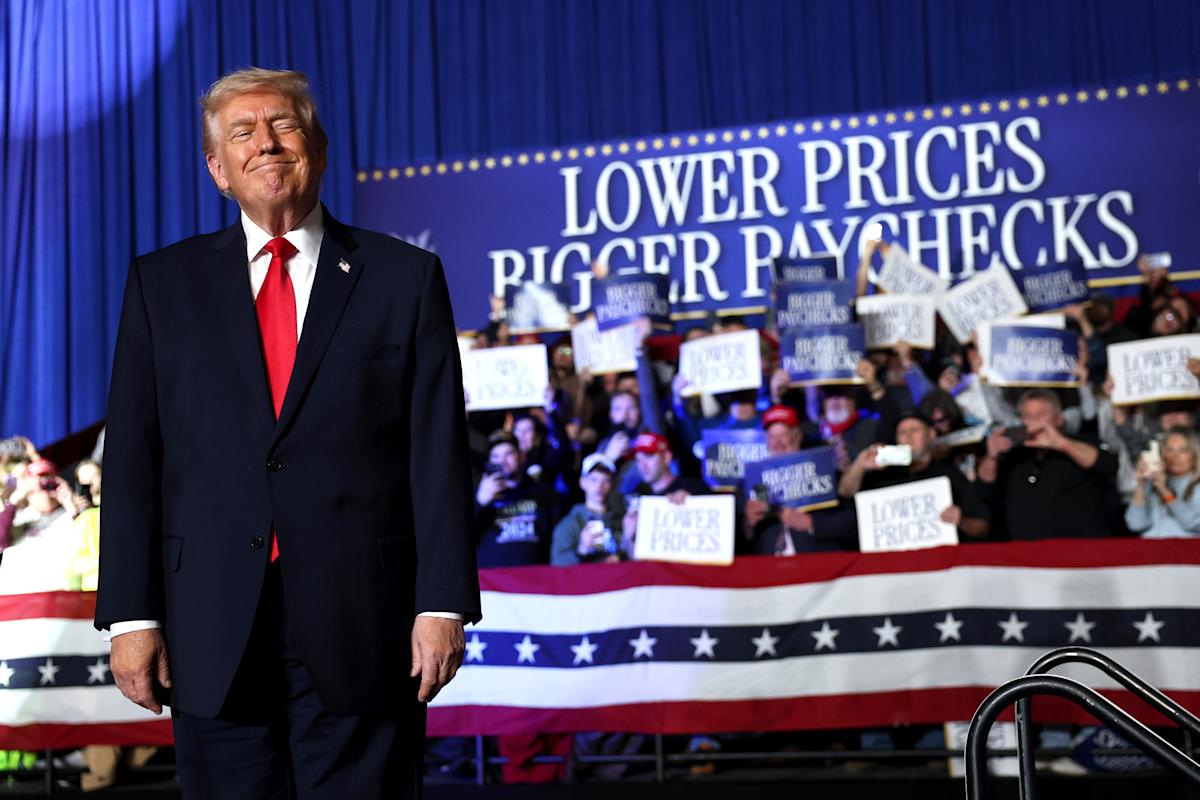
The drop followed comments from US president Donald Trump that suggested a degree of comfort with a weaker currency, according to traders and analysts.
Read more: Should you invest in gold?
Asked whether the dollar had fallen too far, Trump said its value was “great”.
Analysts said the president appeared to be taking a calculated risk, noting that a weaker dollar could support US exporters and help reduce the country’s trade deficit.
“When the person who could jawbone to defend the currency sounds unconcerned, the perceived backstop under the dollar gets thinner,” said Anthony Doyle, chief investment strategist at Pinnacle Investment Management.
Win Thin, chief economist at Bank of Nassau, said: “The Trump administration is taking a calculated risk.”
“Foreign exchange typically is the leader in terms of showing market discomfort with a country’s policies and economic outlook, so this dollar weakness bears watching.”
Stephen Innes of SPI Asset Management said: “This was not a policy signal. It was a presidential shrug — and in foreign exchange, White House indifference moves price faster than easing cycles ever do.”
The Fed is widely expected to keep interest rates unchanged at its January meeting, which is currently under way.
Sterling rose above $1.38 on Wednesday for the first time since October 2021, as the dollar continued to lose ground amid growing investor unease about the global reserve currency.
The euro climbed past $1.20 for the first time in more than four and a half years, while the Swiss franc strengthened to a 10 year high against the US currency.
Trump played down concerns about the dollar’s weakness when speaking to reporters in Iowa on Tuesday.
“No, I think it’s great,” Trump said when asked if he was worried about the currency’s decline. “I think the value of the dollar — look at the business we’re doing. The dollar’s doing great.”
Sterling was also supported by signs of persistent inflation pressures in the UK retail sector.
Read more: Shop price inflation ‘defies expectations’ to jump to 1.5% in January
“Data released late yesterday showed that UK shop prices remain elevated. The British Retail Consortium’s index of commonly purchased goods jumped 1.5% this month, the strongest gain in nearly two years.”
Technical indicators suggested further upside for the pound, according to one market analyst.
“Spot retains a lot of bullish moment, according to the DMI oscillators, and new cycle highs, which will reinforce the bull trend appear to be a matter of time.”
Oil prices were little changed on Wednesday as lingering supply concerns following a winter storm in the US offset pressure from disrupted exports.
Brent crude (BZ=F) futures were flat at $66.54 a barrel, while West Texas Intermediate (CL=F) rose 0.2% to $62.51 at the time of writing.
US producers lost up to 2 million barrels per day, or about 15% of national output, over the weekend, according to estimates from analysts and traders, after the storm strained energy infrastructure and power grids.
Crude and liquefied natural gas exports from US Gulf Coast ports fell to zero on Sunday, according to ship tracking service Vortexa.
Stocks: Create your watchlist and portfolio
Supply disruptions elsewhere have also supported prices. A loss of production in Kazakhstan is underpinning the rally, Toshitaka Tazawa, an analyst at Fujitomi Securities, told Reuters.
“But once supply fears ease, selling pressure is likely to return,” Tazawa said.
He added that a projected global crude supply surplus this year, alongside geopolitical risks including tensions in the Middle East, could keep WTI trading around $60 a barrel for now.
In equities, the FTSE 100 (^FTSE) on Wednesday was muted at 10,210 points.
Read more:
Download the Yahoo Finance app, available for Apple and Android.