
This post was originally published on this site.
Do you know the difference between interest rates and mortgage rates? What about a high-yield savings account?
Many of us learn about these terms well into adulthood, if at all, whereas public high school students in Florida do not.
That’s because financial literacy is now a requirement for graduation.
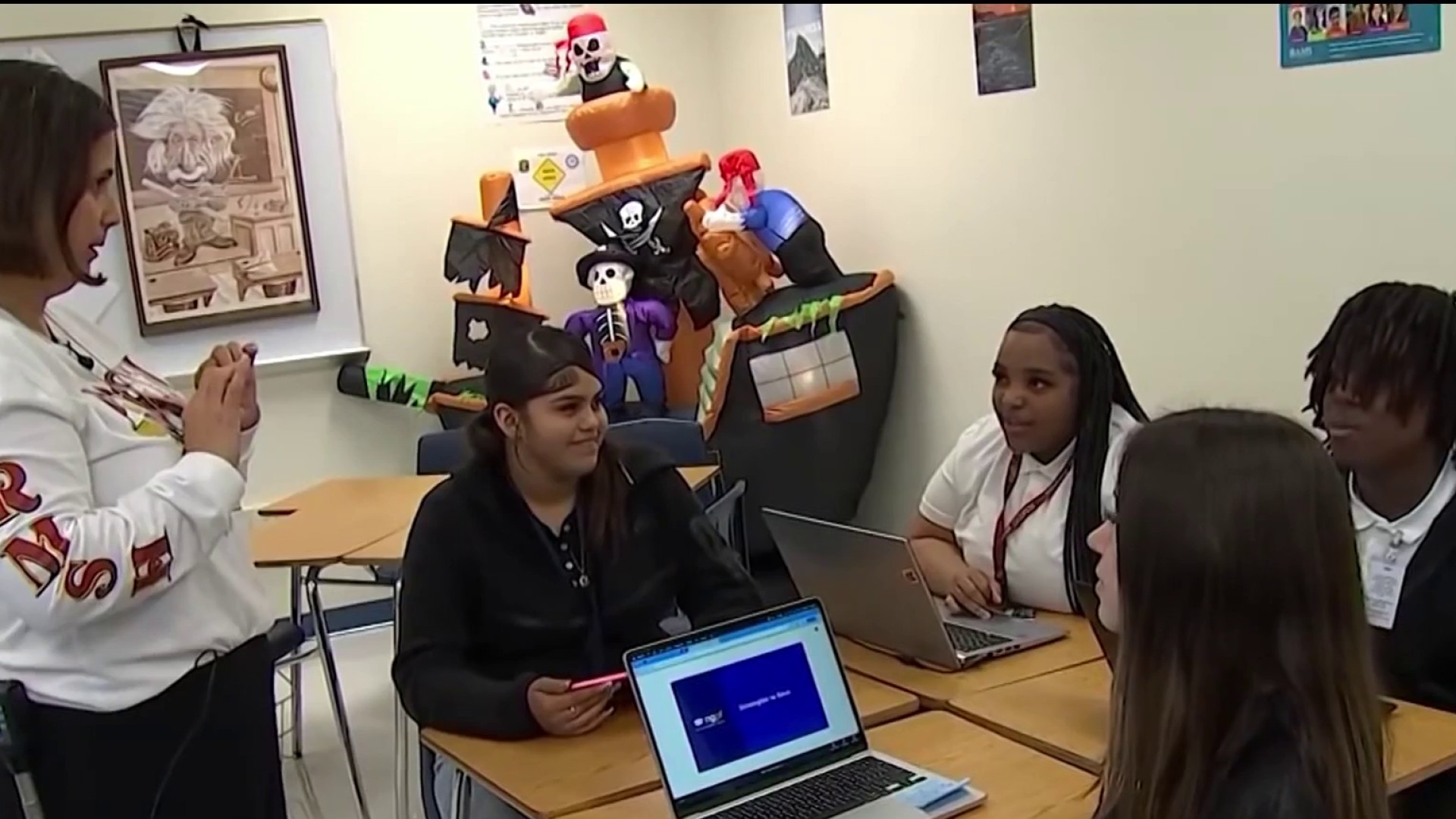
Ms. Martha Delgado doesn’t teach your typical high school class. When students leave her classroom, many will be well ahead of most adults in managing money.
“I worked during the summer, so 30% of my paycheck goes to my savings and the rest goes to my wants and needs,” Willne Pierre said.
Robert Morgan High School juniors Pierre and Diego Acosta are part of a growing group of Florida public school students who will graduate equipped with financial literacy and money management skills.
It’s all thanks to the Dorothy L. Hukill Financial Literacy Act that Gov. Ron DeSantis signed into law in 2022. The law requires students to take a personal finance course, and the class of 2027 will be the first class to graduate under the new requirement.
The instruction students are getting goes beyond opening a checking or savings account; they’re also learning how to invest, use credit cards responsibly, understand credit scores, and even apply for financial aid when they go to college.
“They’re learning about when you go to get loans, how do the loans work, compound interest, simple interest, things that I would’ve loved to have when I was growing up as an adult and applying for a loan for a house or a loan for a car,” Delgado said.
Low financial literacy often leads to high debt. Across the country and here in South Florida, people are carrying more debt.
A data tool, the Opportunity Atlas, from the U.S. Census Bureau and Opportunity Insights at Harvard University, takes us inside how South Floridians are faring financially in adulthood.
When looking at people born between 1978 and 1985 across all income levels and races, those in Miami-Dade County had some of the highest levels of debt in the state.
In 2020, the average credit card balance was $5,800, and the average student loan balance was around $18,000.
The average credit scores of those growing up in Miami-Dade were lower than the national average.
“I feel like I can better help my kids because I love my mom, but she hasn’t been able to help me because she doesn’t understand that much, but Ms. Delgado was able to help me, and I want to help other people too,” Acosta said.
Delgado can relate to many of her students, who, like her, come from homes where their parents aren’t able to teach them to manage money responsibly.
“My dad was the single breadwinner,” she said. “We were five kids, so it was a lot for my father, so my dad was just work, work, work, work, so he really didn’t have the time or the tools to tell me anything about financing.”
The Opportunity Atlas shows the economic mobility disparities, that 90% of children born in 1940 earned more than their parents, but today only half do.
But it’s classes like Ms. Delgado’s that could go a long way to help bridge the wealth gap.
Acosta and Pierre are already well on their way to a better financial future. At only 16, both are QuickBooks-certified, and they’re not stopping there.
“My long-term goal is definitely to save for a house that’s number one, and I’m already starting to save for college,” Pierre said.