
This post was originally published on this site.
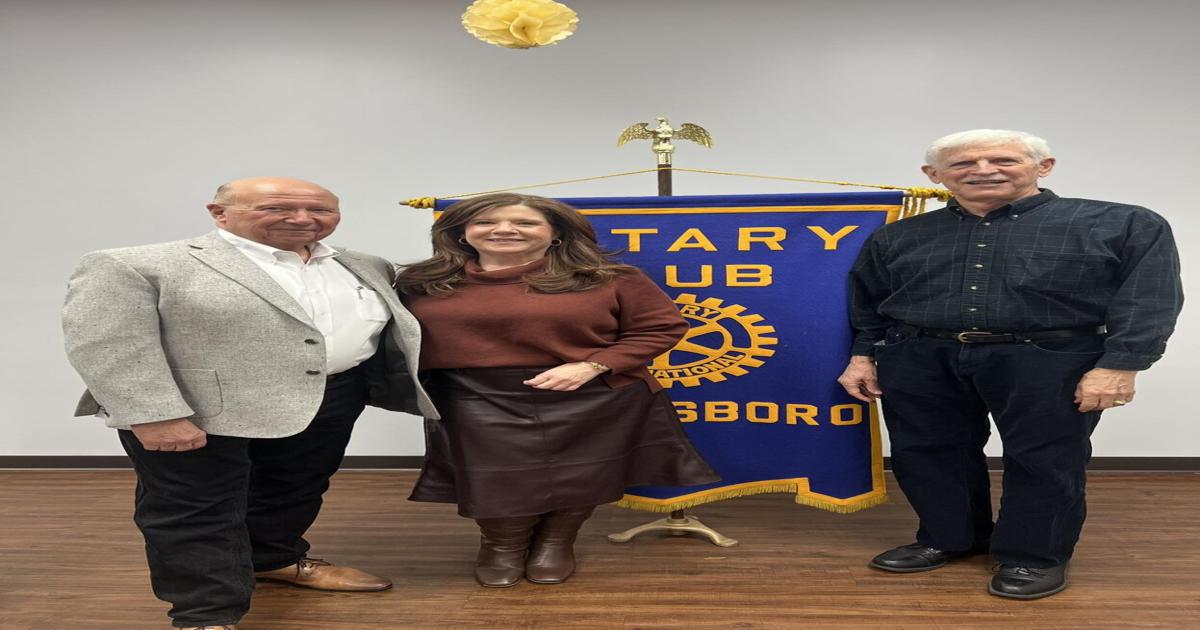
On Wednesday, Dec. 3, the Scottsboro Rotary Club met and had financial advisor David Nichols speak to the club about the state of the market and investing.
To start, Nichols states that as a financial advisor, one typically has two ‘epiphanies’ in their career. The first will happen your first few years in the business, with Nichols saying that “you will become just enhanced with all this knowledge. You know it. You’ve got it.”
Then the second epiphany will come several years later.
“It’s called a market correction. Then you’ll go ‘I didn’t really want to be an analyst anyways,’” Nichols said.
First, Nichols said that he always reverts back to is corporations, not the stock.
“It’s not really about the stock, it’s about the corporations,” Nichols said.
Nichols also cites a white house statement, reporting a commitment of $9.6 trillion of both U.S. and foreign investments. Though Nichols understands the apprehension to believing a number, he states that even half of that original commitment would be a huge economic boost.
“If you take that and look at that new money coming in, creating paychecks, creating building, it’s going to have a significant effect,” Nichols said.
Nichols then walks the club through a graph showing the market annual returns dating back from 1980 to 2025. In the graph, 34 or 45 years have ended on a positive return. The graph also displays the lowest the market went each year, showing the markets lowest point vs where it ended. Nichols explains that two things drive the stock market: fear and greed. While fear drives much of the market, with people constantly fearing something falling out, Nichols assures that it would never happen due to American’s “buying stuff” better than anyone else in the world.
“Americans get up every day and buy stuff. For that reason, we have the strongest economy in the world,” Nichols said.
Another handout Nichols gave the club is from Morningstar. In a graph, Morningstar displays a graph showing positive returns nearly across the board as of Dec. 2, 2025, with the only negative growth being a -.19 loss in a one-month chart, with five, 10 and 15-year returning around 12% annually. Nichols, using that graph, speaks about the importance of long-term money when investing, saying that investing is a long-term result.
Nichols then shares a story of Warren Buffett. Someone asked Buffet if he would invest in bitcoin, to which Buffet said he would not. The person then asked what Buffett would invest in with a horrible market. Buffett answered that he would buy companies producing hamburgers.
“Americans are always going to want to eat,” Buffett said.
Nichols advised to own companies that provides services and products and not to do so with short-term money.
Nichols also advises to “put the long-term money to work.”
“My joke nowadays with clients is ‘I don’t want you to be standing on the sidewalk waving as the parade goes by,’” Nichols said. “Be diversified, have good quality. If you need help from an advisor, find one that you can get on the same page with because one thing about financial advisors, they are diverse as the rest of the population.”
Lastly, Nichols advises to own good corporations with long-term money but to avoid concentrating too much on a single company.
“Every now and then, I’ll come across somebody who has had a stock that has done so well. Maybe 50% to 60% of their total savings (are in that company…) If we sell it, you are probably going to get a thank you letter from the IRS because they’re fixing to hit you with a big capital gains bill. Set it aside for inheritance,” Nichols said.