
This post was originally published on this site.
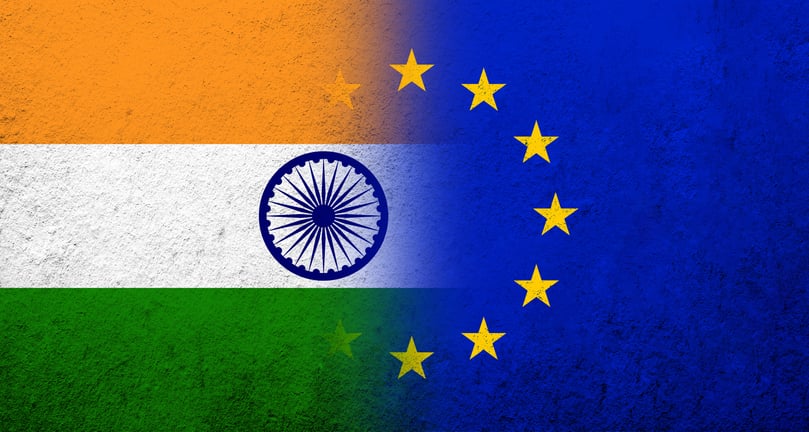
Nearly two decades after the parties first floated the idea of a free trade agreement, the turbulence of the global market has prompted the European Union and India to carry their deal across the finish line.
In an agreement that seemingly bodes well for the flow of pharmaceuticals between the two regions, the EU and India on Monday agreed to a sweeping free trade agreement that the European bloc has dubbed “the largest such deal ever concluded by either side.”
The EU did not mince words about the rationale behind the accord, citing the need to strengthen trade and political ties with India “at a time of rising geopolitical tensions and global economic challenges.” The language no doubt refers to the pressures being imposed by trading superpowers China and, now more acutely felt with the advent of the second Trump administration, the U.S.
Notably, the deal is expected to “mostly” eliminate an 11% Indian tariff on EU pharmaceuticals, as well as nearly completely axe trade duties on products like machinery and chemicals while reducing taxes on others. Further, India has agreed to remove or reduce steep tariffs on EU exports of agricultural and food products like wine and olive oil, alongside other concessions.
In a fact sheet accompanying the deal, the EU noted that it lassoed roughly 1.1 billion euros in pharmaceutical exports to India in 2024. The process to whittle down the 11% tariff rate currently facing European drugs could take up to 10 years, or mostly five to seven years, according to the EU document.
The European Commission now needs to move the deal up a chain of European lawmakers before it can be put into action. The bloc first launched negotiations around a free trade agreement with India in 2007, but talks were subsequently suspended in 2013 before being relaunched in 2022.
Granting the EU “privileged access” to the Indian services market is also a key component of the arrangement. While acknowledging that those terms mark “the most ambitious commitments on financial services by India in any trade agreement,” the EU added that the agreement will also provide a high level of protection and enforcement of intellectual property.
The deal has been constructed atop the foundation of existing international intellectual property treaties and “brings Indian and EU intellectual property laws closer,” the EU explained. Ultimately, those measures are designed to ease the operations of EU and Indian businesses that rely on IP to trade and invest in each other’s markets, according to the deal announcement.
The free trade pact comes as the EU and India have been hammered on two fronts by the threat of U.S. tariffs and reliance on China for key pharmaceutical building blocks. Additionally, the COVID-19 pandemic—and the apparent continued fracturing of global trading ties—has given renewed zeal to country- and region-specific conversations around greater drug production and supply chain autonomy.
As it stands, the EU and India currently trade more than 180 billion euros ($215 billion) of goods and services each year, and with the free trade agreement, the EU now expects to double exports to the South Asian country by 2032, the bloc said in a Jan. 26 press release. The EU added that it expects the tariff reductions to save around 4 billion euros (roughly $4.8 billion) per year in duties on European exports.
“We have created a free trade zone of 2 billion people, with both sides set to gain economically,” Ursula von der Leyen, European Commission president, said in a statement.
“We have sent a signal to the world that rules-based cooperation still delivers great outcomes,” she continued. “And, best of all, this is only the start—we will build on this success, and grow our relationship to be even stronger.”
India and the EU’s strategic move follows a 2025 marked by the uncertainty of President Donald Trump’s country- and industry-specific tariff threats. In the closing months of last year, a mounting number of country-specific deals and company drug pricing pacts with the White House—which themselves confer temporary immunity from import duties—brought clarity to the situation as companies seemingly adapted.
Still, the recent escalation of Trump’s rhetoric around the U.S. acquisition of Greenland, and the threat of new tariffs on certain European allies that came with it, suggests that any present stability around U.S. trade policy could be fragile.
After threatening new 10% trade duties on eight European countries that showed recent military support for the autonomous Danish territory of Greenland, Trump ultimately backed off his threat, though not before concerns arose that the tactic could upend a previous trade deal with the EU capping tariffs on most European exports, including drugs, at 15%.
As blunt an instrument as they may be, Trump’s tariff threats appear to have succeeded at spurring new pharma investment pledges in the U.S.
Meanwhile, broader concerns around tightening U.S. trade policy prompted a 9.1% jump in global pharmaceutical production last year, informed by “front-loading activity in anticipation of US tariffs,” financial services firm Atradius wrote in a recent report. That rate of growth is expected to slow to 1.6% in 2026 amid a pivot toward “retrenchment” following last year’s manufacturing boom, Atradius noted.