
This post was originally published on this site.
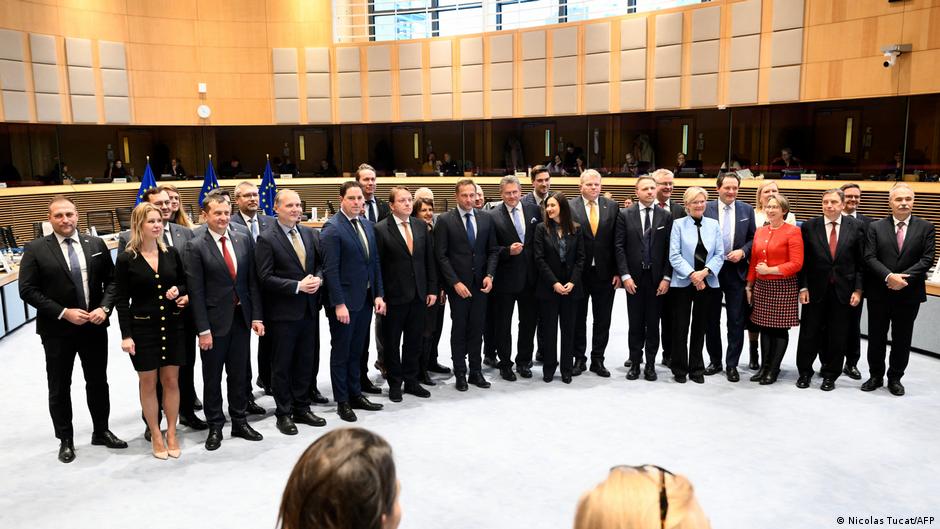
Representatives of the European Union‘s member states in Brussels on Friday cleared the way for the Mercosur free trade agreement with South American countries.
A majority of the EU’s 27 states, representing 65% of the bloc’s population, have said they agree for the proposal to proceed.
European Commission President Ursula von der Leyen could sign the agreement with the EU’s Mercosur partners Brazil, Paraguay, Argentina and Uruguay as early as next week.
The pact still needs to be approved by the European Parliament before it can take effect.
Not all EU members on the same page
While the deal is set to be approved with the necessary majority, some key players have not backed it.
France‘s President Emmanuel Macron confirmed late Thursday that his country would not be backing the treaty, saying France’s political forces were “unanimous” in their rejection of the deal.
“France is favorable to international trade, but the EU-Mercosur agreement is an agreement from another age, negotiated for too long on bases that are too outdated,” Macron said in a post on X.
The EU-Mercosur deal — which if ratified, would create one of the world’s largest free trade blocs — was initially meant to have been signed in Brazil in December.
It was met with resistance from member states, among them Italy, France and Poland, and had to be postponed.
What could happen under the agreement?
The deal seeks to diversify trade amid US tariffs and would bring EU member states closer to Brazil, Paraguay, Argentina and Uruguay by removing import tariffs on more than 90% of products.
The EU says businesses in the bloc stand to save billions in duties each year and that it will help exports of vehicles, machinery, wines and spirits to Latin America.
“This is the biggest free trade agreement we have negotiated,” EU trade chief Maros Sefcovic said Wednesday following last-minute talks.
“We have in our hands the opportunity to send the world an important message in defense of multilateralism, and to reinforce our strategic position in a global environment that is more and more competitive,” Brazilian President Luiz Inacio Lula da Silva said in December.
Farmers protest
There has been stiff resistance among farmers, but despite that, the governments of Germany and Spain are among those strongly in favor.
Farmers have voiced their concerns that the deal threatens to undercut them with cheaper imports, however Berlin and Madrid say the deal will provide a welcome boost to industries battling with Chinese competition and tariffs in the United States.
Thursday saw farmers take their tractors into the streets, blocking routes in Paris and parts of Germany.
Edited by: Wesley Rahn