
This post was originally published on this site.
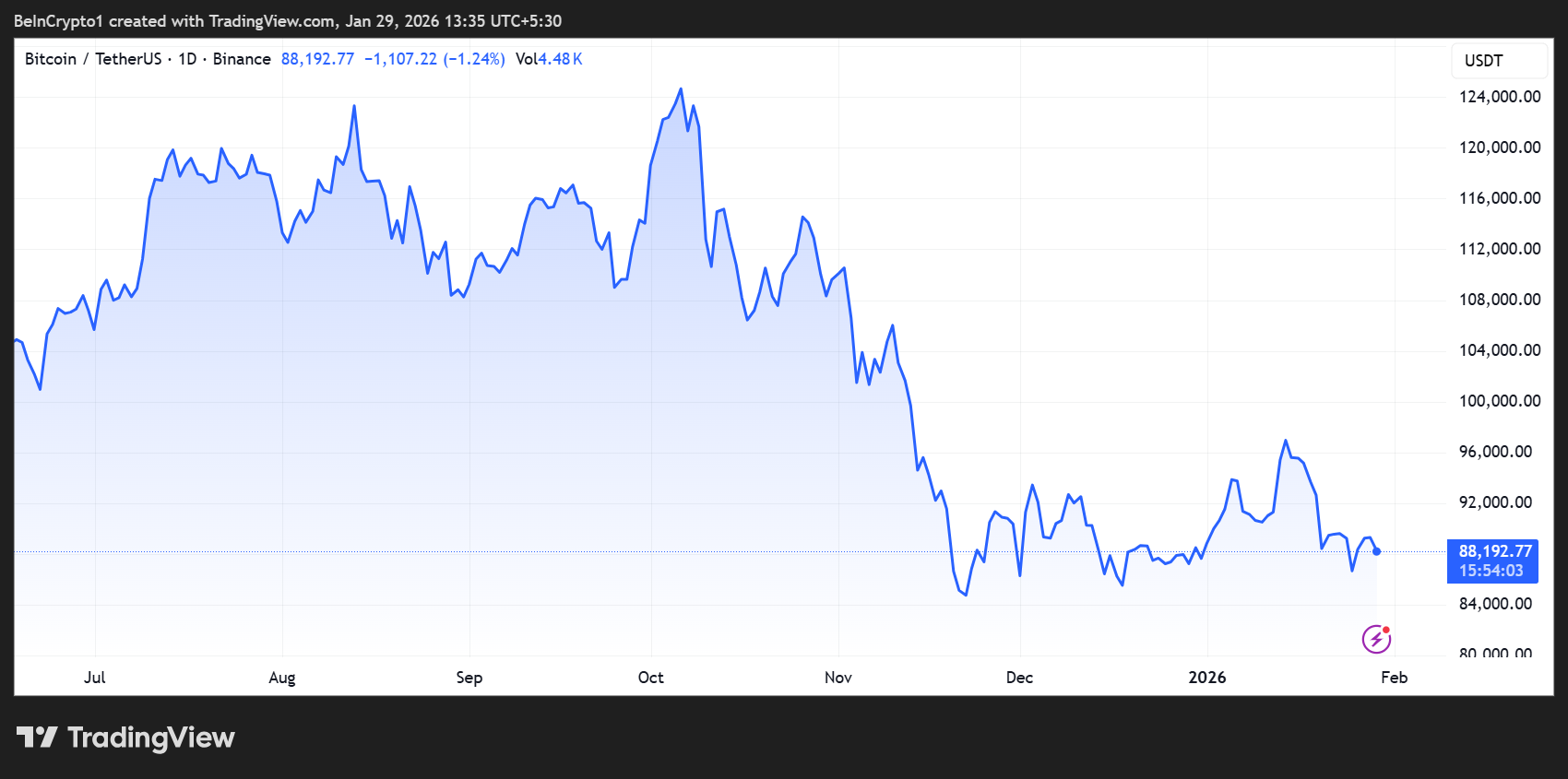
While many corporations might have sold into a 23% Bitcoin price slide, Elon Musk’s Tesla and SpaceX stood firm in Q4 2025—no buys, no sells.
Tesla released its fourth-quarter and full-year 2025 financial results after market close on Wednesday, January 28, 2026. This included the earnings update deck on ir.tesla.com, followed by an earnings call/webcast with Elon Musk and CFO Vaibhav Taneja, who discussed results, Bitcoin impairment, autonomy plans, and more.
Sponsored
Tesla and SpaceX Stand Firm on Bitcoin as a Long-Term Treasury Asset
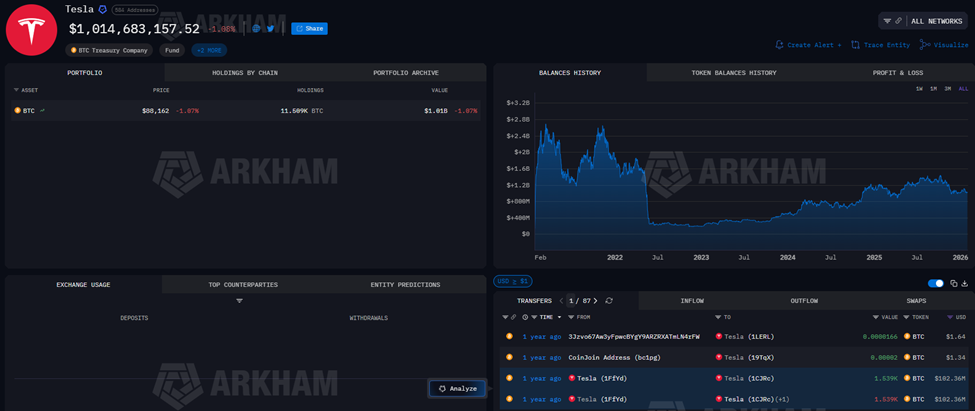
Tesla’s 11,509 BTC stack (unchanged since prior periods) took a $239 million after-tax mark-to-market impairment as Bitcoin fell from roughly $114,000 to $88,000–$89,000.
Yet the company framed this as one minor headwind among several, including tariffs and FX effects, offset by record energy margins and EPS beats.
This is a stark contrast to Tesla’s 2022 panic-selling, when roughly 75% of its Bitcoin holdings were offloaded near bear-market lows.
Sponsored
Today, the company’s approach is deliberate, treating Bitcoin as a long-term strategic reserve on the balance sheet. Relative to Tesla’s $44 billion+ cash pile, the BTC holdings are small, but symbolically powerful, signaling belief in scarcity, upside, and multi-year value.
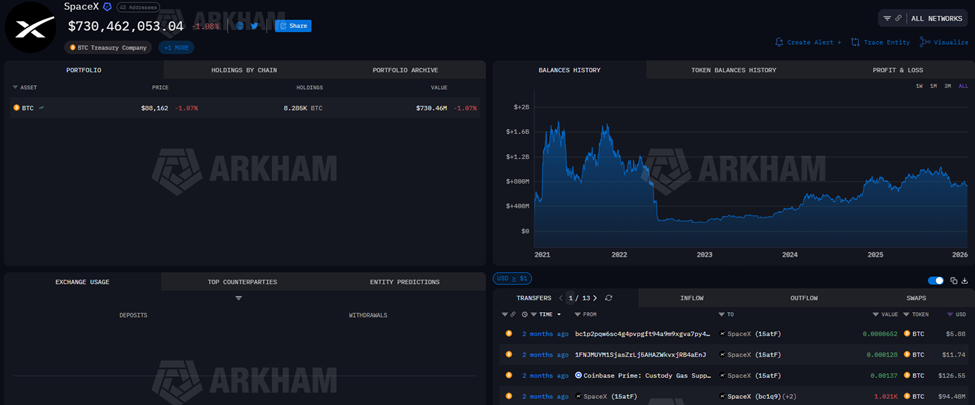
SpaceX, whose IPO is in the works, mirrors this strategy, holding an estimated 8,200–8,285 BTC. The company has not sold meaningfully in over three years, and internal transfers appear to be wallet upgrades or consolidations rather than liquidations.
At current prices, this stack is worth roughly $730 million, quietly creating one of the largest non-institutional Bitcoin exposures outside pure crypto firms.
Sponsored
This deliberate stance stands in contrast to broader corporate behavior in 2025, when many public companies trimmed or exited crypto positions amid volatility.
Tesla’s impairment is purely non-cash GAAP accounting noise, meaning profits could rebound sharply if Bitcoin recovers.
Amid Tesla’s pivot to AI, robotics, and energy, and SpaceX’s escalating valuation (expected $1.5 trillion+ IPO in 2026), Bitcoin remains a small but ideological piece of a multi-trillion-dollar empire.
Sponsored
Musk’s companies are signaling a growing thesis that Bitcoin is digital gold for forward-thinking corporate treasuries, not speculative trading fodder.
The $239 million mark-to-market loss is less a setback than a signal of conviction. Perhaps, for them, Bitcoin is not a side bet.
Rather, it may be embedded in the long game, a strategic hedge and treasury asset that could influence wider corporate adoption if the pioneer crypto stabilizes or surges again.