
This post was originally published on this site.
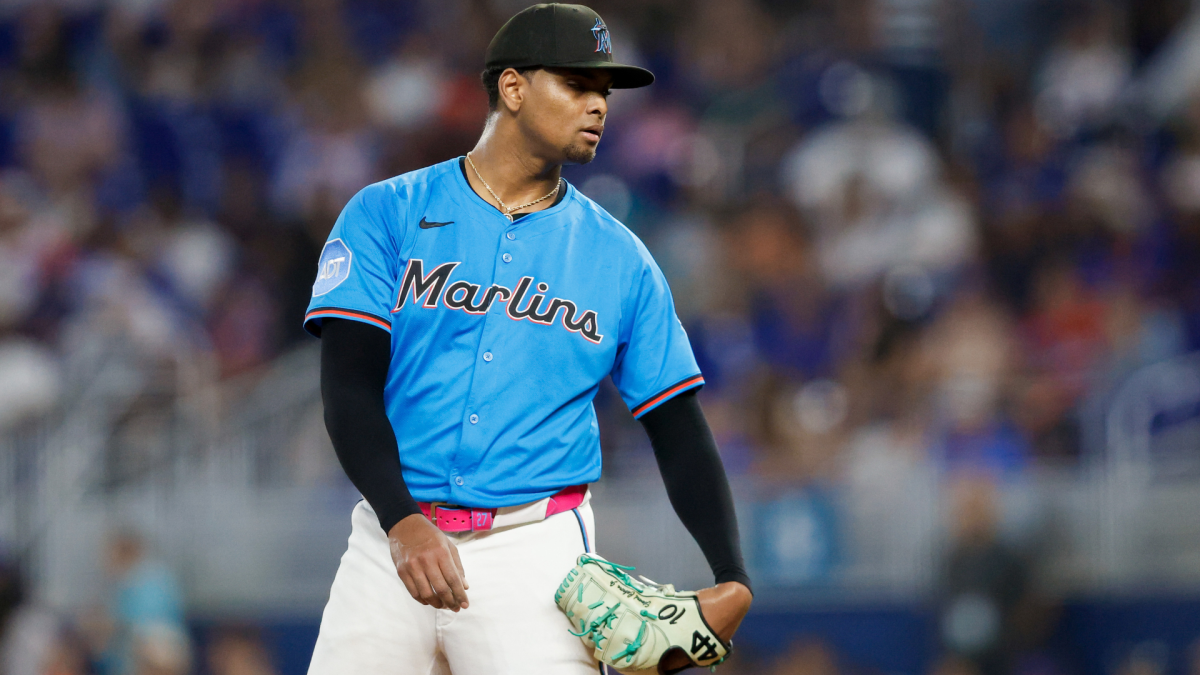
The Chicago Cubs and Miami Marlins agreed to a fun trade on Wednesday, agreeing to a four-player swap that will send right-hander Edward Cabrera to the midwest. In exchange, Miami will receive three hitting prospects, including outfielder Owen Caissie.
As is tradition here at CBS Sports, whenever a notable trade goes down I pop up to provide analysis and hand out grades. Below, you’ll find reports on every involved player and their potential fit with their new clubs. You’ll also find that analysis distilled into a letter grade for each club. Be warned that the grade itself is the least important part of the exercise and should be treated as such.
Edward Cabrera trade: Cubs acquire Marlins frontline starter for top outfield prospect
Dayn Perry
Before getting to The Good Stuff, here again is the trade in its entirety:
- Cubs receive: RHP Edward Cabrera
- Marlins receive: OF Owen Caissie, INF Cristian Hernández, INF Edgardo De Leon
Now, onward.

Cubs grade: A
Cabrera, who will celebrate his 28th birthday in April, offers Chicago both baseline competency and the promise of a higher level of performance. Across parts of five big-league seasons to date, he’s compiled a 4.07 ERA (108 ERA+) and a 2.21 strikeout-to-walk ratio. Durability has and will remain a concern, unfortunately, as he has required four IL stints over the past two years. Three of those were because of an issue with his elbow or his shoulder. That the Cubs are taking the plunge anyway, even with the apparent risk he misses significant time, speaks not only to the grim reality of pitcher health, but to the upside they must see in his game.
Labeling Cabrera as a power pitcher is only fair. None of his five offerings clock in slower than 84 mph on average. Both his fastballs sit in the upper 90s and even his “changeup” averages 94 mph. But Cabrera isn’t just a glorified velocity readout. His primary pitch last season was his aforementioned cambio and he possesses a ridiculous curveball. There simply aren’t many starters who can throw a pitch with this kind of velocity (84 mph) and depth (nearly 11 inches of sink) — it’s no wonder why the curve was the best bat-missing weapon in his arsenal, with a 45% whiff rate.


The other knock on Cabrera’s game has been his control. He shored up that weakness in 2025, walking 8.3% of batters in a drastic improvement from his previous 13.3% career mark. The key to those gains? Throwing his sinker nearly twice as often. Cabrera located his sinker within the zone more than 60% of the time, which is notable since he didn’t clear even 55% with any of his other pitches. Nowadays, it’s in vogue for sinkers to be used only when the pitcher has the platoon advantage. Cabrera has been willing to throw it against lefties too, if only to keep himself in positive counts.
Zoom out and you have the makings of a high-quality pitcher, one who could front a contender’s rotation. Cabrera just might do that as soon as this year. He figures to log regular starts as part of a group that also includes lefties Matthew Boyd and Shota Imanaga (back after accepting the qualifying offer) and righties Cade Horton and Jameson Taillon. The Cubs have enough depth to cover for whenever there is an injury or two, too. Justin Steele ought to return from elbow surgery over the summer and Chicago can trot out Colin Rea, Javier Assad, Ben Brown, and Jordan Wicks as needed. (That’s without factoring in any pure prospects, like Jaxon Wiggins.)
It’s to be seen how the Cubs progress from here — how, exactly, they fill the Kyle Tucker-sized hole in their outfield now that the most obvious internal candidate is heading to South Beach. All the same, Cabrera is a good get who can easily become a great get if he can stay hearty and hale for more than a couple of months at a time.

Marlins grade: B
The Marlins surprised people at the trade deadline when they opted to hang onto their assortment of starting pitchers, including both Cabrera and Sandy Alcantara. Here, a half-year later, they’ve cashed in Cabrera to land three young positional players. In reality, Caissie is the main draw. He’s ready for a prolonged big-league look and he has a real chance of growing into a meaningful contributor.
Caissie, 23, has been on prospect radars since being selected in the second round by the San Diego Padres in 2020. (He was then traded to the Cubs the following winter as part of the Yu Darvish swap.) That helps to explain whatever fatigue exists with his game despite his relative youth. Even so, he’s going to rank No. 68 when CBS Sports publishes my top 100 prospect list in a few weeks’ time.


Caissie spent most of last season in Triple-A, batting .286/.386/.551 before receiving a 12-game introduction to the majors. He continues to generate high-end exit velocities (he cleared 114 mph in the big leagues) despite an unusual, upright swing. He’s also still prone to whiffing, however, coming up empty on nearly 40% of his attempts against non-fastballs. Caissie is not going to make up ground defensively or on the basepaths, so his future will be determined by how often he can walk and bop.
Again, Caissie should get a prolonged opportunity at the big-league level, likely as part of an outfield that includes Jakob Marsee and Kyle Stowers, a 2025 All-Star who … well, had a similar profile before the Marlins obtained him a couple of summers ago as part of a trade for a starting pitcher. Might lightning strike twice in Miami? It’s worth the risk, especially given Cabrera’s injury history and the fact the Marlins have several promising arms on the way (lefty Thomas White is one of the best pitching prospects in the sport and fellow southpaw Robby Snelling could break camp with the big-league club).
Hernández, 22, is a formerly well-regarded prospect who hit .252/.329/.365 with seven home runs and 52 stolen bases in High-A. He’s a quality runner and shortstop defender, but his chances of serving as more than a utility infielder hinge on further development from his bat. While Hernández has more juice than his statline indicates, he’s prone to hitting the ball on the ground at high rates. He, too, swings and misses a lot, running a contact rate around 71% in 2025. The Marlins will try to unlock more from his bat over the coming months. If they succeed, he could regain his prospect shine.
De Leon, 19 in February, hit .276/.353/.500 with five home runs and five stolen bases in 43 games in the Arizona Complex League. As with his trade partners, he’s been prone to swinging and missing. De Leon has shown some ability to lift the ball. He’s also seen action at each of the four corner positions.
The reason this isn’t an “A” grade is because the package does feel a little light compared to what the Tampa Bay Rays acquired from the Baltimore Orioles for righty Shane Baz. Medical information is the great unknown for public analysis and, if I had to guess, that’s probably the reason for the perceived disparity. It’s also possible the Marlins just like and value Caissie more than you or I might. Fair enough.