
This post was originally published on this site.
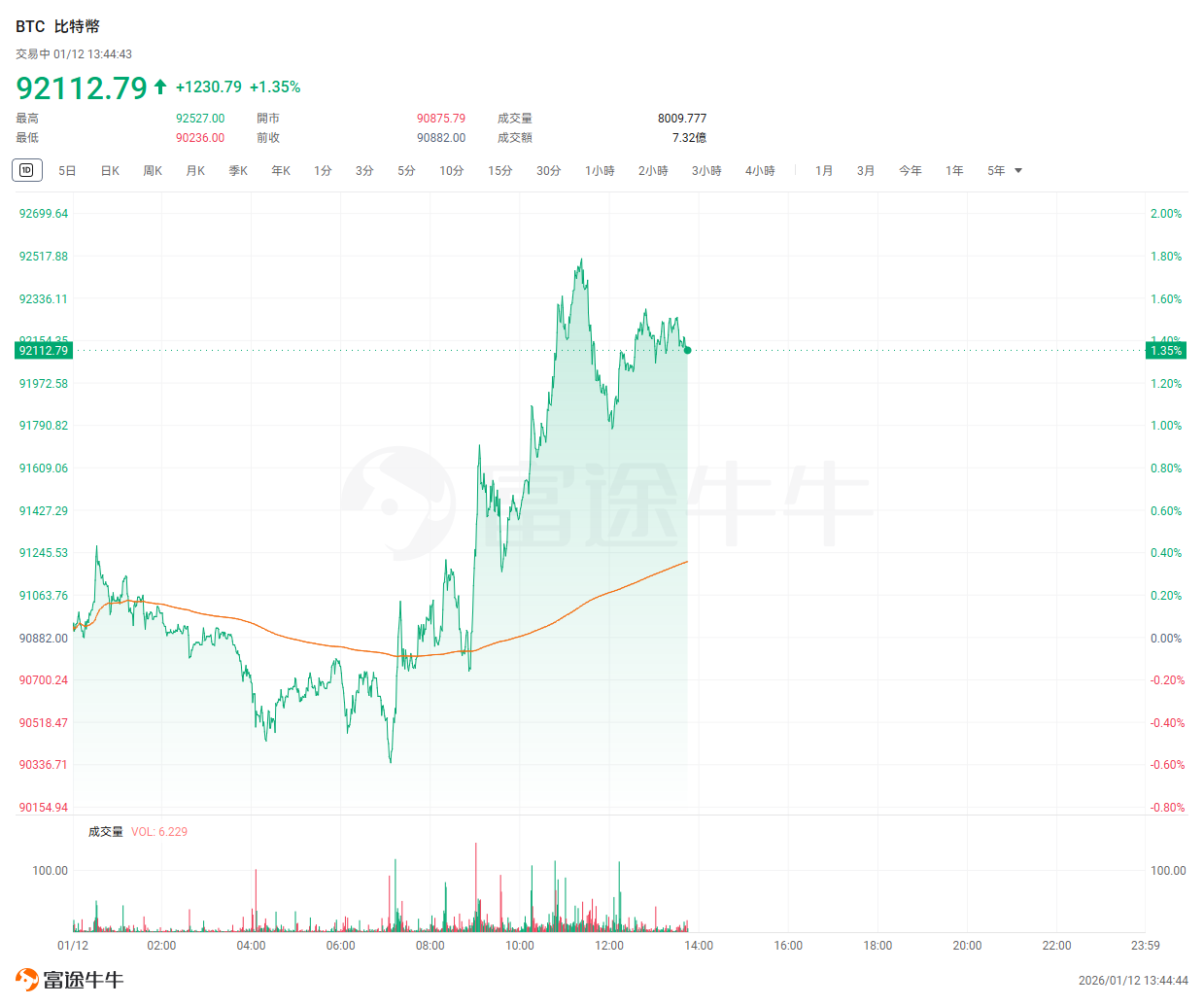
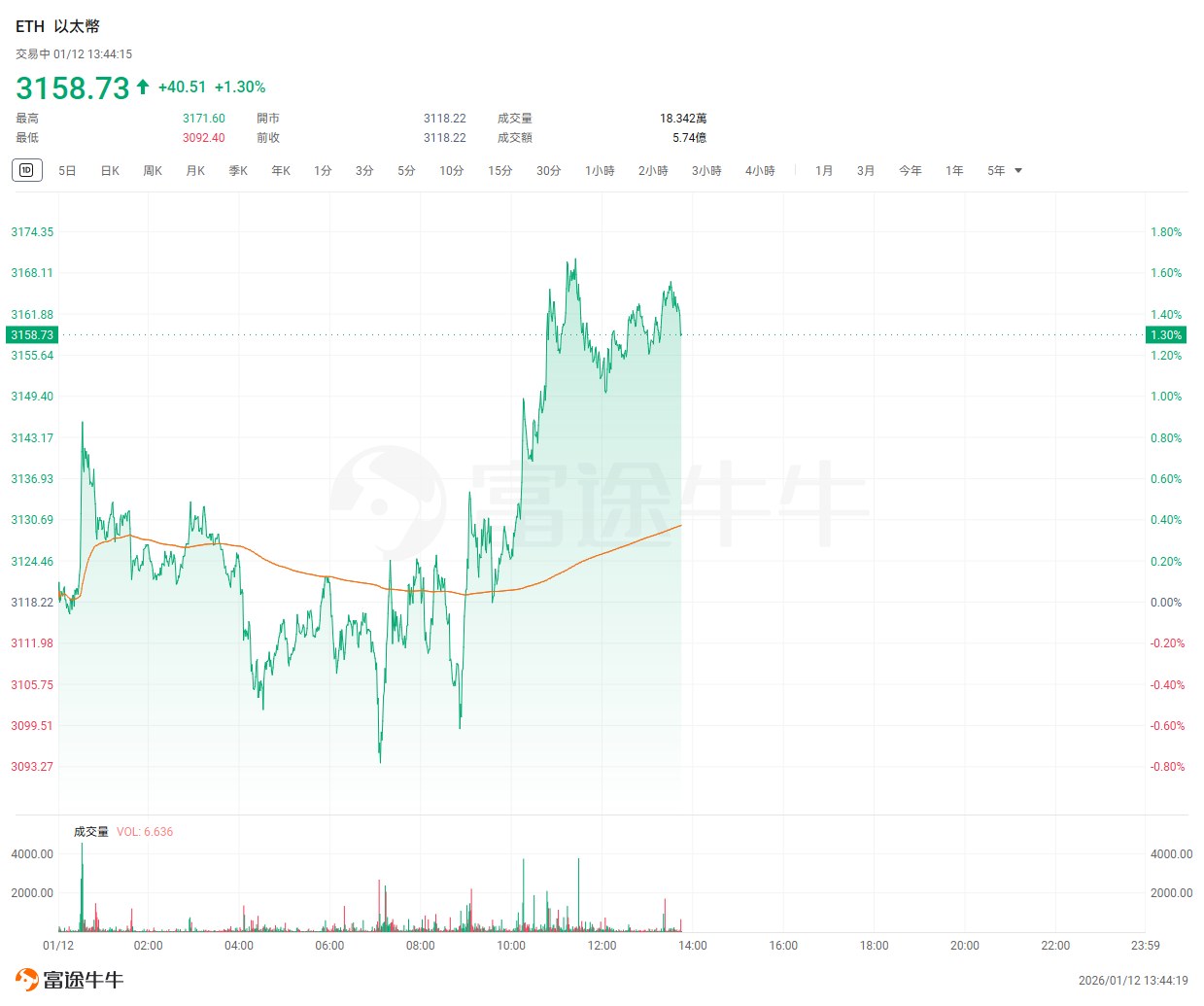
January 12th report: The cryptocurrency market is on an upward trend. As of press time, $Bitcoin (BTC.CC)$ increased by 1.35%, trading at $92,112.79; $Ethereum (ETH.CC)$ rose by 1.30%, trading at $3,158.73.
Cathie Wood, founder of ARK Invest, stated that the U.S. government may begin directly purchasing Bitcoin in the future to bolster the national Bitcoin Strategic Reserve, rather than relying solely on assets confiscated by law enforcement agencies.
 Wood noted in a recent episode of the podcast *Bitcoin Brainstorm* that although the Trump administration established a national Bitcoin reserve via executive order, the source of the reserve so far has been limited to confiscated BTC, with no purchases made on the open market. The initial goal was to hold one million Bitcoins, and she believes they will eventually begin buying.
She believes that under pressure from midterm elections, Trump will remain highly focused on cryptocurrency issues, which would benefit the Bitcoin strategic reserve. On one hand, Trump and his family’s interests in the crypto industry continue to grow; on the other hand, the crypto community played a crucial role in his presidential election victory. She said: “He doesn’t want to be a lame-duck president. He wants to have one or two more productive years in office, and he sees crypto as the pathway to the future.”
Reports indicate that the Trump administration has signed multiple executive orders to establish a Bitcoin reserve and inventory of crypto assets, and formed a crypto and AI task force led by David Sacks to promote industry legislation, including the GENIUS Act (stablecoin legislation).
According to Bloomberg, $Coinbase (COIN.US)$ is increasing pressure on U.S. lawmakers to preserve the ability to offer rewards to customers holding stablecoins. The company argues that if the discussed restrictions are included in the major cryptocurrency bill announced on Monday, this business could face risks. Sources indicate that if the bill contains more than just enhanced reward disclosure requirements, Coinbase might reconsider its support for the Digital Asset Market Structure Bill, which is set for review in at least one Senate committee on Thursday.
Insiders revealed that the proposed solution under consideration is to limit the ability to offer rewards to regulated financial institutions. This move has gained some support within the banking sector, as people believe that interest-bearing stablecoin accounts could draw deposits away from traditional banks. Coinbase has applied for a national trust license, which would allow it to offer rewards under the new rules. However, crypto-native companies are pushing to maintain platform-based reward models, which can operate without a trust license, warning that broader restrictions could disrupt the competitive landscape of the industry.
The exact wording of the bill remains unclear, but provisions related to rewards will be added, and this issue has already weakened bipartisan support for the market structure bill, potentially delaying its passage. Sources suggest a possible compromise could involve allowing only banks with banking licenses to offer rewards on stablecoin balances. Recently, five crypto firms received conditional approval from the U.S. OCC to become national trust banks. Given these recent approvals, a market structure bill allowing trust-licensed companies to offer yields might appease some crypto firms. If restrictions are implemented, insiders believe it could trigger a “whack-a-mole” scenario where crypto companies seek alternative ways to reward users.
$Strategy (MSTR.US)$ Founder and Executive Chairman Michael Saylor posted updates about the Bitcoin Tracker on the X platform again, writing: “₿ig Orange.” Based on previous patterns, Strategy always discloses Bitcoin purchases the day after relevant announcements.

According to the Hong Kong Economic Journal, Financial Secretary Paul Chan attended a RTHK forum to gather opinions on the new Budget. He noted that in response to public suggestions for stablecoins to eventually be pegged to gold, he emphasized that progress on stablecoins would be gradual, with consideration of gold or other pegs only after completing the initial phase. The government continues to study this issue carefully while exercising caution.
-
The Wall Street Journal: Venezuela’s oil exports heavily rely on USDT, with Tether emphasizing strict compliance with international sanctions.
According to The Wall Street Journal, Tether’s rise as the world’s leading stablecoin has been partly attributed to Nicolás Maduro. This is because Tether serves as an essential tool for Venezuela’s state-owned oil company (Petróleos de Venezuela, or PdVSA) to circumvent sanctions, functioning as a settlement currency for oil transactions. It also provides an economic lifeline for Venezuelan citizens suffering from the collapse of their national currency, the Bolívar.
A spokesperson for Tether responded, stating that the company complies with all applicable U.S. and international sanction regulations. They work closely with U.S. authorities, including the Office of Foreign Assets Control, and regularly assist law enforcement agencies in freezing addresses associated with illegal activities or violations of sanctions based on legitimate requests.
According to Crowdfund Insider, PhotonPay, a provider of stablecoin payment infrastructure, announced the completion of a multi-million-dollar Series B funding round. The round was led by IDG Capital, with participation from Hillhouse Investment, Enlight Capital, Lightspeed Faction, and Shoplazza. Blacksheep Technology served as the exclusive financial advisor. The company did not disclose its valuation.
The new funds will be used to accelerate the expansion of its stablecoin financial payment channels, recruit key talent, and enhance its global regulatory compliance framework, with a particular focus on the United States and select emerging markets. Founded in 2015, PhotonPay currently operates 11 global centers and employs over 300 staff. The company claims its annualized payment processing volume through its ‘stablecoin-native’ clearing and settlement infrastructure exceeds $30 billion. It has established partnerships with financial institutions such as JPMorgan, Circle, Standard Chartered Bank, DBS Bank, and MasterCard, and plans to strengthen its account issuance, acquiring, and foreign exchange capabilities. Starting in 2026, PhotonPay also intends to launch corporate value-added services, including treasury products for idle funds and flexible credit tools.
Michael Saylor, Founder and Executive Chairman of Strategy, posted on the X platform that the best-performing assets of the past decade were digital intelligence ( $NVIDIA (NVDA.US)$ ), digital credit ( $Strategy (MSTR.US)$) and digital capital ($Bitcoin (BTC.CC)$ )。
Johann Kerbrat, Head of Robinhood’s crypto business, stated that the company chose to build an Ethereum Layer-2 network based on Arbitrum rather than launching an independent Layer-1. The core reason is the desire to directly leverage Ethereum’s security, decentralization attributes, and EVM ecosystem liquidity, thereby focusing on core products such as stock tokenization. Robinhood’s proprietary L2 is still in the private testnet phase, while tokenized stocks have already been deployed on Arbitrum One. Assets and liquidity can be seamlessly migrated when the new chain goes live. To date, the number of tokenized stocks offered by Robinhood has expanded from around 200 initially to over 2,000.
According to monitoring by Onchain Lens,$Bitmine Immersion Technologies (BMNR.US)$An additional pledge of 109,504 ETH (worth $340.49 million) has been made. To date, they have cumulatively pledged 1,190,016 ETH, with a total value reaching $3.7 billion.

According to TASS News Agency,$Tether (USDT.CC)$Tether, the issuer, has registered the trademark for its asset tokenization platform Hadron in Russia. Records show that Tether submitted the application in October 2025 and was approved in January 2026. The exclusive rights to the trademark are valid until October 2035. This trademark can be used for blockchain financial services, cryptocurrency trading and exchange, crypto payment processing, and related consulting services.
-
M&A Transaction Value in Crypto Industry Surges to $37 Billion in 2025, Setting New Record High
According to DL News, data from Architect Partners shows that publicly disclosed M&A transaction values in the crypto industry surged to $37 billion in 2025, more than seven times the previous year, far exceeding analysts’ expectations of approximately $30 billion, and setting a new record high for the industry. The transaction volume increased by 74% year-on-year, reaching 356 deals, of which 39 transactions exceeded $100 million, and 17 exceeded $500 million.
Karl-Martin Ahrend, co-founder of Areta, stated that the pace of M&A transactions will depend on regulatory clarity, interest rates, risk appetite, and valuation attractiveness. Traditional financial institution buyers are most interested in stablecoins and the payments sector. He expects M&A activities to remain active through 2026, with the industry shifting towards building enduring enterprises and seeing more ‘bridge-style’ acquisitions. Deal terms will place greater emphasis on risk management, although unexpected regulatory hurdles may arise. By early 2026, the direction of U.S. regulation is expected to provide clearer signals.
In response to the question, ‘How long will it take for the U.S. SEC to process Morgan Stanley’s Bitcoin ETF application?’ Bloomberg analyst James Seyffart stated, ‘At the earliest, it will be 75 days from the date of submission. So, it will likely be around March 23.’
According to sources cited by Seoul Economic Daily on January 11 local time, the second phase of South Korea’s Financial Services Commission’s cryptocurrency liberalization policy, proposed in February of last year, is about to be implemented. Under this measure, listed companies and qualified professional investment institutions can allocate up to 5% of their own capital to cryptocurrencies such as Bitcoin and Ethereum. Industry insiders expect this move to attract approximately 3,500 institutions and companies, bringing substantial capital into the market on a large scale.
The financial insider revealed that South Korean regulators are expected to announce the final rules between January and February, officially allowing companies to use their own funds to invest in cryptocurrencies like Bitcoin and Ethereum. It is widely believed in the industry that, with the draft of South Korea’s Digital Assets Basic Act also expected to be introduced in the first quarter of this year, relevant companies will be permitted to conduct such transactions by the end of the year at the latest.
The report noted that, to control risks associated with large-scale corporate investments in cryptocurrencies, South Korean regulators plan to set an annual investment cap at 5% of a company’s own capital. Additionally, the investment scope will be limited to the top 20 cryptocurrencies by market capitalization listed on South Korea’s five major exchanges, with the list of eligible cryptocurrencies updated every six months based on trading market capitalization data.
-
Uncle Ma’s Ethereum long position has incurred floating losses again, with the current position holding 10,800 ETH.
According to on-chain analyst Ai Yi’s monitoring, Uncle Ma’s Ethereum long position has incurred another $287,000 in floating losses. Compared to the unrealized gains at the higher point of ETH on January 7, the position has now retraced over $2 million. He currently holds a 25x leveraged long position of 10,800 ETH, valued at $33.62 million, with an average entry price of $3,138.43.
According to CoinDesk, Hsiao-Wei Wang, Co-Executive Director of the Ethereum Foundation, stated in an interview that Ethereum is steadily moving towards a future where zero-knowledge cryptography will become a core component of the network. She described zero-knowledge technology as part of Ethereum’s mid-term roadmap and noted that the field has seen numerous breakthroughs over the past one to two years.
Although recent upgrades still focus on improving execution and blob space for Layer 2 networks, integrating zero-knowledge as a protocol-level feature is becoming increasingly feasible. Introducing zero-knowledge directly into Ethereum’s core could significantly reduce the amount of work required to secure the network, making it easier to scale without sacrificing decentralization or reliability. Hsiao-Wei Wang emphasized that resilience, censorship resistance, and neutrality remain at the heart of Ethereum, even as the network continues to evolve.
Responding to his previous tweet stating that a ‘super cycle is coming,’ CZ reiterated on the X platform: ‘A single tweet cannot change anything. I also cannot predict the future. Keep accumulating.’
Editor/Joe