
This post was originally published on this site.
When you’re running a business of whatever size, it’s critical to know your numbers – but when you’re running the finances for 22 schools, it’s even more imperative to get your maths right.
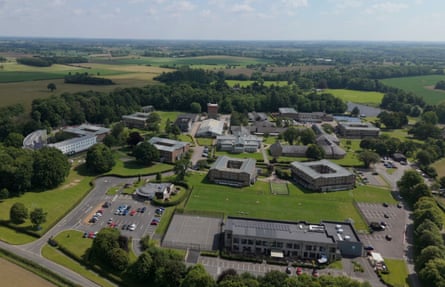
Established in 2016, Sapientia Education Trust (SET) is responsible for more than 8,500 pupils and 1,300 staff across Norfolk and Suffolk. However, until 2022, the administration of its finances was still being done the old school way – manually – with piles of paper-based files and spreadsheets.
Steven Dewing, SET’s chief financial officer, says: “When I joined in September 2021, the team were struggling. The trust was recovering after Covid, and getting invoices paid on time and reports delivered on time was a challenge.”
The system being used by the trust was adopted back when it encompassed just five schools. By the time Dewing joined, the number of schools had risen to 15 – each with its own database and no sharing of data. “There were lots of silos.”
Dewing recalls how his deputy needed a whole day each month simply to reconcile it all, with numbers pulled out and manually put on to consolidated spreadsheets. Only then could data be manipulated into the right formats needed.
“That was not uncommon for finance departments,” he says, “but it is very prone to error. Also, invoices were being manually signed, requisitions were written by hand, and because we had a different system for each school, we couldn’t join these up. People physically carried around loads of paper, so it was hard to maintain compliance.”
‘Everything in one database’
All this changed in September 2022 when SET moved to a new system, Sage Intacct, which was rolled out with the support of ION, a Sage Education implementation partner.
And for a trust that includes the country’s largest state boarding school with 1,400 children alongside small, rural primary schools with as few as 16 pupils, the finance platform was a gamechanger.
“Now we have everything in one database,” says Dewing. “Each school is still its own entity, but it’s all shared so there is no manual reconciling, it all just happens in the system.”
He adds that using Intacct has also meant SET can combine purchasing across the trust, allowing it to benefit from economies of scale and supplier discounts, while reducing the admin of having to purchase across all its schools.
He also highlights the platform’s ease of use and describes how having access to personalised dashboards for every user has been a massive step forward. “We used to pull out data and then email it to people,” he says, “but now depending on what level you are and what your role is, there are different dashboards. Users can go in and see information whenever they want and drill down to the transaction. It has enabled us to empower them with data they need, when they need it.”
Successful use cases for this part of the implementation include head teachers in SET’s small rural schools seeing an accurate and real-time position of their finances, with staff able to login from any location any time to study the data and reports.
“What’s good is we can pull in non-financial information too, like pupil numbers and staff numbers,” adds Dewing. “You can then combine that with other data to give cost per student, cost per staff member, and much more, without any Excel manipulation.”
Adding up the time saved with AI
Within SET’s finance department, a pool of four people is responsible for multiple schools reporting to Dewing. Below this there are others who input transactions, invoices and payments.
To ensure the department was up to speed from day one, ION provided training in Sage Intacct during the onboarding process. It offered Dewing and his colleagues a structured programme, which the CFO says was a major help given “it’s a really big bit of software with lots of different functionality”.
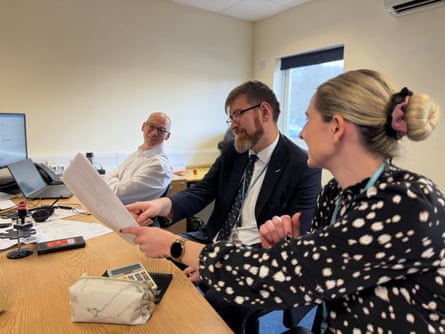
“Having someone guide you through it and teach you what it does, while making sure you’re doing the right things at the right time, was vital,” he says. “We broke the training down into four two-hour sessions rather than one whole day and also got them to record some short videos, which we continue to use.”
Dewing has found a number of Sage Intacct’s AI-driven tools particularly useful. For instance, Outlier Detection, which automatically spots data appearing in odd patterns and suggests corrections, and Accounts Payable Automation, which uses AI to populate invoices against purchase orders.
Given that SET processes more than 25,000 invoices a year, this represents a transformational timesaver for colleagues who no longer have to input the details themselves and simply now check over the AI-prepared documents.
Dewing cites this as just one key example of how the move to Sage Intacct has revolutionised what his finance team can do for the wider trust.
“It has enabled finance to move from a pure admin function, where you carry bits of paper around and get things paid, to a strategic partner in the organisation,” he says. It’s become less about ‘have we paid this on time or have we ordered that’, because that just happens through the system.
“We can now spend far more time supporting people to take financial decisions and in budgeting. Sage Intacct has changed our relationships with the schools because they see what value we bring.”
Find out more about Sage Intacct and book a demo, at: sage.com