
This post was originally published on this site.

- Alphabet is planning an even bigger debt sale.
- xAI loses its second co-founder in two days
- China’s consumer inflation rose less than expected.
- The Dow notched another record close, but other major U.S. indexes fell.
- Buy the dip in gold: Wells Fargo.
What can’t artificial intelligence claim to do nowadays? Tech platform Altruist announced Tuesday a tool to help users carry out tax planning — an act, as everyone knows, more complex than quantum physics — within “minutes.”
Financial stocks wobbled on those claims as investors feared AI tools could replace — or at least lower the value of established advisory firms and banking names. LPL Financial lost 8.3%, Charles Schwab tumbled 7.4% and Morgan Stanley dropped 2.4%.
Investor sentiment was further depressed by downbeat U.S. economic data. In December, seasonally adjusted retail sales were flat month on month, falling short of the 0.4% increase expected by a Dow Jones survey of economists. Those figures might not have disappointed just Wall Street — but also folks who were expecting more for Christmas.
A weak retail report also casts a shadow on the nonfarm payrolls count for January, which comes out Wednesday morning stateside. After all, it’s hard to shop with a shaky job.
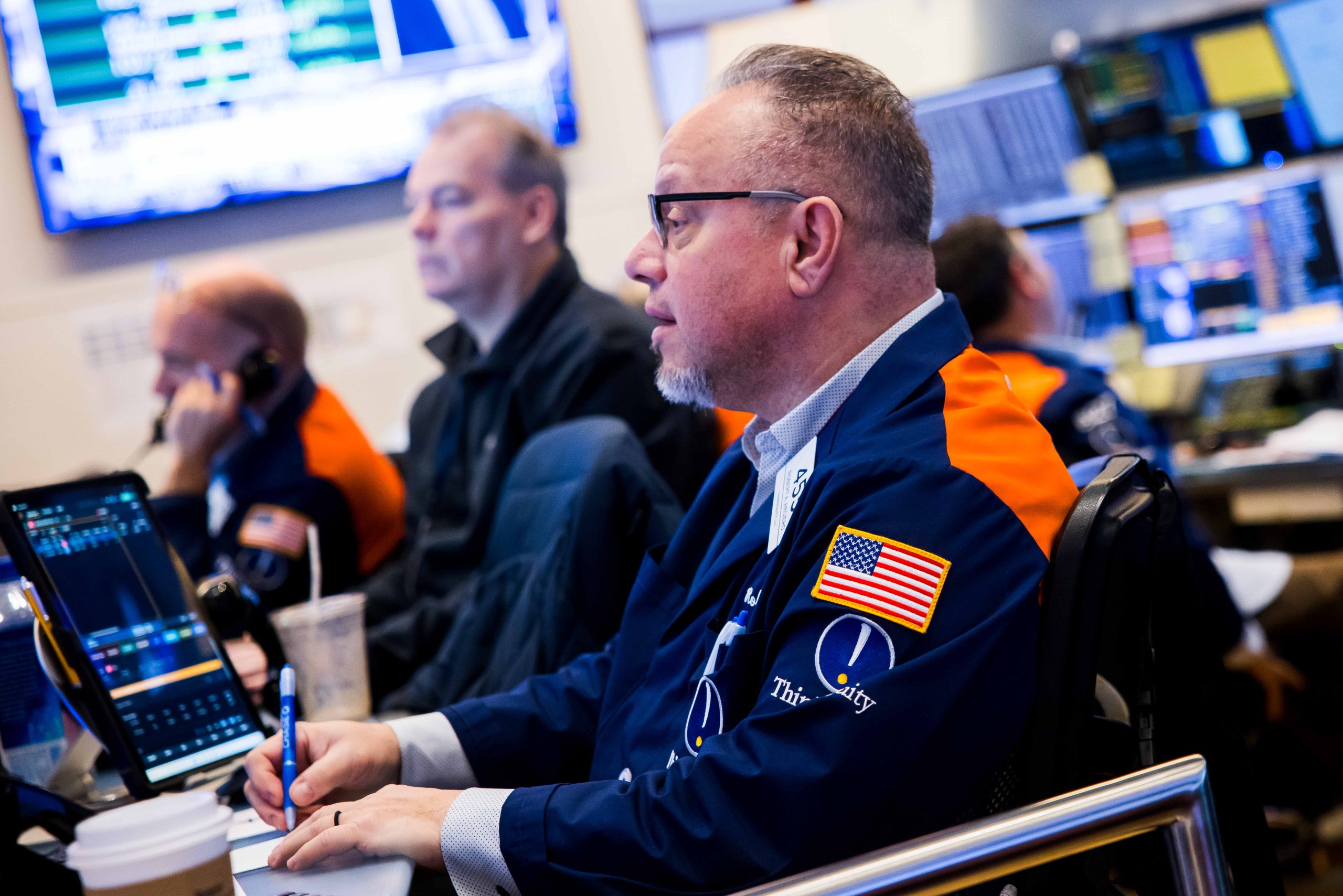
Weighed by the above developments, major U.S. benchmarks mostly fell. The S&P 500 lost 0.33% and the Nasdaq Composite retreated 0.59%. The Dow Jones Industrial Average, however, eked out a 0.1% gain to hit another closing record. The market has shown “a rotation into other areas that may be more insulated from that AI trade,” Anthony Saglimbene, Ameriprise Financial’s chief market strategist, told CNBC.
Over in Europe, Siemens Energy reported Wednesday a 12.8% year-on-year increase for its fiscal first quarter, while net income rose sharply and beat expectations as compiled by LSEG. CEO Christian Bruch appears on CNBC’s “Squawk Box Europe” to discuss the numbers further.
Things aren’t quite as rosy at Heineken, as the Dutch brewer announced it would be cutting up to 6,000 jobs on weak beer sales — catch CEO Dolf van den Brink on “Squawk Box Europe” for his last media interview before leaving the role.
Meanwhile, Ukraine President Volodymyr Zelenskyy is reportedly planning to announce election plans and a peace referendum later in the month, reported the Financial Times, in what would be a fundamental shift in the besieged country’s objectives amid Russia’s invasion.
— CNBC’s Leonie Kidd, Michelle Fox contributed to this report.
What you need to know today
Alphabet is planning a debt sale again, with the company close to finalizing a global bond issuance in excess of $30 billion, according to two people familiar with the deal. That’s comes after it raised $20 billion on Monday.
xAI loses its second co-founder in two days, with researcher Jimmy Ba on Tuesday announcing his departure from the Elon Musk-founded company. Ba’s departure comes just one day after fellow co-founder Tony Wu announced his own exit from xAI.
China’s consumer inflation rose less than expected. The consumer price index in January rose 0.2% from a year earlier, below the forecast of 0.4% increase in a Reuters poll. But producer prices fell 1.4% year on year, better than expectations of a 1.5% drop.
The Dow notches another record close, but other major U.S. indexes fell Tuesday on a disappointing retail sales report and financial stocks coming under pressure. Asia-Pacific markets rose Wednesday as investors shrugged off AI fears and China’s weak CPI.
[PRO] Buy the dip in gold, Wells Fargo wrote in a Monday note to its clients, adding that it expects the precious metal to stabilize. Here’s where the bank sees gold heading to by the end of 2026.
And finally…
Inside China’s push to feed 1.4 billion people without U.S. crops
Over the last few years in China, it’s gotten easier to buy food straight from the farm. Whether it’s boxes of apples or bags of vacuum-sealed corn-on-the-cob, online orders placed through popular e-commerce apps take just a couple of days to arrive in Beijing.
The economics behind this consumer experience boil down to a few key differences at the heart of the U.S.-China trade story.
— Evelyn Cheng