
This post was originally published on this site.

CLEVELAND — The Cavaliers have already made one trade ahead of the Feb. 5 deadline. That deal put them a few chess moves short of a potential blockbuster move, and the question is now whether a few smaller moves could be a precursor to something much larger.
The Cavs dealt forward De’Andre Hunter to the Sacramento Kings in exchange for guards Keon Ellis and Dennis Schroder on Jan. 31. The deal solved issues for the Cavs on multiple fronts — it bolstered their rotational guard depth, added a player (Ellis) who was reportedly coveted by several teams, offloaded a player (Hunter) who had begun to underperform and saved roughly $50 million, counting both salary savings and luxury tax penalties.
That trade suddenly put the league on notice the Cavs could be larger contenders for a roster-shaking move because it put them a few small steps shy of getting under the NBA’s second apron, which would open up a world of possibilities for how they could reshape the lineup at the deadline.
What is the NBA’s second apron?
The Hunter trade left the Cavs roughly $14 million over the second apron, a line above which the league greatly restricts the types of moves teams can make. The Cavs are now one or two deals away — likely involving Lonzo Ball, Max Strus, Dean Wade or others — from regaining some flexibility on the trade front.
Getting under the second apron would open up a much wider range of trade possibilities because it would allow the Cavs to aggregate salaries in a 1-1 trade, sending multiple players to the same team. They could also take on more money than they’re sending out.
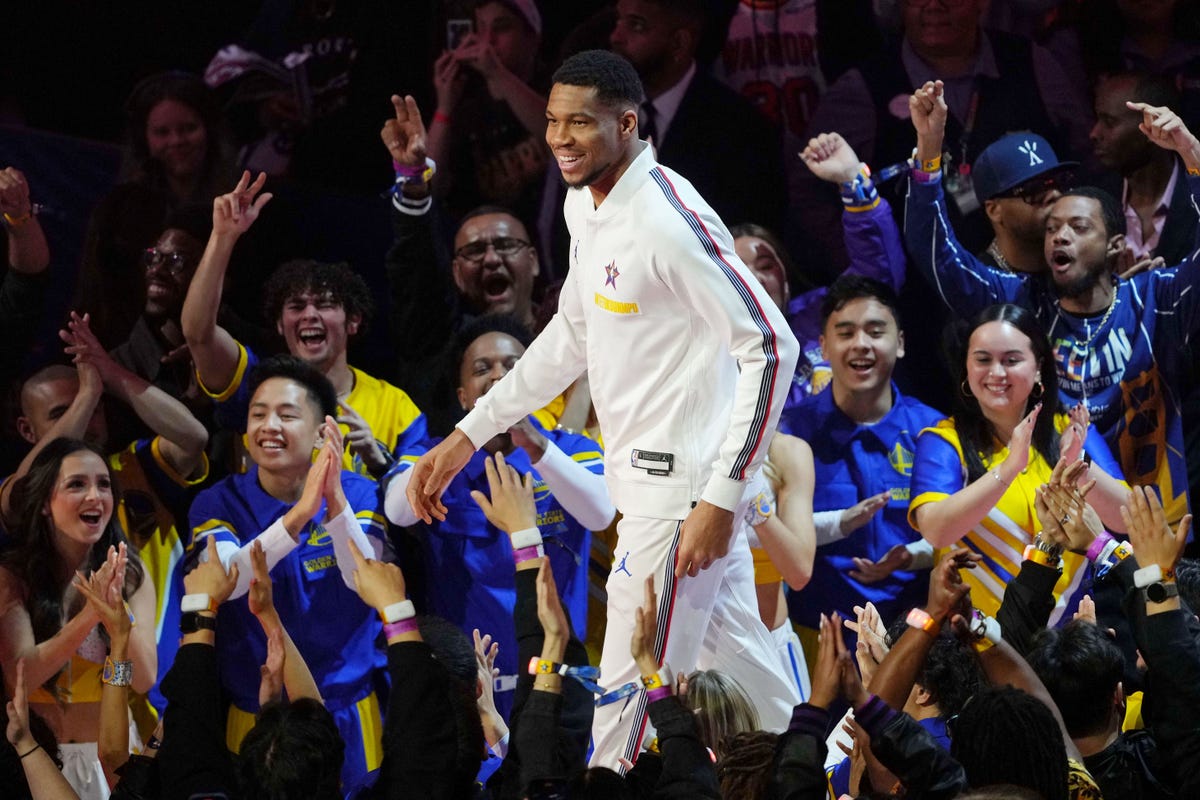
And those avenues would again make the Cavs a contender to shake up the core four and acquire a big-name star. In this case, it could mean Milwaukee Bucks superstar Giannis Antetokounmpo.
Could the Cavs acquire Giannis Antetokounmpo at the NBA trade deadline?
The easiest route for the Cavaliers to becoming a factor in the potential Antetokounmpo sweepstakes would be dealing Lonzo Ball plus a few other smaller contracts, and likely attaching multiple second-round picks to facilitate the deal.
The bottom line with a few Cavaliers rotational players is this: optimism in November quickly turned to frustration in January.
Hunter looked like a tremendous fit in Kenny Atkinson’s rotation after the deadline deal that brought him to Cleveland last season, and he was then tabbed to be the “offseason MVP” in the Cavs locker room. But none of that good will or positive momentum translated into what was a vastly different-looking season for Hunter this year.
For Ball, what was a “lottery ticket” acquisition looked like it might have legs early on, but his shooting cratered and so, too, has much of his value to the Cavaliers. Strus, meanwhile, still hasn’t made his season debut after offseason foot surgery and could be a candidate to be traded as well.
If the Cavaliers can dip below the second apron, an offer to the Bucks for Antetokounmpo becomes possible. This is where, if they go this route, the Cavs’ core four will be blown up.
Any genuine offer for Antetkounmpo for the Bucks likely starts with at least Evan Mobley or a Darius Garland/Jarrett Allen combination. It would make sense for the Bucks to prefer Mobley as the centerpiece, and it’s possible Garland becomes involved either way, in addition to a few other players to make it all work. And regardless of which route the Cavs and Bucks go on the player side, multiple first-round picks and/or pick swaps would be headed to Milwaukee.
The Bucks will have options, though, meaning the Cavs need to bid high if they want to shake things up.
Mobley has been right in the dead center of everything they’ve been building for years, although acquiring a superstar such as Antetokounmpo might be too tempting to pass up. Although it would shorten the Cavaliers’ contention window by a year or two, it might also bolster it while it’s open, and the East is as weak as it’s been in a long time because of a series of injuries to several stars.
Then again, the Cavs have balked at any major deals to break up the core four in the recent past, and the Hunter trade could stand alone as a move that helps the Cavs’ rotation, as Ellis and Schroder both fit defined roles.
Could the Cavs trade for LeBron James at the NBA trade deadline?
A LeBron James reunion to Cleveland is certainly possible, if both parties are interested — but probably not until next season.
Yes, the Hunter trade freed up a large chunk of salary pace and chipped away at their luxury tax penalties, and another deal involving Ball or Strus could further cut into it all, but Schroder is still making serious money (more than $14 million this year and the next two seasons after that). So the Cavs likely would need to move a core four member to make the numbers work for James this season, and that isn’t happening for a 41-year-old forward regardless of name recognition.
The only other solution would be a series of smaller moves in the next few days, but that plausibility is rather low — at least for now. This is something that could remain a storyline this upcoming summer, as the Lakers and James might be setting the stage for a breakup as Los Angeles builds around Luka Doncic and the future.
The Akron Beacon Journal sports department can be contacted via email at bjsports@thebeaconjournal.com.